What Is a Furnace Heating System (And How Does It Work)?
A furnace heating system is the most common way American homes stay warm in winter. Here’s a quick overview:
| Feature | Details |
|---|---|
| What it does | Burns fuel (or uses electricity) to heat air, then distributes it through ducts |
| Common fuel types | Natural gas, propane, oil, electric |
| Efficiency range | 56% AFUE (old) up to 98.5% AFUE (modern high-efficiency) |
| Key components | Burners, heat exchanger, blower motor, thermostat, air filter |
| Typical lifespan | 15–20 years |
| Average install cost | $4,000–$10,000+ |
Most homes in Rhode Island and across the U.S. rely on a gas furnace as the core of their heating setup. The furnace heats air and pushes it through ductwork to every room — all triggered automatically by your thermostat.
Choosing between brands like Trane and Bryant comes down to understanding what’s inside the box: efficiency ratings, staging technology, and how well the system matches your home’s actual heating load.
I’m Richard Marcello, President of Advanced Heating & Cooling, and after more than 30 years installing and servicing furnace heating systems across Rhode Island, I’ve seen what separates a system that performs reliably for 20 years from one that becomes a headache after five. In this guide, I’ll walk you through everything you need to make a confident, informed decision.
Furnace heating system vocab to learn:
Understanding Your Furnace Heating System
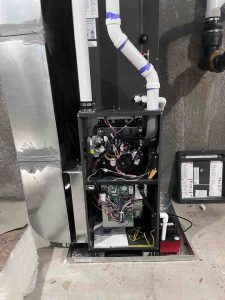
When we talk about a furnace heating system, we are referring to a central heating unit that serves as the heart of your home’s HVAC setup. Unlike boilers, which use water or steam, a furnace is a “forced-air” system. It pulls cold air from your rooms through return ducts, heats it up, and then uses a powerful blower fan to push that toasty air back through a network of supply ducts.
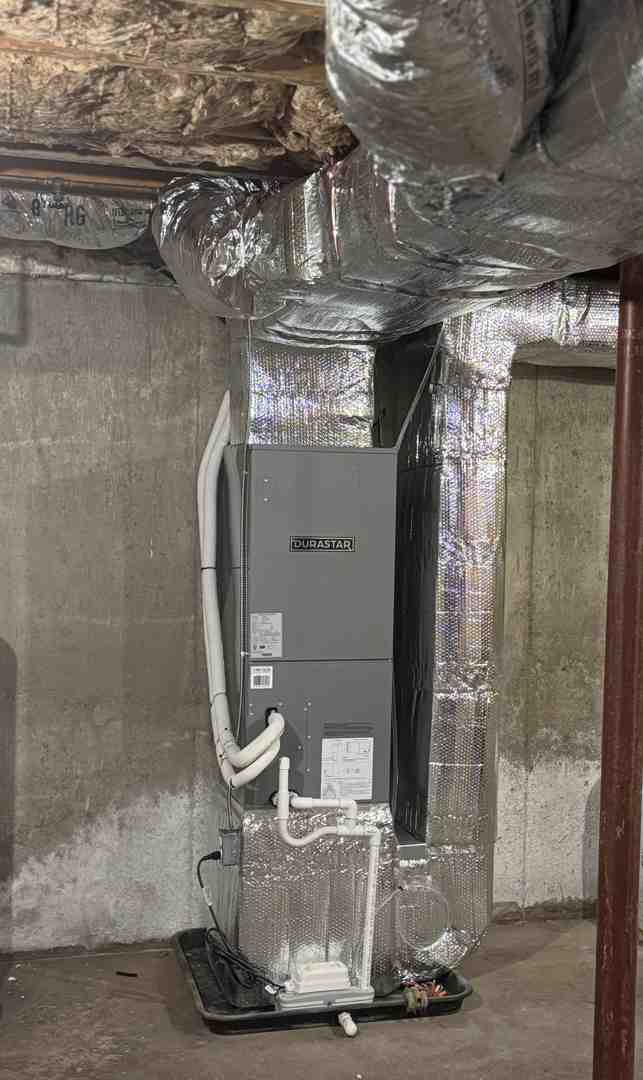
In places like Smithfield, Slaterville, and Greenville, RI, the most common setup is a gas-fired furnace. These units are often tucked away in a basement, utility closet, or attic. Because they share the same blower motor and ductwork as your central air conditioner, they are incredibly efficient at providing year-round comfort. When the thermostat detects a drop in temperature, it sends a low-voltage signal to the furnace to begin the heating cycle.
Understanding the technical nuances of your furnace (central heating)) is the first step toward better home management. Whether you are looking into a brand-new heating installation or trying to understand why your current unit is making that “clunking” sound, knowing the basics helps you communicate better with your technician.
How a Gas Furnace Heating System Works
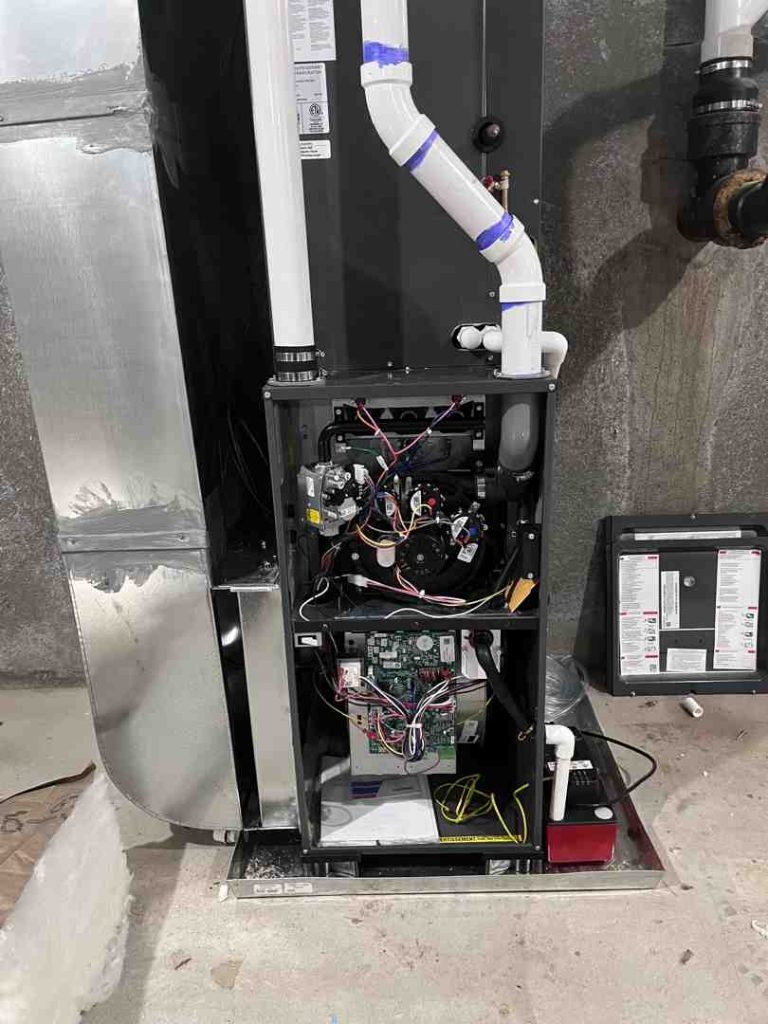
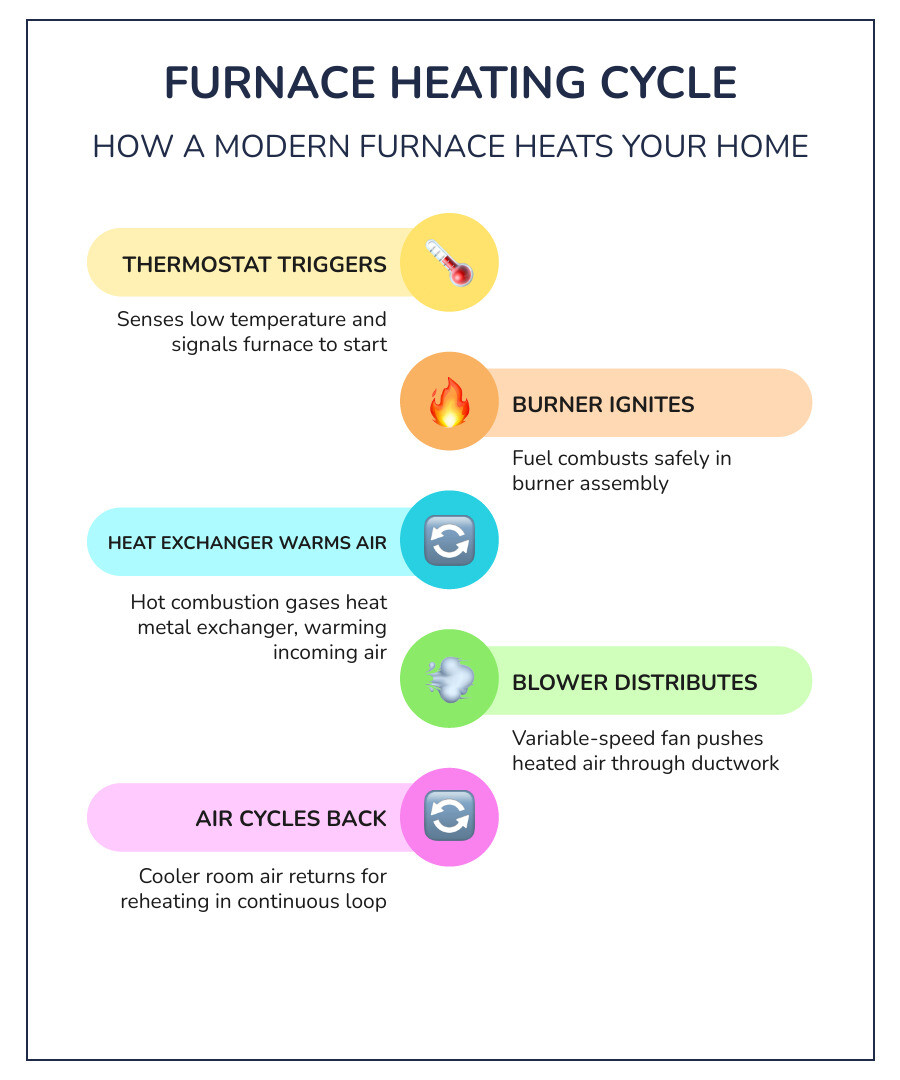
The magic of a gas furnace heating system happens in a sequence of carefully timed steps. It all starts with the burners. When the thermostat calls for heat, a gas valve opens, and an ignitor (usually a modern hot surface igniter or a spark igniter) lights the gas.
The flames heat up the heat exchanger, which is a set of hollow metal tubes or coils. This is the most critical part of the system: it allows the heat from the combustion process to transfer to your home’s air without letting dangerous combustion gases (like carbon monoxide) mix with the air you breathe.
Once the heat exchanger reaches a specific temperature, the blower motor kicks on. It pulls air across the exterior of the hot heat exchanger and pushes it through your home. Meanwhile, an inducer fan ensures that the exhaust gases are safely vented out of your home through a flue pipe or PVC vent.
If your system isn’t keeping up, there are 7 practical ways to solve heating repair problems before calling in the pros, such as checking your thermostat batteries or ensuring your air filter isn’t clogged.
Comparing Furnace Heating System Efficiency and AFUE
Efficiency is measured by AFUE, or Annual Fuel Utilization Efficiency. Think of it like the “MPG” for your heater. If a furnace has an 80% AFUE rating, it means 80% of the fuel it burns becomes heat for your home, while 20% escapes through the chimney.
| Furnace Type | AFUE Rating | Characteristics |
|---|---|---|
| Old/Obsolete | 56% – 70% | Heavy cast iron, pilot lights, high fuel waste. |
| Mid-Efficiency | 80% – 83% | Standard venting, electronic ignition, common in RI. |
| High-Efficiency | 90% – 98.5% | Condensing technology, PVC venting, massive fuel savings. |
High-efficiency models are “condensing” furnaces. They have a secondary heat exchanger that captures “latent heat” from the exhaust gases. This process is so effective that the exhaust cools down enough to turn into water (condensate), which is then drained away. According to the Department of Energy guide on furnaces and boilers, upgrading from an old 56% AFUE unit to a 90% model can save 1.5 tons of carbon dioxide emissions annually if you use natural gas.
Key Differences Between Trane and Bryant Furnaces
When we help homeowners in North Smithfield or Johnston choose between Trane and Bryant, we look at reliability and the specific technology inside. Both brands are industry leaders, but they offer different “flavors” of comfort.
Trane is often associated with rugged durability. They are famous for their “Spine Fin” coils and Climatuff compressors (in AC units), but their furnaces are equally robust. Trane focuses heavily on quiet operation and consistent airflow. Their high-end models often feature modulating gas valves that can adjust the flame size in tiny increments to maintain a perfectly steady temperature.
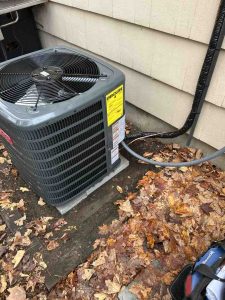
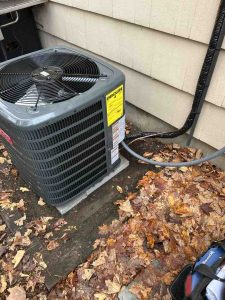
Bryant, a sister company to Carrier, offers incredible value and innovation. The Bryant Legacy™ line, for instance, focuses on balancing high efficiency (up to 97% AFUE) with long-term durability. Their systems are known for being very “installer-friendly,” which often means a more precise setup. Many Bryant models are also Hybrid Heat® compatible, meaning they can be paired with an electric heat pump to create a dual-fuel system that chooses the cheapest fuel source based on the outdoor temperature.
Both brands offer:
- Single-Stage Heating: Like a light switch; it’s either 100% on or off.
- Two-Stage Heating: Like a high/low switch; it runs on a lower, quieter setting most of the time.
- Modulating/Variable-Speed: Like a dimmer switch; it adjusts precisely to your home’s needs.
If you are wondering when is it time to replace your HVAC system, consider that if your current unit is over 15 years old and requires a repair costing half of its replacement value, an upgrade to a Trane or Bryant unit is likely the smarter financial move.
Choosing the Right Size and Type for Your Home
Size matters—a lot. If a furnace heating system is too small, it will run constantly and never get the house warm. If it’s too large, it will “short cycle,” turning on and off rapidly, which wears out the components and leaves hot and cold spots.
To get it right, we use a Manual J Load Calculation. This isn’t just looking at square footage; it accounts for:
- Your home’s insulation levels.
- The number and type of windows.
- The direction your house faces.
- Local climate data for Rhode Island.
Furnace capacity is measured in BTUs (British Thermal Units). A typical home might need anywhere from 40,000 to 100,000 BTUs depending on its size and “tightness.” We also look at “tonnage,” which refers to the blower motor’s ability to move air (crucial for your AC system as well).
Proper sizing is part of mastering direct vent furnace installation. When we install a high-efficiency unit in a home in Georgiaville or Stillwater, we ensure the venting is correctly sized to handle the acidic condensate produced by these 90%+ AFUE machines. You can learn more about how we determine the perfect fit in our HVAC system size guide.
Maintenance and Longevity of Modern Furnaces
A modern furnace heating system is a significant investment, and like a car, it needs regular maintenance to reach its full 15–20 year lifespan. In our 30+ years of experience, the number one cause of furnace failure is dirt.
Dust and pet dander act like a blanket on your furnace components. It coats the blower motor, causing it to overheat, and settles on the heat exchanger, reducing efficiency. Even worse, a dirty air filter restricts airflow, which can cause the heat exchanger to crack—a dangerous situation that can leak carbon monoxide into your home.
We recommend:
- Changing Air Filters: Check them monthly and change them at least every 90 days.
- Annual Tune-Ups: Every fall, have a professional inspect the burners, clean the sensor rods, and check for cracks in the heat exchanger.
- Vent Inspections: Ensure that birds or snow haven’t blocked your exterior exhaust pipes.
Following a winter HVAC maintenance checklist can save you from a 2 AM emergency call. We cannot overstate the importance of regular heating maintenance; it’s the difference between a system that lasts 12 years and one that lasts 22.
Frequently Asked Questions about Furnace Heating Systems
Does a gas furnace require electricity to operate?
Yes, absolutely. This is a common misconception. While the heat comes from burning gas, the distribution and control of that heat require electricity. Your furnace needs power to run:
- The blower fan that pushes air through the ducts.
- The electronic control board (the “brain” of the system).
- The inducer fan that clears the combustion chamber.
- The electronic ignitor.
During a power outage in Mapleville or Woodville, your gas furnace will not run unless you have a backup generator or a dedicated battery backup. If your power is on but your heat is off, you may need emergency heating services when your system fails.
What are the signs my furnace needs repair or replacement?
Your furnace usually tries to tell you it’s struggling before it quits entirely. Keep an ear and an eye out for:
- Strange Noises: Bangs, whistles, or rattles often mean a loose belt or a failing motor.
- Yellow Flames: A healthy gas flame should be crisp and blue. A flickering yellow flame can indicate incomplete combustion and a carbon monoxide risk.
- Frequent Cycling: If the unit turns on and off every few minutes, it’s likely overheating or has a faulty sensor.
- Rising Bills: If your gas bill is skyrocketing but the weather hasn’t changed, your efficiency is tanking.
If you notice these, it’s time to start finding reliable heating repair in Smithfield before a small fix becomes an expensive replacement.
How much does a new furnace installation cost?
For a professional installation in the Rhode Island area, you can generally expect to pay between $4,000 and $10,000.
The price varies based on:
- Efficiency: A 96% AFUE unit costs more upfront than an 80% unit but saves more on monthly bills.
- Complexity: If we need to run new PVC venting or modify your existing ductwork, the labor cost increases.
- Brand and Warranty: Premium models with longer warranties (like those from Trane or Bryant) carry a higher price tag.
To avoid surprises, we always recommend how to get an accurate furnace replacement estimate by having a technician visit your home to assess the infrastructure rather than quoting over the phone.
Conclusion
A furnace heating system is more than just a box in the basement; it is the key to your family’s comfort and safety during our harsh Rhode Island winters. Whether you choose the rugged reliability of a Trane or the innovative efficiency of a Bryant, the most important factor is the quality of the installation.
At Advanced Heating & Cooling, we’ve spent three decades serving our neighbors in Smithfield, Johnston, and the surrounding areas. We take pride in our honest, “no-pressure” approach. We don’t just sell you a furnace; we design a comfort system tailored to your home’s unique needs.
If you’re ready for a warmer, more efficient home, we’re here to help. From expert furnace setup in Smithfield to routine maintenance that keeps your old unit humming, our team has the experience you can trust. Contact us today for a free estimate and let us help you find the perfect heating solution for your home.