Why Getting Your Gas Heater Installation Right Matters From Day One
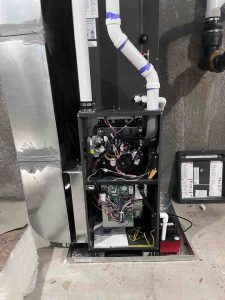
Gas heater installation is one of the most impactful upgrades you can make to your home’s comfort and energy efficiency. But it comes with real stakes — gas lines, venting, permits, and safety codes all have to line up correctly.
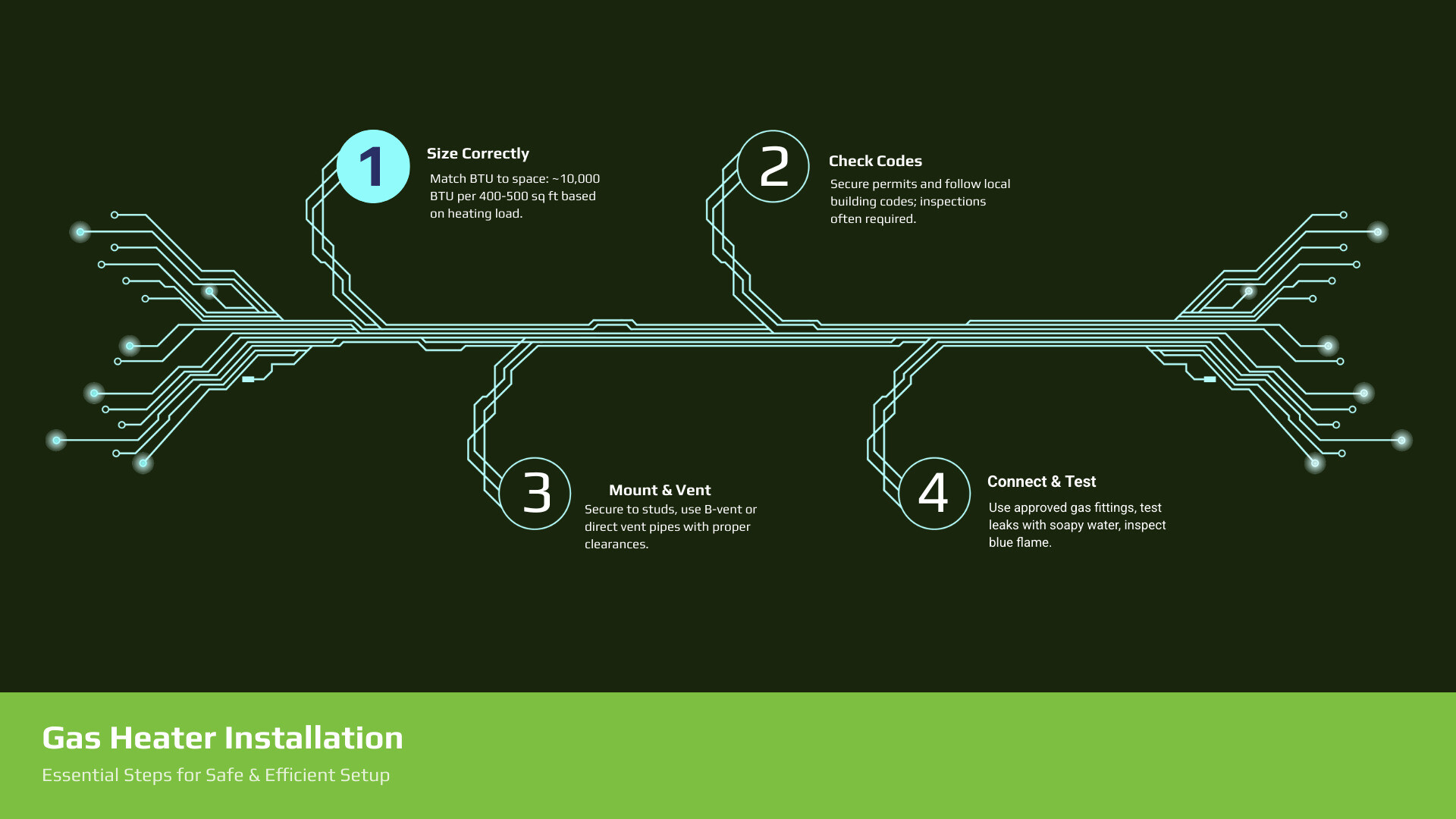
Here’s a quick overview of what a successful gas heater installation involves:
- Choose the right heater — match BTU output to your space (roughly 10,000 BTU per 400–500 sq ft)
- Check local codes — most Rhode Island jurisdictions require a permit and inspection
- Mount and vent properly — secure to studs, use correct vent pipe type (B-vent or direct vent)
- Connect the gas line safely — use approved materials, proper sealant, and test for leaks
- Run a final safety check — soapy water leak test, blue flame inspection, and CO detector placement
Get any of these steps wrong and you’re looking at gas leaks, carbon monoxide risks, or a failed inspection. Get them right and you’ve got reliable, efficient heat for years to come.
It’s also worth knowing the cost picture upfront. A professional installation of a 17,000 BTU natural gas space heater runs around $1,032 in total. A confident DIYer might spend closer to $300 — saving roughly $732 — but that assumes no mistakes, the right tools, and a solid understanding of local codes.
I’m Richard Marcello, President of Advanced Heating & Cooling, and with over 30 years of hands-on experience in gas heater installation and HVAC service across Rhode Island, I’ve seen what separates a safe, lasting install from a costly callback. Let’s walk through exactly how to do this right.
Essential gas heater installation terms:
Planning Your gas heater installation: Sizing and Selection
Before you pick up a wrench, you need to pick the right unit. In April 2026, homeowners have more efficient options than ever, but efficiency doesn’t matter if the unit is the wrong size for your Smithfield home.
BTU Ratings and Sizing
BTU stands for British Thermal Unit. It’s a measure of heat output. A common rule of thumb for our New England climate is needing about 10,000 BTU for every 400 to 500 square feet of space. However, if you are heating a drafty garage in Greenville or a room with vaulted ceilings in Johnston, you might need to increase that capacity by 30% to 50%.
An oversized heater will “short cycle,” turning on and off constantly, which wears out components. An undersized heater will run forever and never actually get you warm. We always recommend a proper heating load calculation that considers your insulation quality, window surface area, and local climate.
Vented vs. Vent-Free Models
Choosing between vented and vent-free is one of the biggest decisions in gas heater installation.
| Feature | Vented Gas Heaters | Vent-Free Gas Heaters |
|---|---|---|
| Exhaust | Vents outside via pipe | No external vent required |
| Air Quality | Higher; combustion gases exit home | Can increase indoor moisture/CO |
| Efficiency | 70-85% (some heat lost to vent) | Nearly 99.9% efficient |
| Installation | More complex (requires wall/roof hole) | Simpler; “plug and play” with gas line |
| Safety | Sealed combustion is safest | Includes Oxygen Depletion Sensor (ODS) |
While vent-free units are tempting due to their 99.9% efficiency, they aren’t allowed in all rooms (like bedrooms or bathrooms) in many Rhode Island jurisdictions. For those looking for the gold standard, mastering direct vent furnace installation tips from the pros is the way to go, as these units pull air from outside and exhaust it back out, keeping your indoor air pristine.
Natural Gas vs. Propane
Most homes in North Smithfield or Slaterville are on natural gas lines. However, if you’re out in a more rural part of Mapleville, you might be using propane. Ensure your heater is factory-set for your fuel type. While conversion kits exist, they must be installed with extreme precision to prevent dangerous “sooting” or gas delivery issues.
Safety First: Permits, Codes, and DIY Risks

We get it — the idea of saving over $700 by doing a DIY gas heater installation is attractive. But in the HVAC world, “DIY” can quickly stand for “Don’t Involve Yourself” if you aren’t prepared for the legal and safety ramifications.
The Legal Side: Permits and Inspections
In almost every town we service, from Esmond to Georgiaville, a permit is required for any new gas appliance installation. This isn’t just the city trying to collect a fee; it’s about having a third-party inspector verify that your venting won’t cause carbon monoxide poisoning and your gas lines won’t leak.
If you install a heater without a permit and it causes a fire, your homeowner’s insurance may deny the claim entirely. That “DIY savings” of $732 suddenly looks like a massive liability. Following how to install a gas heater: key steps & safety tips is essential for anyone attempting this, but checking with your local building department in Smithfield is the mandatory first step.
Professional vs. DIY Cost Analysis
Let’s look at the numbers for a standard 17,000 BTU space heater:
- Pro Cost: $1,032 (Includes labor, materials, and peace of mind).
- DIY Cost: $300 (Materials only).
- DIY Savings: $732.
- Pro Time: 9.4 hours.
- DIY Time: 11+ hours (usually involves three trips to the hardware store).
While the 71% savings is significant, you must factor in the cost of specialized tools like a manometer (for pressure testing) and a pipe threader, which can eat into those savings quickly.
Step-by-Step Guide to Mounting and Venting

If you’ve done your homework and decided to proceed, you’ll need the right arsenal.
Essential Tools List:
- Stud finder
- Level
- Drill and masonry bits (if mounting on block)
- Pipe wrenches (two of them — one to hold, one to turn)
- Tubing cutter
- Manometer (to check gas pressure)
- Standard hand tools (screwdrivers, wire strippers)
Mounting the Unit
Always use a stud finder. Gas heaters are heavy, and as they heat up and cool down, the metal expands and contracts. If you just mount it into drywall with anchors, it will eventually pull out of the wall. Secure the mounting bracket directly into the wall studs. For garage heaters, ensure the unit is at least 18 inches off the floor to prevent the ignition of any spilled gasoline vapors.
The Art of Venting
Venting is where most DIY projects go south. If you are installing a vented unit, you must follow vent right heat bright essential steps for furnace vent pipe installation to ensure gases move upward and outward.
- B-Vent Pipes: These are double-walled pipes used for most gas appliances. They stay cooler on the outside than single-wall pipes.
- Slope: Horizontal vent runs must slope upward toward the termination point (usually 1/4 inch per foot) to prevent “back-drafting.”
- Wall Thimbles: When the vent goes through a combustible wall, you must use a wall thimble to maintain proper clearance and prevent the wall from catching fire.
Connecting the Gas Line for Your gas heater installation
The gas line is the “business end” of the project. In Rhode Island, we typically use black iron pipe or CSST (Corrugated Stainless Steel Tubing).
- Shut off the Main: Never work on a live gas line. Test the shut-off by trying to light a stove burner.
- Use the Right Sealant: Use yellow Teflon tape or pipe dope specifically rated for gas. Never use the white tape meant for water lines; gas will eat right through it.
- Sediment Traps: You must install a “dirt leg” or sediment trap (a small vertical nipple of pipe) before the gas enters the heater. This catches moisture and debris before they can clog the heater’s sensitive valves.
- Flexible Connectors: Most local codes allow a stainless steel flexible connector between the hard pipe and the heater, which makes heating installation much easier and helps dampen vibration.
Final Safety Checks for Your gas heater installation
Once everything is connected, do not just flick the switch and walk away.
- The Soapy Water Test: This is a classic for a reason. Mix dish soap and water and spray it on every single joint. If you see bubbles growing, you have a leak. Tighten the connection and try again.
- Manometer Testing: A pro will use a manometer to ensure the gas pressure coming into the unit matches the manufacturer’s specifications (usually 5 to 7 inches of water column for natural gas).
- Flame Inspection: When the heater is running, the flame should be a steady, crisp blue. If you see a lot of yellow or orange, it means the burner is “starving” for air or the gas-to-air mixture is wrong, which produces carbon monoxide.
- CO Detector Placement: No gas heater installation is complete without a fresh carbon monoxide detector installed in the same room and near sleeping areas.
Following the advice in how to do a gas heating system installation right means taking the time to calibrate the thermostat and ensuring the venting is pulling a strong draft.
Frequently Asked Questions about Heating Systems
Is it legal to install a gas heater myself in 2026?
In many parts of Rhode Island, including Smithfield and Johnston, you are technically allowed to perform work on your own primary residence, provided you pull the proper permits and pass the final inspection. However, some local jurisdictions require a licensed pipefitter for the final gas connection. Always check with your local building official before starting.
How do I know what size BTU heater I need?
For a standard room with 8-foot ceilings and decent insulation, multiply the square footage by 20 or 30. For example, a 500-square-foot garage would need a 10,000 to 15,000 BTU unit. If the space is poorly insulated, aim higher.
What are the signs of a gas leak after installation?
The most obvious is the “rotten egg” smell (mercaptan added to gas). Other signs include a whistling sound near connections, dead patches of grass near outdoor lines, or a sudden, unexplained spike in your gas bill. If you smell gas, leave the house immediately and call your gas utility from outside.
Conclusion
A successful gas heater installation turns a chilly basement or a freezing garage into your favorite part of the house. While the DIY route offers some savings, the complexity of gas codes and the sheer importance of safety often make professional help the smarter long-term investment.
At Advanced Heating & Cooling, we’ve spent over 30 years serving our neighbors in Smithfield, Greenville, and throughout Rhode Island. We pride ourselves on honest, quality workmanship and ensuring every system we touch is safe enough for our own families. Whether you need a second set of eyes on your DIY project or a full, turn-key installation, we’re here to help.
Don’t spend another winter shivering. Contact us today for a free estimate and let’s get your home cozy.