Is Your Heating System Ready for Replacement?
Heating system replacement is one of the most important home investments you’ll make — and knowing when and how to do it right can save you thousands.
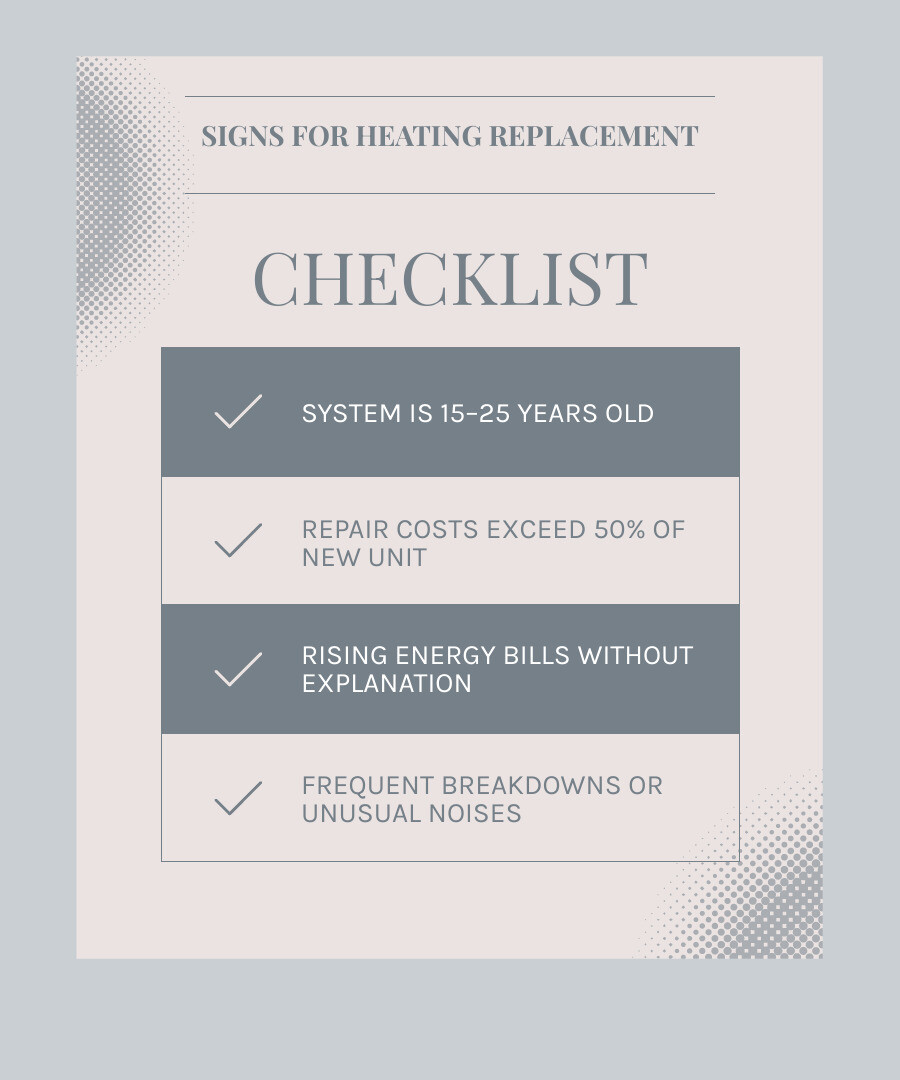
Quick answer: Key signs you need a heating system replacement
| Signal | What It Means |
|---|---|
| System is 15–25 years old | Approaching or past typical lifespan |
| Repair costs exceed 50% of a new unit | Replacement is more cost-effective |
| Energy bills rising without explanation | System efficiency is declining |
| Frequent breakdowns | Components are failing |
| Uneven heat or cold spots | System is undersized or failing |
| Unusual noises or yellow burner flame | Potential safety risk |
If two or more of these apply to your home right now, it’s time to seriously consider a full replacement rather than another repair.
Heating and cooling account for roughly 51% of a home’s total energy use. When your heating system starts to fail, you feel it — in your comfort, your monthly bills, and eventually your wallet. A failing furnace in a Rhode Island winter isn’t just inconvenient. It can become a safety issue, especially if you’re dealing with an aging system that may be leaking carbon monoxide.
The good news: modern heating systems are dramatically more efficient than systems installed even 15 years ago. Older furnaces often operate at just 60–70% efficiency. Today’s high-efficiency models can reach up to 95% AFUE, meaning nearly every dollar you spend on fuel actually heats your home.
I’m Richard Marcello, President of Advanced Heating & Cooling in Smithfield, RI, and I’ve spent over 30 years guiding Rhode Island homeowners through heating system replacement decisions — from sizing the right equipment to navigating local rebates. In this guide, I’ll walk you through everything you need to know to make a smart, confident choice this winter.
Heating system replacement vocab explained:
Telltale Signs It’s Time for a Heating System Replacement

Living in Smithfield or North Smithfield means dealing with some serious New England winters. When your heater starts acting up, the first question is always: “Can I just fix it one more time?” To help our neighbors make that call, we use a few industry standard benchmarks.
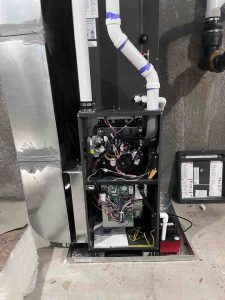
First, consider the equipment age. Most modern furnaces are designed to last between 15 and 25 years. However, if you have a heat pump, that window is slightly shorter, typically 10 to 15 years. If your system was installed before 2010, you are likely missing out on significant technological leaps in energy efficiency.
We often recommend the 50% repair rule: if a single repair estimate costs 50% or more of the price of a new unit, it’s time to move on. Another helpful tool is the $5,000 decision rule. You multiply the age of your unit by the cost of the repair. If the total is over $5,000, a heating system replacement is usually the smarter financial move. For example, a $500 repair on a 12-year-old furnace equals $6,000—making replacement the better bet.
Beyond the math, listen to your home. Are you hearing banging, whistling, or thumping? These are signs of mechanical fatigue. Most importantly, look at your burner flame. It should be a crisp, steady blue. A yellow or flickering burner flame is a red flag for incomplete combustion, which can lead to carbon monoxide leaks. If your CO alarm goes off or you experience unexplained flu-like symptoms, evacuate and call for help immediately.
For more detailed diagnostics, check out our guide on When Is It Time To Replace Your Hvac System or learn about Beyond The Burner Finding Top Furnace Replacement Services In Smithfield.
Comparing Modern Heating Options: Furnaces, Heat Pumps, and Boilers
Choosing a new system isn’t just about picking a brand; it’s about picking the right technology for your specific home in Greenville or Johnston. Here is how the most common systems stack up:
| System Type | Avg. Equipment Cost | Efficiency Metric | Best Suited For |
|---|---|---|---|
| Gas Furnace | $1,800 – $4,000+ | 80% – 98% AFUE | Homes with existing gas lines and ductwork |
| Electric Furnace | $1,850 – $2,750 | 100% AFUE (High Op. Cost) | Warmer climates or backup heat |
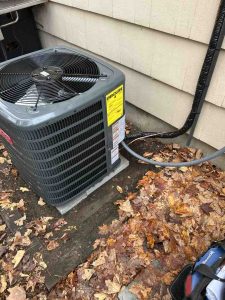
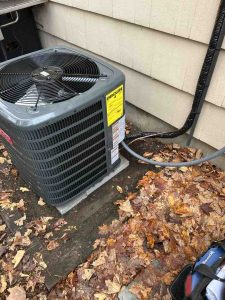
| Air-Source Heat Pump | $4,200 – $7,600+ | SEER2 / HSPF2 | Energy-conscious homes; dual heating/cooling |
| Boiler (Condensing) | $3,500 – $8,000+ | Up to 95% AFUE | Older homes with radiators or baseboard heat |
In Smithfield, many older homes rely on boilers to distribute steam or hot water. Modern condensing boilers are much quieter and more compact than the “monsters” found in basements 30 years ago. If you’re a business owner, you might also be looking at Seamless Commercial Ac Heating Replacement A Business Owners Guide to understand how these systems scale for larger spaces.
If you are curious about specific local services, you can find expert help for HVAC in North Smithfield RI | Comfort Systems | Heat Pumps.
The Rise of the Heat Pump as a Heating System Replacement
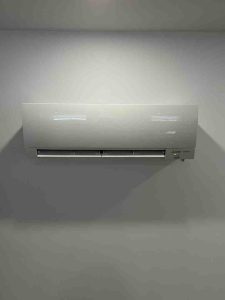
Heat pumps are often called the “Tesla of HVAC.” Unlike a furnace that creates heat by burning fuel, a heat pump simply moves heat from the outside air into your home. Even when it’s cold out, there is thermal energy to be found.
Modern cold-climate heat pumps are now a viable primary heating source for Rhode Island. They are incredibly efficient, often providing 3 to 4 units of heat for every 1 unit of electricity used. Plus, they handle your air conditioning in the summer, simplifying your home maintenance. If your current system is failing, reading When Your Hvac Acts Up A Comprehensive Repair Handbook can help you understand if a transition to heat pump technology is right for you.
Understanding AFUE in Furnace Heating System Replacement
If you stick with a gas furnace, the most important number you’ll see is the AFUE (Annual Fuel Utilization Efficiency). Think of this as the “MPG” for your heater. An 80% AFUE furnace wastes 20 cents of every dollar up the chimney. A 95% AFUE model wastes only 5 cents.
High-efficiency models often feature variable-speed blowers and modulating gas valves, which allow the furnace to adjust its output precisely to the weather outside, rather than just blasting on and off. This is a key focus when we handle Heating Up Profits Expert Commercial Furnace Replacement In Smithfield.
Financial Planning: Heating System Replacement Costs in 2026

Budgeting for a heating system replacement in 2026 requires looking at the “total project cost,” not just the price of the unit. For a typical 2,000 sq. ft. home in Rhode Island, you can expect total costs (equipment plus labor) to range from $5,000 to $12,500 for a standard furnace, or up to $22,000 if you are installing a high-end heat pump system with ductwork modifications.
Several factors determine your final quote:
- System Capacity: Measured in BTUs or tons. Bigger isn’t always better (more on that below).
- Infrastructure: If you are switching from oil to gas, or adding ductwork where none existed, labor costs will rise.
- Permit Fees: Local building codes in places like Esmond or Mapleville require inspections to ensure safety.
- Labor Rates: Professional installation typically accounts for about $1,500 to $3,000 of the total bill.
For a deeper dive into these numbers, see Your Homes Hvac Replacement What To Expect Financially. If you are facing a financial hardship, the Rhode Island Heating System Repair and Replacement Program (HSRRP) may be able to provide assistance to eligible households.
Maximizing ROI with High-Efficiency Heating System Replacement
While high-efficiency systems cost $1,000 to $2,500 more upfront, the return on investment (ROI) in 2026 is stronger than ever. Thanks to the Inflation Reduction Act, federal tax credits can cover up to 30% of the cost of a heat pump installation, capped at $2,000 annually.
Locally, RI Energy and Clean Heat Rhode Island offer substantial rebates—sometimes over $1,000—for switching to high-efficiency electric heat pumps. When you combine these incentives with monthly fuel savings of 15–40%, the “premium” for a better system often pays for itself in just a few years. We specialize in helping you find these savings through Smart Spending How To Get An Accurate Furnace Replacement Estimate In Smithfield.
The Installation Process and Professional Sizing
The most critical day in the life of your heating system is the day it is installed. If a contractor just looks at your old unit and says, “Yep, we’ll put in the same size,” they are doing you a disservice.
We perform a Manual J load calculation. This technical assessment looks at your home’s square footage, insulation levels, window quality, and even the direction your house faces. An oversized unit will “short-cycle,” turning on and off too frequently, which wears out the motor and leaves you with cold spots. An undersized unit will run constantly, spiking your bills and failing to keep you warm during a Stillwater freeze.
A standard heating system replacement typically takes 4 to 8 hours. If we are doing a complex job involving new gas lines or ductwork, it might take 1 to 2 days. Once the unit is in, we perform “commissioning”—testing the airflow, gas pressure, and safety limits to ensure everything meets manufacturer specs.
If you find yourself without heat in the middle of the night, we offer When The Heats Off Finding Emergency Furnace Replacement Service. For our business clients, we provide similar precision in Unpacking The Price Tag Commercial Ac Unit Replacement.
Frequently Asked Questions about Heating Replacement
Should I replace my AC and heating system at the same time?
In almost every case, yes. Your furnace and AC often share the same blower motor and ductwork. Replacing them together ensures the components are perfectly matched, maintains your full manufacturer warranty, and saves you significantly on labor costs compared to doing them separately.
How long does a typical heating system replacement take?
For a straightforward furnace-for-furnace swap, expect the crew to be in your home for 4 to 8 hours. If you are switching fuel sources (like oil to gas) or installing a full heat pump system with a new indoor coil, it can take one to two full days.
What is the best month to schedule a new installation?
Spring and early fall (the “shoulder seasons”) are the best times. Demand is lower, which means shorter wait times and often better pricing or seasonal promotions from manufacturers. Waiting until your system breaks in January means you’ll be making a rushed decision while your family is freezing—never a fun position to be in!
Conclusion
A heating system replacement is more than just a purchase; it’s an investment in your family’s safety and comfort. At Advanced Heating & Cooling, we’ve spent over 30 years serving our neighbors in Smithfield, Johnston, North Smithfield, and the surrounding areas. We pride ourselves on honest, quality workmanship and a “building science” approach that ensures your new system is sized perfectly for your home.
Don’t wait for a total system failure to start your research. Whether you’re interested in a high-efficiency gas furnace or a modern heat pump, we’re here to provide the expert guidance you need. We offer free estimates to help you plan your project without any pressure.
Ready to upgrade your home comfort? Contact Us for a Heating Installation Estimate today and let’s get your home ready for whatever winter throws our way.