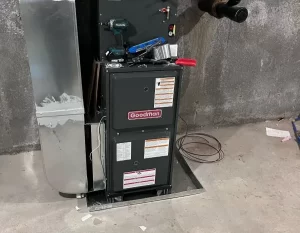
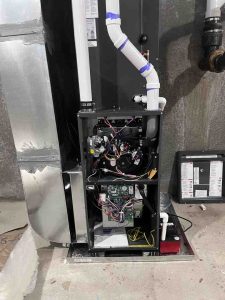
A whole house humidifier connects to your furnace and adds moisture to the air that flows through your home. It helps with dry skin, static shocks, cracked wood, and scratchy throats in winter. Installation ties the unit into your ductwork, a water line, a drain, and the furnace controls. This guide explains how it works, what the installation visit looks like, and how to use it well.
Rhode Island winters are cold and dry indoors, because heating the air makes it lose moisture. Many homeowners notice the problem by January. At Advanced Heating & Cooling, we install humidifiers that work with your existing furnace and help you set them up so they work well and stay safe.
Why Winter Air Feels So Dry
Cold air outside holds very little water. When it comes inside and gets heated, the air becomes even drier. A furnace running for many hours each day makes this worse.
Dry air can cause many small problems. You may notice dry skin, chapped lips, and nosebleeds. Wood floors and furniture can shrink and crack. You may also get more static shocks when you touch a doorknob.
Some people feel that a home at the right humidity feels warmer, too. It is a comfort issue more than a heating issue, but the two are linked. Moist air can feel more comfortable at a given temperature.

How a Whole House Humidifier Works
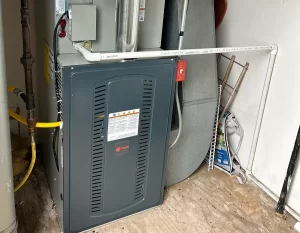
A whole house humidifier mounts on or near your furnace. It uses a water line to bring in a small amount of water. The unit turns that water into vapor and adds it to the air moving through your ducts.
A control called a humidistat watches the humidity level in your home. When the air is too dry, the humidifier turns on. When the air reaches the level you set, it turns off.
Because it uses your ductwork, it covers the whole home. That is different from a portable humidifier, which only helps one room and has to be refilled by hand.
Types of Whole House Humidifiers
There are a few common types, and each works a little differently. Your technician can help you choose based on your furnace and your home.
- Bypass humidifiers use warm air from the furnace to evaporate water from a pad
- Fan powered humidifiers use a small fan to push more moisture into the air
- Steam humidifiers heat water to make steam, and they work in many setups
Bypass models are common because they are simple and use the furnace blower. Steam models make moisture quickly and can fit homes where a bypass will not work. You can learn about one style in our post on downflow humidifiers.
What Happens on Installation Day
A good installer starts by looking at your furnace and ductwork. They find the best spot for the unit, near a water line and a drain. They also check that your furnace and blower can support it.
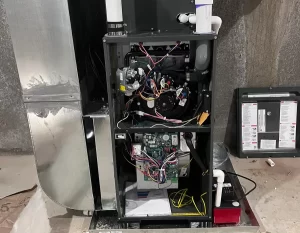
Next, they cut an opening in the duct and mount the humidifier. They connect a small water line, run a drain line, and wire the unit and the humidistat. They then turn on the water and power and test the system.
Before they leave, they set the humidity level and show you how to use the controls. They should also explain how to replace the water panel or pad, since that is a regular task.

Setting the Right Humidity Level
More humidity is not always better. If the air is too moist, you can get condensation on windows, damp spots, and even mold. The right level changes with the outdoor temperature.
In very cold weather, a lower setting protects your windows. In milder weather, you can set it a bit higher. Many humidistats have a guide printed on them, and your installer can tell you what is best for your home.
A small meter called a hygrometer shows the humidity in a room. It is a good way to check your settings. If you see water on the inside of the windows, turn the humidity down.
Can You Install a Humidifier Yourself?
Some people try it, and we wrote about the process in our DIY humidifier guide. The job involves water, drain lines, ductwork, and low voltage wiring. A mistake can cause leaks, rust, or damage to the furnace.
A professional install also gives you a tested, working system. The technician can set it up so it does not strain the furnace. If you are not comfortable with water lines and wiring, we recommend having a technician do it.
Our posts on adding a humidifier to your furnace and the benefits of a central HVAC humidifier explain more about what you can expect.
Keeping Your Humidifier Working Well
A humidifier needs a little care. Minerals in the water build up on the pad or panel over time. Replace it on the schedule in the manual, often once a year.
Check the drain line and water line each season. Look for leaks, clogs, or stains. At the end of the heating season, turn off the water supply and set the unit to off. Then turn it on again in the fall.
- Replace the water panel on schedule
- Check for leaks around the unit and the drain
- Turn off the water in spring and restart in fall
- Keep the humidistat set to a safe level
- Have it checked during your yearly furnace tune-up
A furnace tune-up is a good time to have the humidifier checked too. The technician can look at the pad, the water flow, and the controls.

Is a Humidifier Right for Your Home?
A humidifier helps most when the air in your home is dry for much of the winter. If you notice dry skin, static, and cracking wood, it may be worth looking at. If your home already has high humidity or damp spots, you may not need one.
Ask a technician to measure your indoor humidity first. That gives you real numbers and helps avoid guessing. If you have a very tight home or a lot of windows with condensation, a technician can advise you.
Conclusion
A whole house humidifier adds moisture to your home through your furnace and ductwork. A professional installation connects the water, drain, and controls, and sets the right humidity level. A little care each year keeps it working and keeps your air comfortable.
Want to talk about a humidifier for your home? Contact Advanced Heating & Cooling and we will help you pick the right setup.