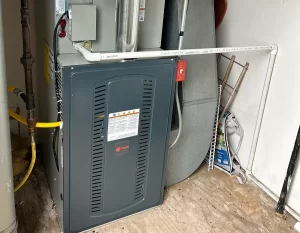
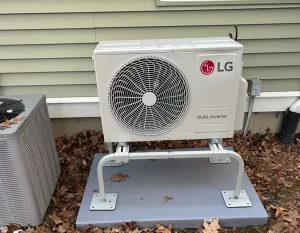
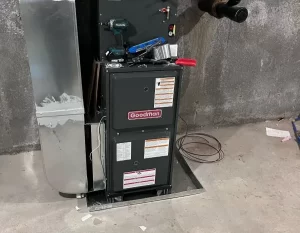
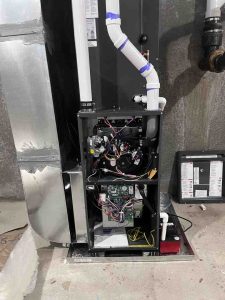
Most furnace repairs come from a short list of problems, like a dirty flame sensor, a bad igniter, a worn blower motor, or a clogged filter. A technician finds the cause by testing the system step by step. Many fixes can be done in one visit if the part is on the truck. This guide explains the common problems, how a repair visit works, and how to decide between repairing and replacing.
At Advanced Heating & Cooling, we answer furnace calls across Rhode Island. Cold weather puts stress on every heating system, and we know which problems show up most. Knowing them helps you describe the problem clearly when you call.
The Most Common Furnace Problems
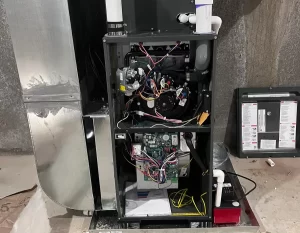
A furnace has many moving parts, but a few of them cause most no-heat calls. Understanding them makes it easier to follow what the technician tells you. Here are the problems we see most often:
- Dirty or failed flame sensor
- Cracked or worn igniter, or a pilot light that will not stay lit
- Clogged air filter that causes overheating
- Worn blower motor or a bad capacitor
- Thermostat that is wrong, dead, or out of place
- Blocked vent or intake pipe
- Faulty control board
- Cracked heat exchanger
The first few are the easiest to fix. A flame sensor gets coated with a thin layer of dirt, and the furnace thinks there is no flame. It shuts the gas off for safety. Cleaning or replacing the sensor often brings the furnace right back.

How a Furnace Repair Visit Works
A good repair visit follows a clear path. First, the technician asks what you noticed. Did it stop suddenly or slowly get worse? Did you hear a sound or smell anything?
Next, the technician checks the thermostat, the power, and the air filter. Then they watch the furnace go through its start-up steps and see where it stops. This is called a sequence of operation, and it tells them which part is not doing its job.
Once they find the cause, they explain it in plain words. They should show you the part if they can. You then decide how to move forward, and the work only starts once you agree.
What You Can Check Before You Call
Some quick checks can solve the problem or give the technician helpful clues. These are safe to do on your own. Never open the furnace or touch gas or wiring.
- Make sure the thermostat is on heat and set above room temperature
- Replace the batteries in the thermostat
- Check that the furnace power switch is on
- Look at the breaker panel for a tripped breaker
- Replace a dirty air filter
- Look outside for snow or ice blocking vent pipes
Our guide on what to check when your furnace will not turn on goes through these steps in more detail. If none of them help, it is time for a professional. If you smell gas, leave the house and call from outside.
Problems That Are Safety Issues
Some furnace problems are about safety and not comfort. These should never be put off. A cracked heat exchanger can let carbon monoxide into your home. A blocked vent can push exhaust gases back inside.
Warning signs include soot near the furnace, a yellow or flickering flame, and headaches or dizziness at home. If your carbon monoxide alarm sounds, get everyone outside and call 911. You can read more in our post on carbon monoxide and your furnace.
Technicians are trained to test for these problems. That is why a yearly furnace tune-up matters. It catches safety issues before they become emergencies.
Repair or Replace?
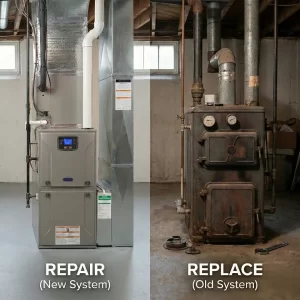
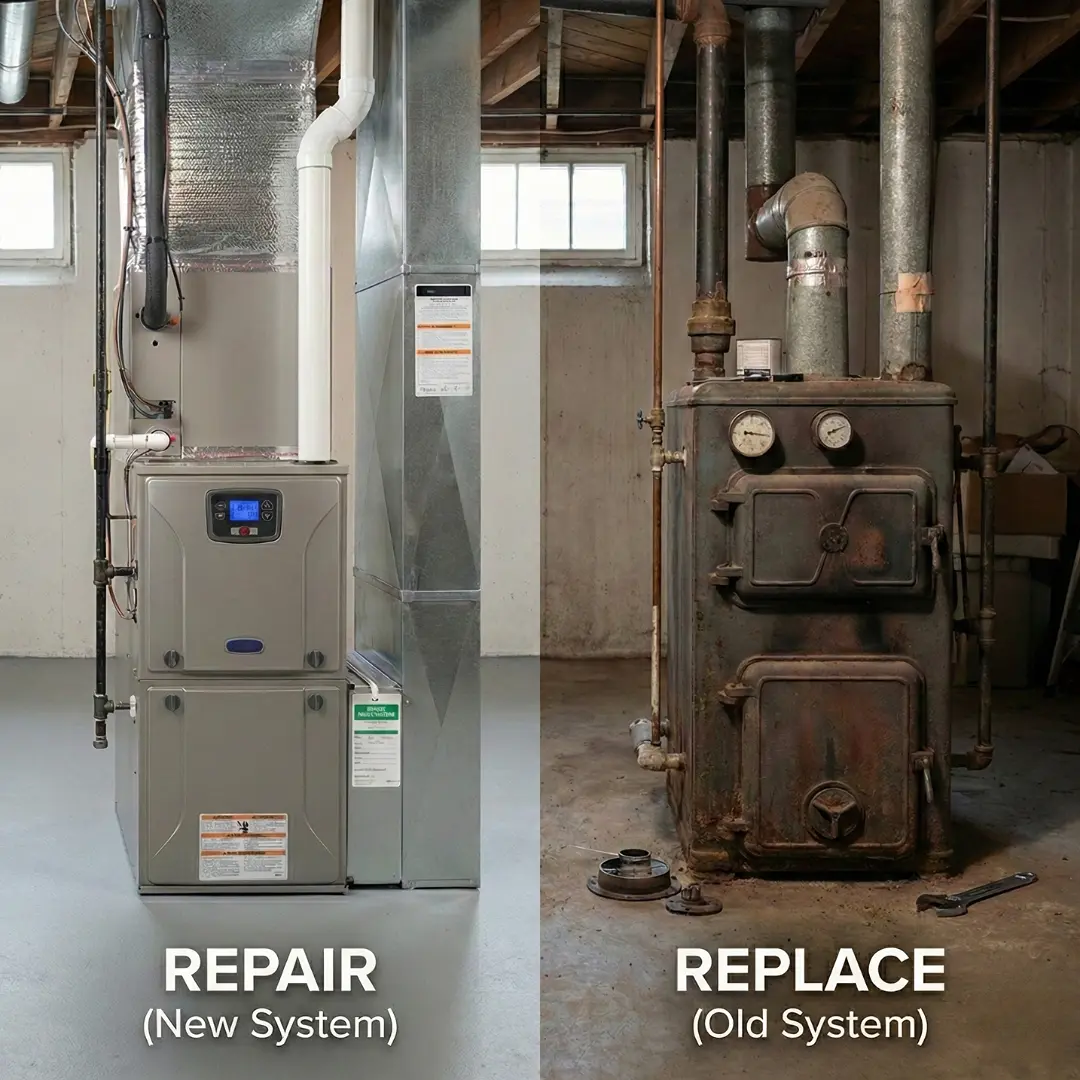
Many homeowners wonder if they should fix the furnace they have or put in a new one. The answer depends on a few things. The age of the furnace is the biggest one. The type of problem and how often it has been repaired also matter.
A repair usually makes sense when the furnace is not old and the problem is small. Replacement may be the better path when the furnace is near the end of its life, has been repaired many times, or has a cracked heat exchanger. Our post on how long a furnace lasts explains the signs in more detail.
We will tell you honestly which makes more sense for your home. We do not push a new system if a repair will do the job. If replacement is the right call, our heating installation team can walk you through your options.
Why Parts and Timing Matter
Some repairs take minutes, and others take longer. Common parts like igniters, sensors, and capacitors are often on the truck. Older furnaces can need parts that are harder to find, which may mean a second visit.
Timing matters too. Cold nights and storms create more calls at once. Calling early in the day and being clear about the problem helps us get to you faster. If you have no heat and the weather is very cold, tell us so we can treat it as urgent.
How to Avoid Repeat Problems
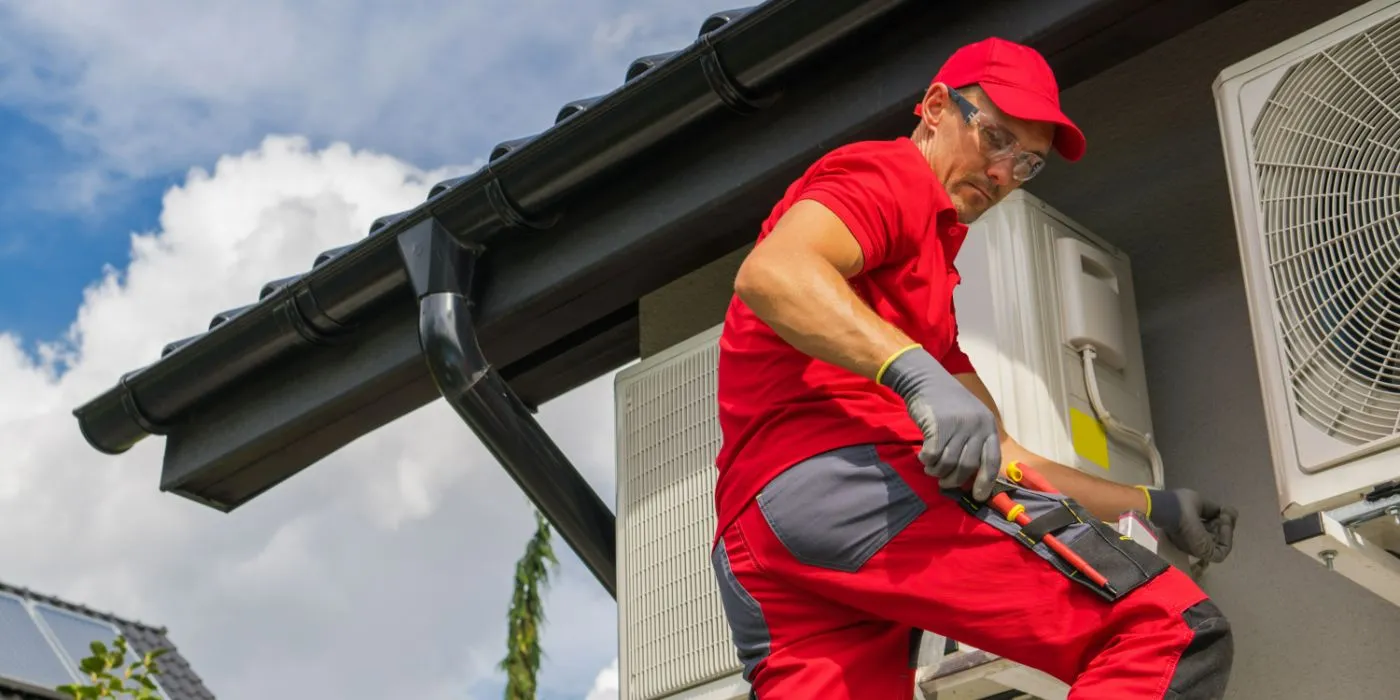
Most furnace repairs can be avoided with simple care. Change the air filter on schedule, keep the area around the furnace clear, and keep vents open. Have the furnace checked every year.
Pay attention to small changes. A new sound, a longer start-up, or a cold room can be an early warning. Call when you first notice it and do not wait for a full breakdown. Our heating repair page shows how we can help.
Why Furnaces Fail During Cold Snaps
Furnaces often break down on the coldest nights, and there is a reason. A furnace works the hardest when the temperature drops, so weak parts give out first. A part that was close to failing in the fall may quit when it has to run for many hours in a row.
Cold weather also brings other stress. Snow and ice can block the outside vent and intake pipes on high efficiency furnaces. Dirty filters can choke the airflow, which makes the furnace overheat. Even a small problem can shut a furnace down for safety.
This is why a fall check is so helpful. The technician can find weak parts and worn belts before the first deep freeze. If you have a furnace that is older, you can also plan ahead and avoid a rush call in the middle of a storm.
Questions to Ask the Technician
A repair visit goes best when you ask good questions. You do not need to know the technical words. Just ask the technician to explain things in plain language.
- What failed, and what caused it to fail?
- Is this a safety issue or a comfort issue?
- Will the repair last, or are other parts also worn?
- Is there a warranty on the part and the labor?
- How much life does the furnace have left?
Conclusion
Most furnace repairs come from a short list of problems, and a skilled technician can find the cause quickly. Try the safe checks first, never open the furnace yourself, and treat gas smells and carbon monoxide alarms as emergencies. When the furnace is old or keeps failing, ask about replacement.
Need your furnace fixed? Contact Advanced Heating & Cooling and we will get a technician to your home.