How to Replace Your Commercial HVAC in Rhode Island Without Losing Your Cool
What Rhode Island Businesses Need to Know About Commercial HVAC Replacement
Commercial HVAC replacement in Rhode Island is one of the biggest mechanical investments your business will make — and getting it wrong can mean weeks of downtime, wasted money, and a system that still underperforms.
Here’s a quick overview of what’s involved:
| Step | What to Expect |
|---|---|
| Assess your system | Check age, repair history, and energy costs |
| Choose your system type | RTU, VRF, heat pump, or boiler depending on your building |
| Get a load calculation | Proper sizing requires a professional Manual J assessment |
| Pull permits | Rhode Island requires mechanical permits and EPA Section 608 compliance |
| Installation | Typically 1 day to several days depending on complexity |
| Apply for rebates | Rhode Island Energy programs can reduce costs by $300–$2,000+ |
Most commercial HVAC systems last 15 to 20 years. Once yours starts aging out — or repair bills start stacking up — replacement is almost always the smarter financial move.
Rhode Island’s climate makes this even more pressing. Cold winters and increasingly humid summers put serious strain on commercial equipment. An aging system doesn’t just cost more to run — it puts your business operations, your employees, and your customers at risk.
I’m Richard Marcello, President of Advanced Heating & Cooling, and over my 30+ years in the industry I’ve guided hundreds of Rhode Island business owners through commercial HVAC replacement in Rhode Island — from small retail shops in Smithfield to large warehouse facilities across the state. In this guide, I’ll walk you through everything you need to make a confident, informed decision.
Key Indicators That You Need Commercial HVAC Replacement in Rhode Island
A commercial HVAC system rarely fails without warning. It usually drops hints first: higher utility bills, hot and cold spots, strange noises, more frequent service calls, or employees quietly bringing desk fans and space heaters into the building like they are preparing for battle.
The most common signs that replacement may make more sense than another repair include:
- Your system is 15 to 20 years old: This is the typical replacement window for many commercial HVAC systems in Rhode Island.
- Energy bills keep rising: If usage has not changed but costs are climbing, the equipment may be losing efficiency.
- Repairs are becoming routine: One repair is normal. Repeated emergency calls are a pattern.
- Comfort is inconsistent: Conference rooms that overheat while reception areas stay chilly usually point to capacity, airflow, zoning, or controls issues.
- The system uses outdated refrigerant: Older R-22 systems are increasingly expensive to service because R-22 is no longer produced or imported in the U.S.
- Major components are failing: Compressor replacement can cost roughly $3,000 to $10,000, and complex commercial cases can exceed $15,000.
- The equipment is disrupting business: If downtime affects customers, tenants, employees, inventory, or production, replacement can become an operations decision, not just a mechanical one.
If you are already seeing these warning signs, our deeper guide to commercial AC and heating replacement explains how to think through the decision before the system fails at the worst possible time.
Evaluating Repair vs. Replacement Costs
A helpful rule of thumb is the 50% rule: if a repair costs around half the price of replacing the system, replacement is usually the better long-term investment.
That rule becomes even more important when the system is older, inefficient, or repeatedly breaking down. For example, replacing a compressor on a 17-year-old rooftop unit may get the system running again, but it does not reset the age of the coils, blower motor, controls, heat exchanger, ductwork, or electrical components.
When we help businesses in Smithfield, North Smithfield, Johnston, Greenville, Forestdale, and nearby areas compare repair and replacement, we look at:
- The age of the equipment
- The cost of the immediate repair
- The repair history over the past 12 to 36 months
- Current energy usage
- Whether replacement parts are readily available
- How downtime affects the business
- Whether rebates or financing can reduce the net replacement cost
A cheap repair is not always cheap if it leads to another breakdown next month. On the other hand, not every older system needs immediate replacement. The right answer depends on the whole picture.
For more detail on what drives pricing, see our guide to commercial AC unit replacement costs.
The Impact of System Age and Efficiency
Older commercial HVAC systems can cost more in two ways: direct energy use and indirect business disruption.
A system installed 20 years ago was built to older efficiency standards. Modern high-efficiency equipment can reduce heating and cooling energy use by up to 50% compared with systems installed 20 years ago, depending on the building, controls, insulation, ventilation needs, and operating schedule.
Efficiency also shows up in comfort and productivity. If your HVAC system cannot keep up during a humid Rhode Island summer or a cold winter morning, the building becomes harder to manage. Employees get uncomfortable. Customers leave sooner. Tenants complain. Sensitive inventory may be affected.
Key efficiency ratings to understand include:
- SEER or SEER2: Measures cooling efficiency for air conditioners and heat pumps.
- EER or IEER: Often used for commercial cooling efficiency, especially under part-load conditions.
- AFUE: Measures furnace fuel efficiency. Upgrading from an older 80% AFUE furnace to a 95%+ AFUE unit can reduce heating fuel use significantly.
- COP and HSPF2: Commonly used for heat pump performance.
Efficiency matters even more as Rhode Island businesses think about electrification, decarbonization, and long-term utility costs. Heat pumps, VRF systems, advanced controls, and better zoning can all support lower operating costs when properly designed.
Choosing the Right System for Your Rhode Island Business
Choosing the right replacement system is not just about swapping “like for like.” Sometimes that works. Other times, the old system was oversized, undersized, poorly zoned, or never designed for how the building is used today.
A good replacement plan considers:
- Building size and layout
- Hours of operation
- Occupancy levels
- Ventilation requirements
- Indoor air quality needs
- Existing ductwork or piping
- Electrical capacity
- Roof access and structural limitations
- Zoning needs for offices, retail areas, storage rooms, kitchens, or production spaces
- Noise requirements
- Budget and rebate eligibility
Common commercial HVAC systems we replace or install in Rhode Island include:
- Packaged rooftop units
- Split systems
- Heat pumps
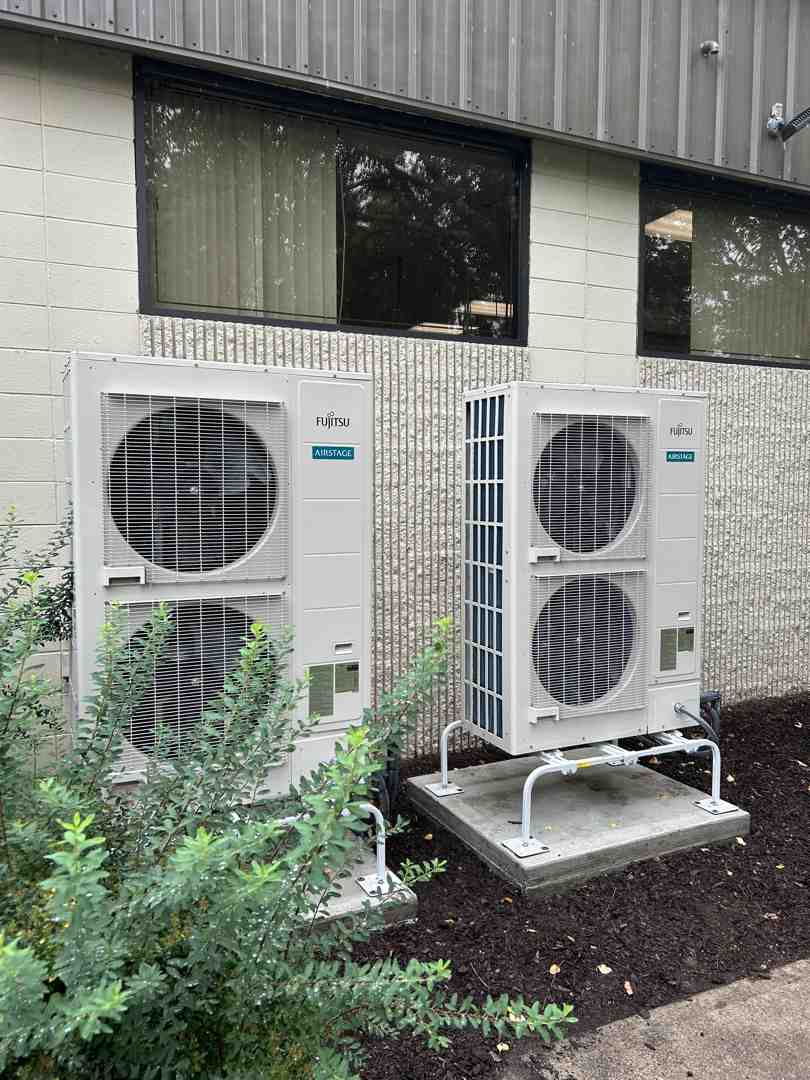
- VRF systems
- Furnaces
- Boilers
- Ductless and ducted mini-split systems
- Hybrid systems using more than one technology
For a broader breakdown of system options, visit our guide to commercial HVAC system choices.
Rooftop Units (RTUs) vs. VRF Systems
Two common options for commercial properties are rooftop units and VRF systems.
Rooftop units, or RTUs, are packaged systems installed on the roof. They are common for retail spaces, offices, restaurants, warehouses, and many light commercial buildings. They can be cost-effective, relatively straightforward to replace, and easier to service when roof access is good.
VRF systems, or variable refrigerant flow systems, use refrigerant piping to connect outdoor units with multiple indoor units. They are known for zoning flexibility and strong part-load efficiency. They can be a smart option for buildings with different comfort needs in different areas.
| Feature | Rooftop Units | VRF Systems |
|---|---|---|
| Best fit | Retail, offices, warehouses, light commercial spaces | Offices, multi-zone buildings, mixed-use spaces |
| Installation style | Packaged unit on roof | Outdoor unit connected to multiple indoor zones |
| Zoning | Moderate, depending on ductwork and controls | Excellent zone-by-zone control |
| Efficiency | Good to high, depending on model | Often very high, especially at part load |
| Disruption | Often faster for direct replacements | Can require more indoor work |
| Maintenance access | Roof access required | Indoor and outdoor components need service |
| Upfront cost | Often lower | Often higher |
| Comfort control | Good with proper design | Excellent for varied spaces |
Neither system is automatically “best.” The best option is the one that fits the building, the budget, and the way your business operates.
Commercial HVAC Replacement in Rhode Island: Sizing and Load Calculations
Sizing is where many replacement projects go wrong.
It is tempting to look at the existing unit and say, “Just give me the same size.” But if the old unit was wrong, replacing it with the same capacity repeats the same problem for another 15 to 20 years. That is a long time to live with bad airflow.
A proper commercial load calculation considers:
- Square footage
- Ceiling height
- Insulation levels
- Window size and orientation
- Roof exposure
- Air leakage
- Number of occupants
- Computers, printers, kitchen equipment, lighting, and machinery
- Ventilation requirements
- Building schedule
- Existing ductwork condition
You may hear rough rules such as one ton of cooling for every 300 to 350 square feet. That can be useful for a very early conversation, but it is not enough for final equipment selection.
A professional Manual J or commercial load calculation helps prevent two expensive mistakes:
- Oversizing: The system short cycles, wastes energy, creates humidity problems, and wears out faster.
- Undersizing: The system runs constantly and still cannot keep the building comfortable.
In commercial buildings, airflow matters just as much as tonnage. Duct restrictions, dirty coils, failing economizers, or poor controls can make even a correctly sized unit perform poorly.
Navigating Costs, Permits, and Rebates in RI
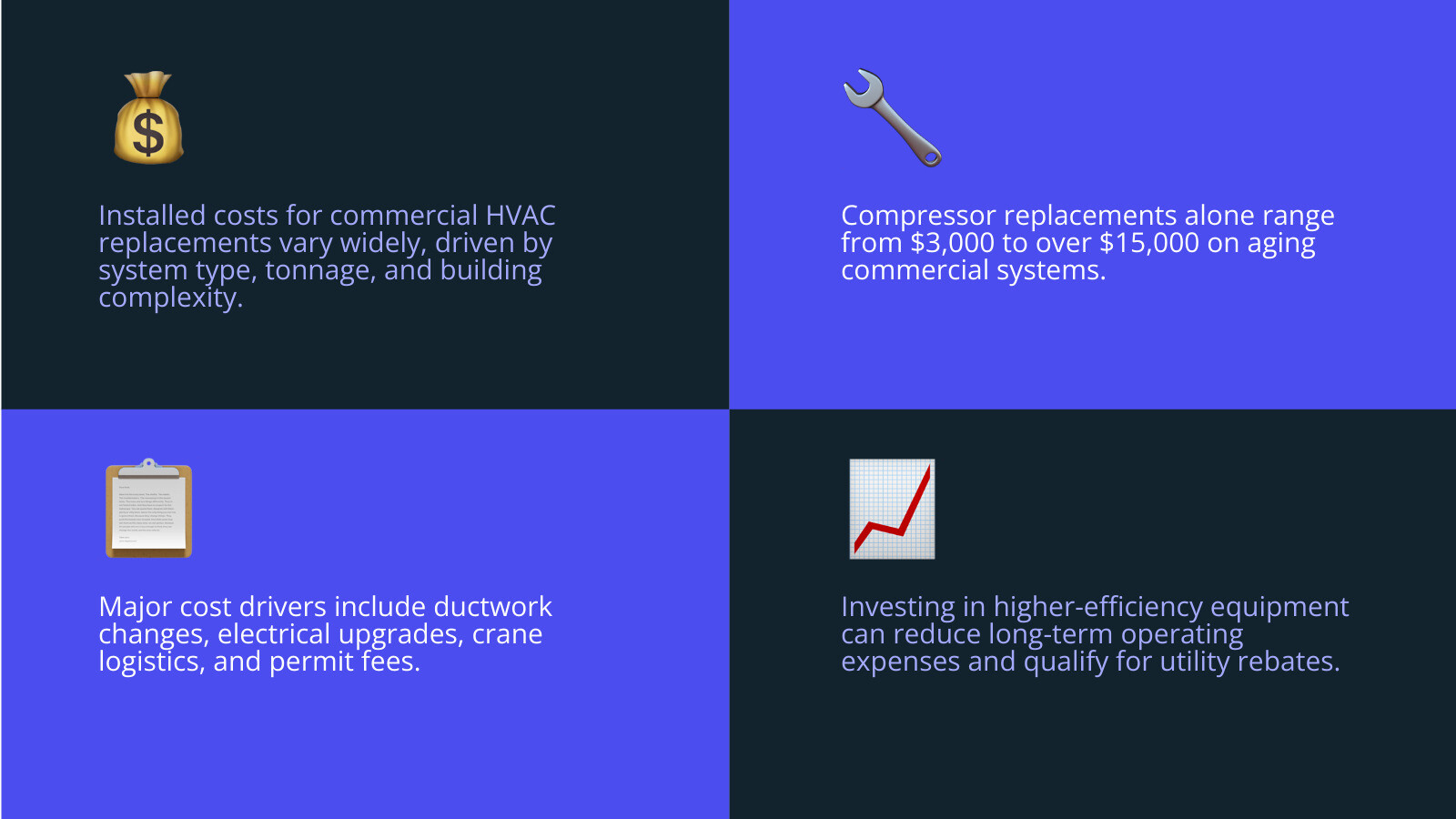
Commercial HVAC replacement costs vary widely because commercial buildings vary widely. A small office with accessible equipment is very different from a multi-zone building requiring ductwork changes, crane coordination, electrical upgrades, and after-hours scheduling.
Major cost factors include:
- System type and capacity
- Equipment efficiency level
- Number of zones
- Ductwork or piping modifications
- Controls and thermostats
- Building automation integration
- Electrical upgrades
- Roof curb or structural work
- Crane or lift requirements
- Permit and inspection fees
- Refrigerant recovery and disposal
- Labor complexity
- Timeline requirements
For context, residential and light commercial heat pump installations in Rhode Island can range from about $5,000 to $14,000 installed, depending on the existing infrastructure. Commercial projects can be higher depending on tonnage, access, system design, and building complexity.
A compressor replacement alone can cost $3,000 to $10,000, with some complex cases exceeding $15,000. That is why a major repair on an aging commercial system deserves a serious replacement conversation.
Rhode Island Building Codes and Compliance
Commercial HVAC replacement in Rhode Island is not just a mechanical swap. It must comply with applicable state and local requirements.
Important compliance areas include:
- Mechanical permits: Commercial HVAC work typically requires permits through the local municipality.
- Rhode Island State Building Code: Rhode Island adopts mechanical code requirements based on the International Mechanical Code.
- Energy code compliance: Equipment and installation may need to meet applicable IECC or ASHRAE 90.1 energy provisions.
- EPA Section 608 certification: Technicians handling refrigerants must be properly certified under EPA Section 608 regulations.
- Electrical permits: New equipment may require electrical work, disconnects, wiring, breakers, or panel changes.
- Gas permits and venting requirements: Furnaces, boilers, and gas-fired rooftop units must be installed with safe combustion air and venting.
- Refrigerant recovery: Old refrigerant must be recovered and handled according to federal regulations.
- Historic or older buildings: Some properties may require extra review if exterior equipment placement, penetrations, or visible changes affect protected structures.
For businesses in Smithfield, Johnston, North Smithfield, Greenville, and surrounding communities, permitting requirements can vary by town. We always recommend confirming the permit path before ordering equipment or scheduling crane work.
Cutting corners on permits can create problems later during inspections, insurance claims, property sales, tenant build-outs, or warranty claims. Not fun. Also not worth it.
Financing and Utility Rebates for Commercial HVAC Replacement in Rhode Island
The upfront cost of a commercial HVAC replacement can be significant, but businesses often have ways to reduce the financial impact.
Common options include:
- Utility rebates
- Manufacturer promotions
- Equipment financing
- Equipment leasing
- Small business loans
- SBA financing
- Capital improvement budgets
- Preventative replacement planning before emergency failure
Rhode Island rebate and incentive programs can reduce net installation costs by $300 to $2,000 or more, depending on equipment type, eligibility, and program availability. Heat pump and high-efficiency equipment incentives may change over time, so it is important to check current 2026 program details before making a final decision.
Potential incentive sources include:
- Rhode Island Energy efficiency programs
- Clean Heat RI programs where eligible
- Federal tax credits or deductions where applicable
- Manufacturer rebates
- Financing plans through qualified lenders
The best time to look at rebates is before equipment is selected. Some programs require specific efficiency ratings, contractor documentation, or pre-approval.
What to Expect During the Installation Process
A well-run commercial HVAC replacement should feel organized, not chaotic. The goal is to replace the system safely, correctly, and with as little disruption as possible.
A typical process includes:
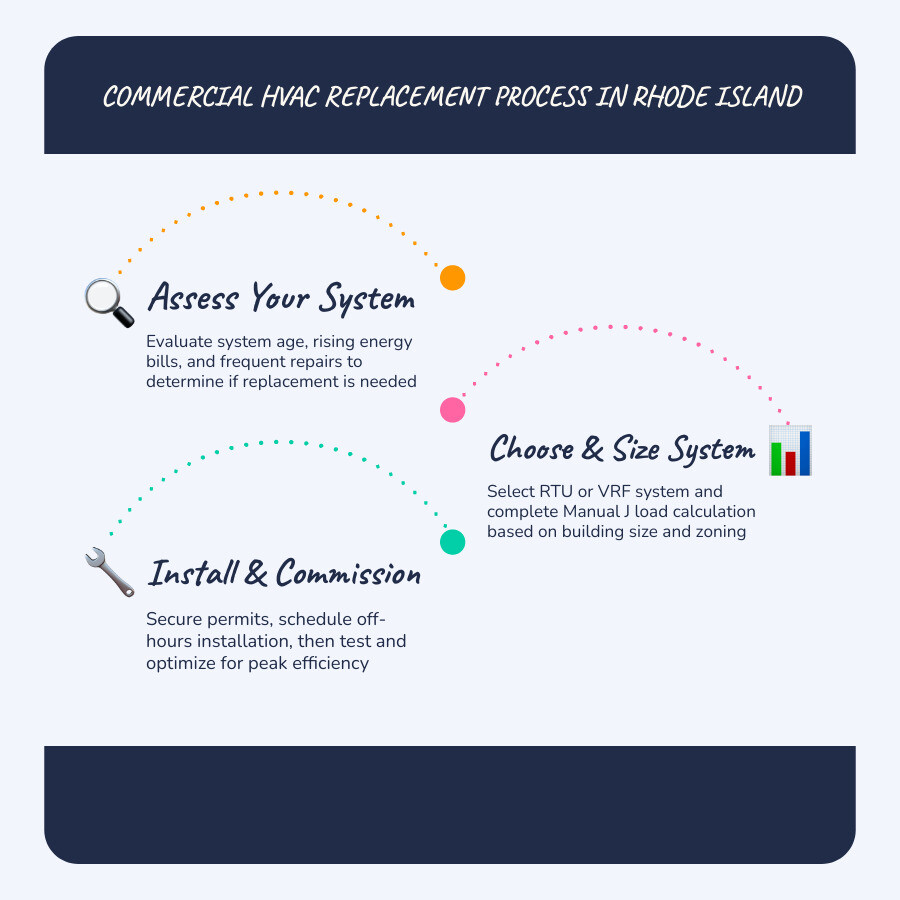
Site assessment We inspect the existing equipment, ductwork, electrical connections, gas piping, controls, roof access, and comfort complaints.
Load calculation and system selection We determine the right capacity and equipment type for the building.
Proposal and schedule You receive a clear scope of work, equipment details, timeline, and cost.
Permits and equipment ordering Required permits are handled before installation begins.
Pre-installation planning We coordinate access, parking, roof work, crane needs, safety zones, and business hours.
Removal of old equipment Refrigerant is recovered properly, utilities are disconnected, and the old unit is removed.
Installation of new equipment The new system is set, connected, sealed, wired, piped, and integrated with controls.
Ductwork or curb modifications If needed, transitions, duct repairs, economizers, dampers, or roof curb adjustments are completed.
Startup and commissioning We test refrigerant charge, airflow, temperature split, safety controls, economizer operation, thermostat communication, and overall performance.
Walkthrough We explain system operation, maintenance needs, warranty information, and recommended service intervals.
A straightforward rooftop unit swap may take 4 to 8 hours once equipment is on site and conditions are right. More complex retrofits can take several days, especially if ductwork, controls, electrical upgrades, or phased installation are involved.
For a closer look at replacement logistics, read our guide on what to expect during commercial AC replacement.
Minimizing Business Disruption
Downtime costs money. We get that.
For many commercial buildings, the replacement plan is just as important as the equipment. We work with businesses to reduce disruption through:
- Off-hours or weekend scheduling when practical
- Phased installation for multi-zone buildings
- Temporary cooling or heating when needed
- Clear communication with owners, managers, and tenants
- Safe work zones around cranes, lifts, ladders, and roof access
- Advance planning for parking and delivery access
- Weather-aware scheduling
- Fast changeouts when equipment is pre-staged
If your business has peak hours, tenant requirements, production schedules, medical storage needs, server rooms, or retail traffic patterns, those details should be discussed early. HVAC replacement should not surprise your staff on installation day like an uninvited marching band.
Post-Installation Maintenance and Longevity
A new commercial HVAC system should last 15 to 20 years with proper maintenance. Without maintenance, that lifespan can shrink quickly.
Preventative maintenance protects your investment by keeping the system clean, efficient, and safe. Important maintenance tasks include:
- Replacing filters regularly
- Cleaning condenser and evaporator coils
- Checking refrigerant levels
- Inspecting belts, motors, bearings, and electrical components
- Testing safety controls
- Verifying economizer operation
- Checking thermostat and control calibration
- Inspecting ductwork and airflow
- Cleaning drain lines
- Reviewing operating data for early warning signs
Dirty coils alone can increase energy use by 5% to 10%. Clogged filters restrict airflow, strain motors, reduce comfort, and can shorten equipment life.
For most commercial systems, we recommend scheduled maintenance at least twice per year: once before cooling season and once before heating season. Buildings with restaurants, manufacturing areas, high dust, heavy occupancy, or long operating hours may need more frequent service.
You can learn more in our guide to commercial AC maintenance.
Frequently Asked Questions About Commercial HVAC Replacement
Commercial HVAC replacement comes with big questions because it affects comfort, cash flow, operations, and long-term planning. Here are the questions we hear most often from Rhode Island businesses.
How long does a commercial HVAC replacement project take?
A simple rooftop unit replacement may be completed in one day, often within 4 to 8 hours for the actual equipment swap if the replacement is straightforward.
However, the full project timeline can be longer when you include:
- Site assessment
- Load calculation
- Proposal approval
- Equipment lead time
- Permit approval
- Crane scheduling
- Electrical or ductwork modifications
- Inspection and commissioning
More complex projects can take several days or be completed in phases. VRF systems, boiler replacements, duct redesigns, or multi-unit buildings require more planning than a direct replacement.
The best way to avoid delays is to start before the old system completely fails. Emergency replacement limits your options and often increases stress.
What is the average lifespan of a new commercial HVAC system in Rhode Island?
Most new commercial HVAC systems in Rhode Island last 15 to 20 years with consistent maintenance.
Actual lifespan depends on:
- Equipment quality
- Installation quality
- Maintenance frequency
- Runtime hours
- Filter changes
- Coil cleaning
- Refrigerant charge
- Building conditions
- Exposure to weather
- Salt, moisture, and humidity
- Whether the system was sized correctly
In northern Rhode Island communities like Smithfield, North Smithfield, Forestdale, Greenville, Slaterville, Georgiaville, Esmond, Woodville, Mapleville, Stillwater, and Johnston, systems work through both cold winters and humid summers. That year-round demand makes maintenance especially important.
Professional installation also matters. Poor installation can reduce performance, increase energy use, create safety issues, and shorten equipment life.
How do I know what size HVAC unit my commercial building needs?
You need a professional load calculation. Guessing based on square footage alone is not enough.
A contractor should evaluate:
- Building dimensions
- Insulation
- Windows and doors
- Roof exposure
- Occupancy
- Lighting
- Computers and equipment
- Ventilation needs
- Ductwork condition
- Airflow requirements
- Zoning needs
- Hours of operation
Tonnage is only one part of the answer. A commercial system must also deliver the right airflow, ventilation, humidity control, and zoning.
If your current system has always struggled, do not assume it is the right size. It may have been wrong from day one.
Conclusion
Replacing a commercial HVAC system is a major decision, but it does not have to be overwhelming. When you understand the signs of failure, compare repair and replacement honestly, choose the right system, follow Rhode Island code requirements, and maintain the equipment after installation, you can protect your business for the next 15 to 20 years.
At Advanced Heating & Cooling, we are locally owned and operated in Smithfield, RI, with 30+ years of experience serving businesses in Smithfield, Forestdale, Slaterville, Greenville, Georgiaville, Esmond, North Smithfield, Woodville, Mapleville, Stillwater, and Johnston.
We believe in honest recommendations, quality workmanship, and free estimates. If your system is aging, unreliable, or costing too much to run, we can help you evaluate your options and plan a replacement that keeps your business comfortable without losing your cool.