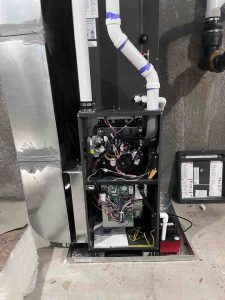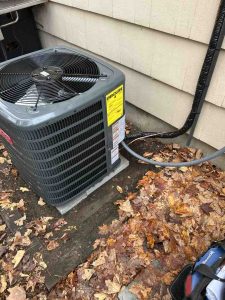
Is It Time for a New Oil Furnace Installation?
Oil furnace installation is one of the most important home heating decisions you’ll make — and if you’re here, you probably need to move fast.
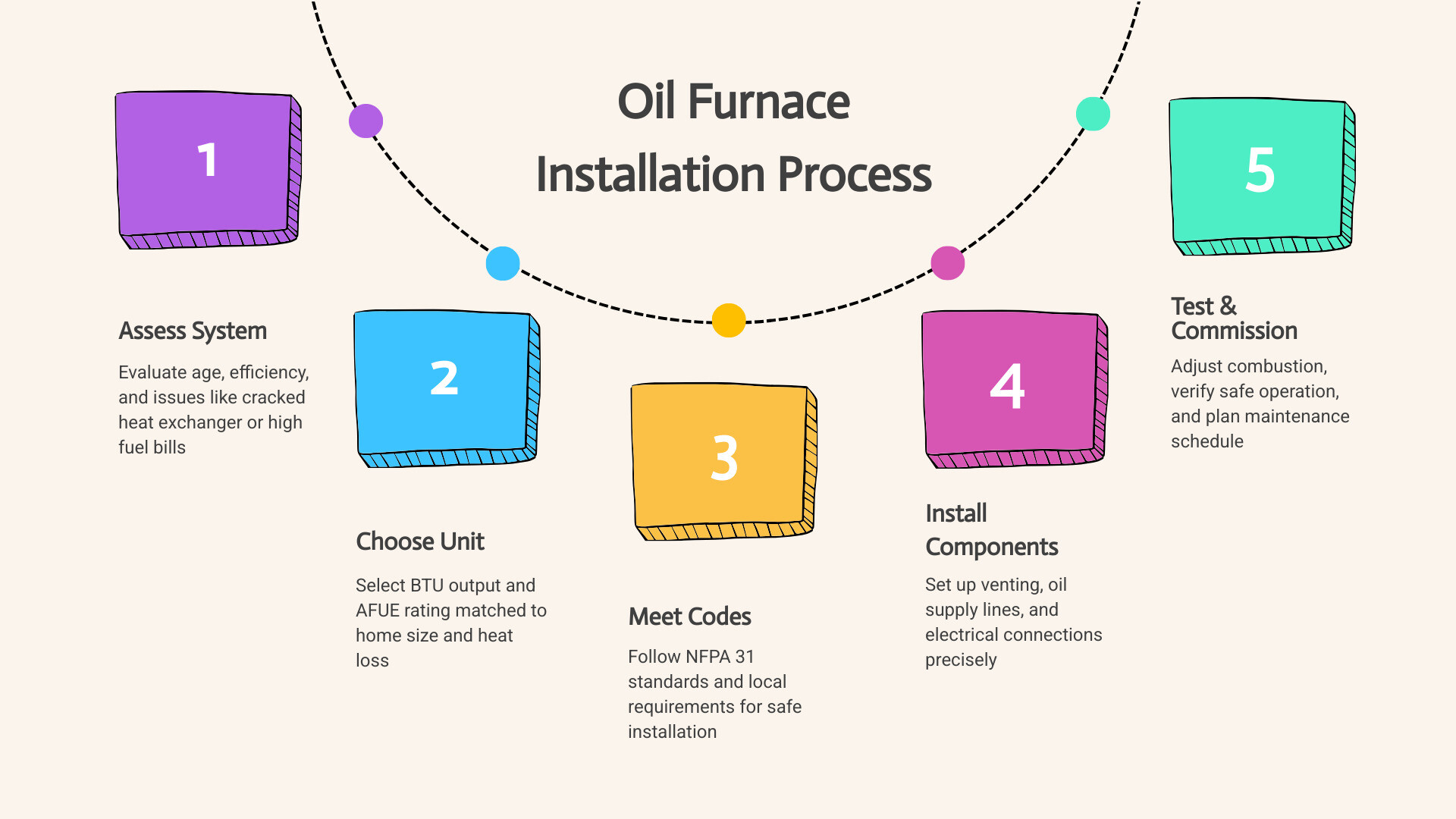
Here’s a quick overview of what the process involves:
- Assess your current system — Is it over 20 years old, inefficient, or failing?
- Choose the right unit — Match BTU output and AFUE rating to your home’s size and heat loss.
- Meet code requirements — Installation must follow NFPA 31 and local Rhode Island codes.
- Install venting, oil supply, and electrical connections — Each has strict specifications.
- Commission and test the system — A qualified technician adjusts combustion and verifies safe operation.
- Plan for ongoing maintenance — Annual tune-ups and filter changes every 90 days keep it running safely.
Most homeowners don’t think about their oil furnace until something goes wrong — a cold morning, a spike in fuel bills, or a technician mentioning a cracked heat exchanger. At that point, the question shifts quickly from “should I replace it?” to “how do I do this right, and what will it cost?”
The answer depends on several factors: the age and condition of your system, your home’s heating load, the state of your chimney and ductwork, and who you hire to do the job. A standard oil furnace replacement in Rhode Island typically runs $4,500 to $11,000 — including the unit, labor, and common add-ons like chimney lining or oil line work.
Getting it done correctly — by someone you can trust — matters more than almost any other variable.
I’m Richard Marcello, President of Advanced Heating & Cooling in Smithfield, RI. With over 30 years of hands-on experience in oil furnace installation and heating system service across Rhode Island, I’ve seen what separates a safe, efficient installation from one that causes problems for years. In this guide, I’ll walk you through everything you need to know to make the right call for your home.
When to Consider a New Oil Furnace Installation
Deciding when to pull the trigger on a new Oil furnace installation is rarely easy, but there are definitive markers that tell us a system is nearing the end of its road. In our 30+ years serving Smithfield and Johnston, we’ve found that a well-maintained oil furnace has an expected lifespan of about 20 years. However, without regular professional service, that number can drop as low as 12 years.

If your furnace is celebrating its 20th birthday, it’s likely running at a significantly lower efficiency than a modern unit. You might notice rising fuel bills even though you haven’t changed your thermostat habits. Other signs of system failure include:
- The “Clunk and Bang”: Strange noises like banging, screeching, or rattling often indicate failing motors or loose components.
- Inconsistent Heating: If the living room is a sauna while the bedrooms are iceboxes, your furnace is struggling to distribute air effectively.
- Frequent Repairs: If you’re calling us every few months for a “quick fix,” those costs quickly add up to the price of a down payment on a new, reliable unit.
- Visible Corrosion: Rust or cracks on the heat exchanger are critical red flags. A cracked heat exchanger isn’t just a performance issue; it’s a major safety hazard that can lead to carbon monoxide risks in your home.
When you reach the point where a repair costs 50% or more of the price of a new unit, replacement is almost always the smarter long-term investment.
Technical Standards and Oil Furnace Installation Requirements
Installing an oil furnace isn’t like plugging in a new refrigerator. It is a complex mechanical process governed by strict safety codes. In Rhode Island, all installations must comply with NFPA 31 Standards (Standard for the Installation of Oil-Burning Equipment). These codes aren’t just “suggestions”—they are designed to prevent fires, explosions, and structural damage.
Expert furnace setup requires meticulous attention to clearances. You can’t just tuck a furnace into a tight corner and hope for the best. Standard requirements usually include:
- Front Clearance: At least 24 inches for service access and burner maintenance.
- Side Clearance: Usually 1 inch from combustible materials, though some models require more.
- Rear Clearance: Often 0 to 6 inches depending on the specific “Highboy” or “Lowboy” model.
- Flue Pipe Clearance: A minimum of 9 to 18 inches from any combustible walls or ceilings.
Venting and Chimney Specifications for Oil Furnace Installation
The venting system is the “exhaust pipe” of your home. If it isn’t perfect, your furnace won’t breathe correctly, leading to soot buildup and poor efficiency. Most oil furnaces require a chimney with a barometric draft regulator to maintain a steady negative over-fire draft (typically -0.01″ to -0.02″ WC).
We often recommend a stainless steel chimney liner during a new Oil furnace installation. Older masonry chimneys can develop cracks or become oversized for modern, high-efficiency units. An oversized chimney allows exhaust gases to cool too quickly, causing condensation. This acidic water can eat away at your chimney’s mortar. To prevent this, we use 24-gauge corrosion-resistant steel for vent connectors and ensure a continuous upward pitch of at least 1/4 inch per foot toward the chimney.
Oil Supply and Burner Configuration
Your burner is the heart of the system. We typically set up burners for No. 2 distillate fuel oil, which has a heating value of approximately 140,000 BTU per gallon. During installation, we focus on:
- Pump Pressure: Usually set to 100-120 PSI for optimal atomization.
- Filtration: We install 10-20 micron high-efficiency oil filters to keep the nozzle from clogging.
- Piping: We determine if your home needs a one-pipe or two-pipe system based on whether the oil tank is above or below the burner level. If the “lift” is more than 8 feet, a two-pipe system is necessary.
- Safety: Every line gets a fusible-handle shutoff valve that automatically cuts the oil supply in the event of a fire.
Electrical, Ductwork, and Blower Configuration
The “brain” of your furnace needs a dedicated 120V power supply, usually wired with 14-gauge copper conductors. In our heating installation guide, we emphasize that electrical safety is paramount. We install a dedicated disconnect switch near the furnace so it can be powered down instantly for service.
Modern furnaces also feature sophisticated blower controllers. Integrating these with your thermostat allows for precise temperature control. A key part of the setup is selecting the correct blower motor speeds.
| Application | Typical Motor Speed | Purpose |
|---|---|---|
| Heating | Medium-Low / Medium | Ensures a comfortable 56°-81°F temperature rise. |
| Cooling (AC) | High | Moves the larger volume of air required for dehumidification. |
| Continuous Fan | Low | Provides quiet air circulation and filtration. |
Optimizing Airflow and Blower Controller Modes
If your ductwork is leaky or undersized, even the most expensive furnace will underperform. Proper ductwork and air filter installation ensures that the external static pressure stays within the manufacturer’s limits (typically 0.20 to 0.50 in. WC).
We also configure “cooling delay-off” settings. This keeps the blower running for about 90 seconds after the AC cycle ends, “harvesting” the remaining cool air from the evaporator coil to boost efficiency. If your system includes a variable-speed motor, we can set it to “Enhanced Mode,” which slowly ramps up the fan speed to provide better dehumidification and quieter operation.
Startup, Maintenance, and Efficiency Optimization
The moment of truth in any Oil furnace installation is the initial startup. We don’t just flip a switch and leave. We use calibrated combustion test instruments to perform a full analysis. We look for a maximum of 12% CO2 and a “trace” smoke rating or less. This ensures you aren’t wasting fuel or creating excessive soot.
To keep that efficiency high, the benefits of regular maintenance cannot be overstated. While a pro should handle the annual tune-up, there are tasks you can do:
- Filters: Change your air filters every 90 days (or more often if you have pets).
- Vents: Keep return air grilles clear of furniture and dust.
- Observation: Keep an eye on the area around the burner for any signs of oil leaks or soot.
Professional annual service includes cleaning the heat exchanger, replacing the oil nozzle and filter, and checking all safety limits. This simple yearly visit can save you thousands in avoided repairs.
Factors Influencing the Cost of Oil Furnace Installation
We know budget is a major concern for families in Smithfield and North Smithfield. The cost to replace an oil furnace typically ranges from $2,500 to $10,000, with the average “standard” job landing between $4,500 and $8,500.
Several factors influence where you fall on that scale:
- Efficiency (AFUE): Standard furnaces (80-85% AFUE) are cheaper upfront. High-efficiency units (86-90%+) cost more but can reduce fuel consumption by 15-25%.
- Unit Size: We perform a Manual J load calculation to ensure the unit isn’t too big or too small. An oversized furnace “short-cycles,” wasting fuel and wearing out parts faster.
- Installation Complexity: Does the oil tank need replacing? Does the chimney need a liner? These add to the labor, which typically runs $50 to $100 per hour.
- Financial Help: You can often find affordable heating services through federal tax credits. Currently, many oil furnaces qualify for a tax credit of up to $600 under the Energy Star program.
Frequently Asked Questions
What is the typical lifespan and warranty of a new oil furnace?
A quality oil furnace should last 20 to 25 years if you take care of it. Most major brands provide a 10-year limited parts warranty. The heat exchanger—the most expensive part of the unit—often carries a 20-year or even a lifetime warranty for the original homeowner. Just remember: most manufacturers will void these warranties if you can’t prove the system was installed by a licensed professional and maintained annually.
Why is professional installation crucial compared to DIY?
We’ve seen some “DIY” attempts in Mapleville and Esmond that were frankly terrifying. Oil furnaces involve high-voltage electricity, pressurized combustible fuel, and exhaust gases that can be lethal if not vented correctly. A professional has the specialized tools—like combustion analyzers and draft gauges—that a homeowner simply doesn’t have. Plus, we ensure everything is up to local Smithfield codes, which is vital for your homeowner’s insurance coverage.
How can I improve the energy efficiency of my oil heating system?
Beyond choosing a high-AFUE model, consider a heat pump vs. furnace hybrid setup. By adding an electric heat pump to your oil furnace, you can use electricity to heat your home during the “shoulder seasons” (spring and fall) and only switch to oil when it gets truly freezing outside. Also, don’t forget the basics: sealing leaky ducts and improving attic insulation can save as much energy as a new furnace!
Conclusion
A new Oil furnace installation is a significant investment in your family’s comfort and safety. At Advanced Heating & Cooling, we’ve spent over 30 years building a reputation in Smithfield, RI, for honest, quality workmanship. We don’t believe in high-pressure sales; we believe in providing the technical expertise you need to make an informed choice.
Whether you’re in Slaterville, Johnston, or North Smithfield, we are here to help you navigate the process from the first load calculation to the final combustion test. If your old furnace is acting up, don’t wait for a total breakdown in the middle of a Rhode Island blizzard.
Contact us today for a free estimate and more info about heating installation services. We’ll make sure your home stays warm, efficient, and safe for the next 20 years.