Why Furnace and AC Installation Matters for Rhode Island Homeowners
Furnace ac installation is the process of professionally installing both heating and cooling systems in your home—often at the same time—to create an efficient, year-round comfort solution. When done correctly, this combined approach saves you money on labor costs, ensures matched components for optimal performance, and delivers reliable temperature control through every season.
Quick Answer: Key Steps in Furnace AC Installation
- Assessment – HVAC technician evaluates your home’s size, insulation, ductwork, and heating/cooling needs
- Sizing – Proper load calculation determines the right BTU capacity and tonnage for your space
- Removal – Old equipment is disconnected and hauled away
- Installation – New furnace and AC components are positioned, connected to ductwork, gas lines, refrigerant lines, and electrical systems
- Testing – Airflow balancing, refrigerant charge verification, and safety checks ensure everything works properly
- Walkthrough – Technician explains operation and maintenance requirements
Most Rhode Island homeowners choose combined installation because it’s faster (typically 10-15 hours total), cheaper than separate projects, and guarantees that your heating and cooling systems work together efficiently. The average investment ranges from $11,500 to $33,000 depending on system type and efficiency ratings—but bundling both units saves $2,000 to $5,000 compared to installing them separately.
Why replace both at once? Furnaces last 15-20 years while air conditioners typically need replacement after 10-15 years. If your furnace is approaching the end of its lifespan when your AC fails, installing both together avoids disrupting your home twice, ensures the evaporator coil and blower are properly matched, and locks in bundled pricing that won’t be available if you wait.
I’m Richard Marcello, President of Advanced Heating & Cooling, and over the past 30+ years I’ve guided hundreds of Rhode Island homeowners through the furnace ac installation process, helping them make informed decisions about system sizing, efficiency ratings, and timing. My team and I focus on straightforward assessments and quality workmanship that keeps your home comfortable without unnecessary upselling.
Furnace ac installation glossary:
- Smithfield HVAC installation services
- Smithfield furnace replacement company
- emergency furnace replacement service
The Strategic Benefits of a Combined Furnace AC Installation
When we talk to homeowners in Smithfield or North Smithfield, the question often arises: “Can’t I just replace the AC now and deal with the furnace later?” While you certainly can, there is a significant strategic advantage to a combined furnace ac installation.
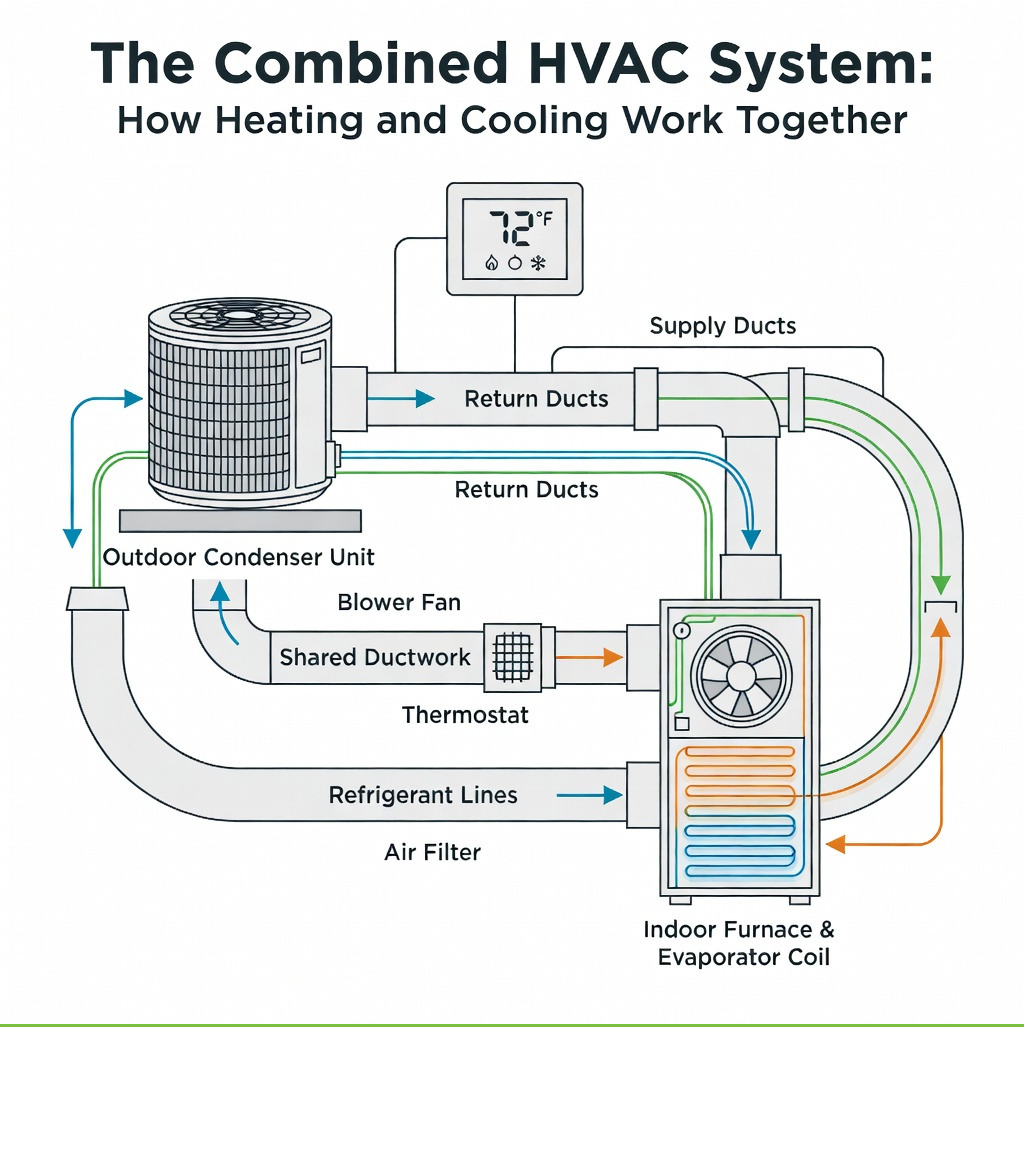
The primary benefit is system synergy. Your furnace and air conditioner are not two entirely separate entities; they share the same “lungs”—the blower motor and the ductwork. By installing them together, we can ensure that the indoor evaporator coil is perfectly matched to the furnace’s blower capacity. This matching is crucial for reaching the advertised SEER2 and AFUE efficiency ratings.
Furthermore, bundling these services is a major win for your wallet. You only pay for one “setup” fee, and we can often save you between $2,000 and $5,000 in total costs compared to two separate visits. It’s also much more efficient for our team, as we can modify the gas lines, electrical connections, and venting all at once. For a deeper dive into how these systems interact, you can read about how air conditioners and furnaces work together or check out our more info about heating installation services.
Signs You Need a Full System Replacement
How do you know if it’s time to pull the trigger on a full furnace ac installation? In Rhode Island, where our winters are harsh and our summers are humid, your equipment works hard. Here are the red flags:
- Age of Equipment: Furnaces generally last 15-20 years, while AC units last about 10-15 years. If both are over a decade old, they are likely nearing retirement.
- Rising Utility Bills: If your energy costs are creeping up despite similar usage, your system is losing its efficiency.
- Frequent Repairs: If you’ve had us out for repairs more than twice in the last two years, you’re likely “throwing good money after bad.”
- Uneven Temperatures: Rooms that are too hot in July or freezing in January often indicate a failing blower or a system that can no longer keep up with the load.
To help you decide, we’ve put together a guide on when is it time to replace your HVAC system.
Sizing Your Furnace AC Installation for Peak Performance
One of the biggest mistakes a DIY-er or an inexperienced contractor can make is “eyeballing” the size of the system. A system that is too small won’t keep you comfortable, but a system that is too large will “short-cycle,” turning on and off constantly, which wears out the parts and fails to remove humidity from the air.
We use a Manual J calculation to determine the exact needs of your home. This isn’t just about square footage; we look at:
- The number and quality of windows.
- Insulation levels in your attic and walls.
- The orientation of your home (which side gets the afternoon sun).
- The number of occupants.
Generally, a central air conditioning system needs about 20 BTUs per square foot of living space. For furnaces, the requirement in our Rhode Island climate zone typically ranges from 45 to 60 BTUs per square foot. You can learn more about these metrics in our guide to HVAC system size.
Navigating System Types and Efficiency Ratings
Choosing the right technology for your furnace ac installation determines your comfort levels for the next 20 years. Here is a breakdown of the three main “tiers” of technology:
| System Type | Operation Style | Comfort Level | Efficiency |
|---|---|---|---|
| Single-Stage | 100% On or Off | Basic | Standard (14-15 SEER2) |
| Two-Stage | High (100%) and Low (65%) | High | Better (16-17 SEER2) |
| Variable-Speed | Adjusts from 30% to 100% | Ultimate | Best (18-26 SEER2) |
As of January 2023, the U.S. Department of Energy efficiency requirements mandate a minimum of 14 SEER2 for northern states like Rhode Island. For furnaces, we recommend an AFUE of at least 90% to ensure you aren’t literally blowing money out of your chimney. If you’re looking for an alternative to traditional combustion, you might also learn about heat pumps vs traditional furnaces.
Choosing Between Single-Stage and Variable-Speed Technology
Think of a single-stage system like a light switch—it’s either on or off. This often leads to “temperature swings” where the room gets slightly too hot before the AC kicks in, then slightly too cold before it shuts off.
A variable-speed system is more like a dimmer switch. It can run at a very low, quiet speed for most of the day, which provides incredible humidity control and keeps the temperature within half a degree of your setting. While the upfront cost for variable-speed furnace ac installation is higher ($27,000–$33,000), the long-term utility savings and comfort are unmatched. For more basics, see our AC installation 101.
Understanding the Impact of High-Efficiency Furnace AC Installation
In places like Johnston and Slaterville, high-efficiency systems are becoming the standard. A furnace with a 98% AFUE (Annual Fuel Utilization Efficiency) rating means that 98 cents of every dollar you spend on gas goes directly into heating your home, with only 2% lost through venting. Compare that to older 80% systems where 20% of your money is wasted!
High-efficiency AC units (up to 19+ SEER) use advanced compressors and fans to provide the same cooling for a fraction of the electricity. This is not just good for the environment; it’s a smart financial ROI over the 15+ year life of the system. We specialize in mastering your comfort with expert furnace setup to ensure these high-efficiency ratings are actually achieved in the real world.
Step-by-Step Guide to a Professional Installation
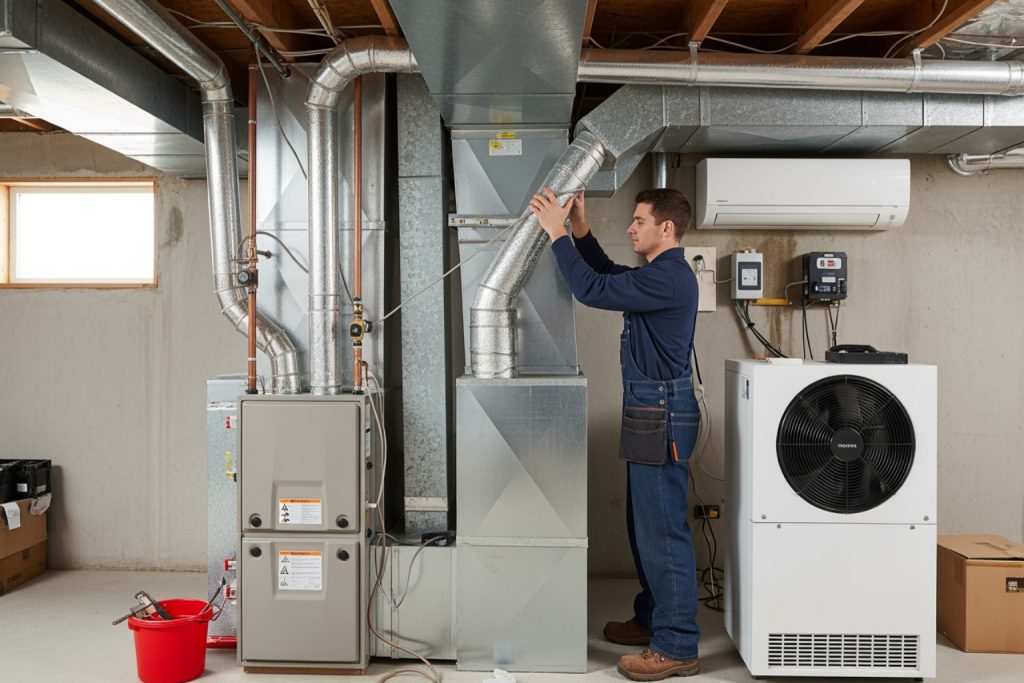
A professional furnace ac installation is a complex dance that usually takes between 10 to 15 hours. Here is how our team at Advanced Heating & Cooling handles it:
- Site Protection: We lay down protective mats to safeguard your flooring in Smithfield homes.
- Old Equipment Removal: We safely recover the old refrigerant (per EPA regulations) and haul away the old units.
- Ductwork Modification: Often, the new high-efficiency units have different dimensions. We custom-fabricate sheet metal transitions to ensure airtight connections.
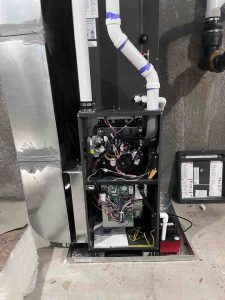
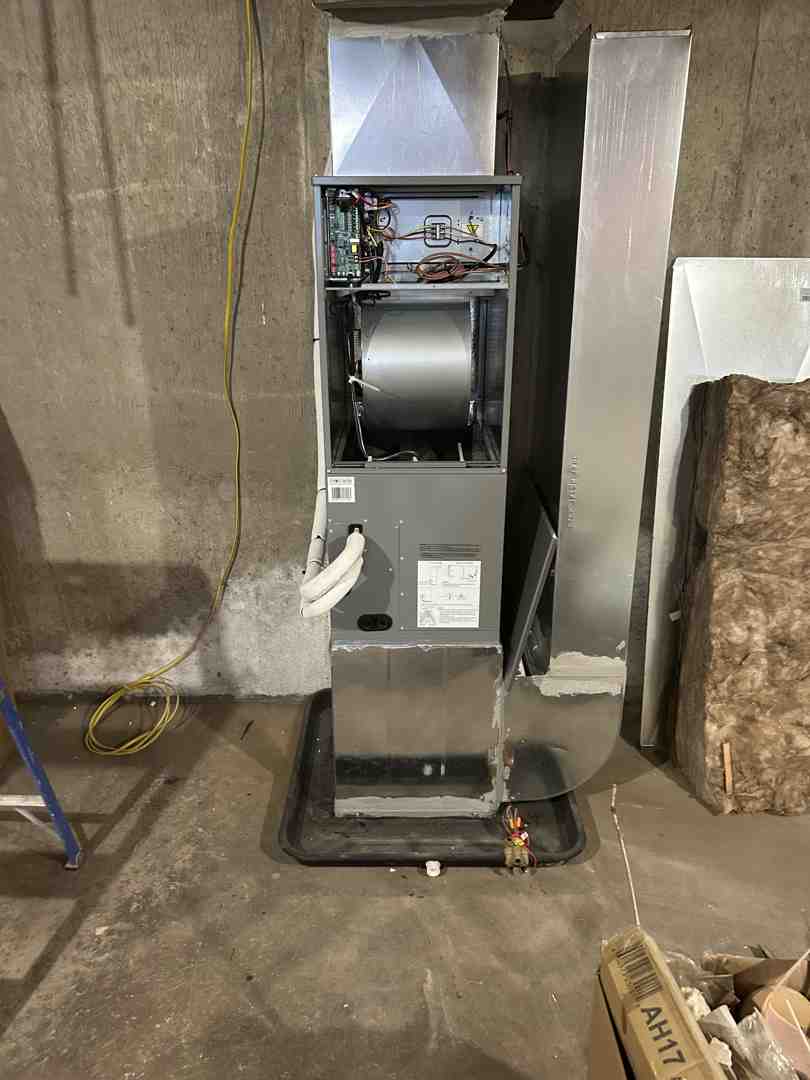
- Component Positioning: The new furnace is leveled, and the evaporator coil is mounted on top.
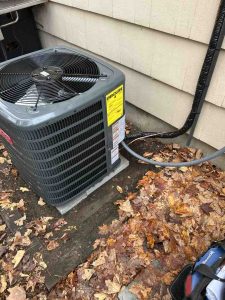
- Line Connections: We run new copper refrigerant lines, connect the gas piping, and install the condensate drain lines.
- Electrical Upgrades: We ensure the wiring and circuit breakers are rated for the new equipment’s power draw.
For more details on the cooling side, visit our page on AC installation and repair.
Preparing Your Home for a New Furnace AC Installation
To make the day go smoothly, we ask homeowners in Greenville or Esmond to clear a path to the mechanical room or basement. Our technicians need at least three feet of clearance around the units to work safely. We also recommend keeping pets in a separate room, as there will be a lot of noise and open doors.
During the prep phase, we also look for opportunities to improve your home’s performance, such as sealing leaky ducts or upgrading your insulation. You can find more tips on finding top furnace replacement services here.
Testing, Commissioning, and Final Walkthrough
The most important part of the job happens after the units are plugged in. We perform a “commissioning” process where we check:
- Static Pressure: Ensuring the blower isn’t working too hard against the ductwork.
- Refrigerant Charge: Using digital gauges to ensure the AC is charged to the exact ounce.
- Safety Checks: Testing for gas leaks and verifying that the exhaust venting is drawing properly.
We then walk you through how to use your new system and how to change the filters. This same rigorous process applies to our commercial clients; see our seamless commercial heating and cooling replacement guide for more.
Investment Costs, Rebates, and Maintenance
Budgeting for a furnace ac installation is a major decision. While a basic single-stage bundle might start around $11,500, a high-end variable-speed system can exceed $30,000. However, bundling the two services typically saves you $2,000 to $5,000 in labor and materials.
In Rhode Island, there are often significant rebates available for high-efficiency equipment. We can help you navigate these incentives to bring your net cost down. Additionally, the DOE furnace and boiler efficiency info provides context on why these investments are worth the upfront cost.
Essential Accessories to Consider During Installation
When we are already opening up your ductwork for a furnace ac installation, it is the perfect time to add accessories that improve indoor air quality (IAQ):
- Smart Thermostats: These can save up to 10-15% on annual bills by learning your schedule.
- Whole-Home Humidifiers: Essential for Rhode Island winters to prevent dry skin and protect wood floors.
- Air Purifiers/Scrubbers: These kill bacteria and viruses in the air stream.
- Zoning Systems: Allow you to have different temperatures on the first and second floors.
For business owners, we offer similar upgrades through our expert commercial furnace replacement services.
Post-Installation Care and Warranty Protection
Your new system is a high-performance machine. Just like a new car, it needs maintenance. We recommend:
- Annual Tune-ups: AC in the spring, furnace in the fall.
- Filter Changes: Every 1-3 months depending on your home’s dust levels and pets.
- Warranty Registration: Most manufacturers offer a 10-year parts warranty, but only if the system is registered within 60 days of installation.
Frequently Asked Questions about HVAC Installation
How long does a typical furnace and AC installation take?
A standard furnace ac installation takes between 10 to 15 hours. If we are just swapping units, it can often be done in a single long day (8-10 hours). However, if we need to modify ductwork, run new gas lines, or upgrade your electrical panel, it may stretch into a second day.
Can I install a furnace and AC system myself?
No. Furnace ac installation requires specialized knowledge of high-voltage electricity, natural gas plumbing, and EPA-certified refrigerant handling. Attempting this yourself is not only dangerous but will also void the manufacturer’s warranty and likely fail local building inspections.
How much can I save by installing both units at the same time?
You can generally save between $2,000 and $5,000 by bundling. This savings comes from reduced labor hours (we only have to show up and prep the site once) and “bundle discounts” provided by manufacturers when we purchase a complete system.
Conclusion
At Advanced Heating & Cooling, we believe that a furnace ac installation is more than just a home improvement project—it’s an investment in your family’s comfort and safety. Serving Smithfield, RI, and surrounding areas like Johnston and North Smithfield for over 30 years, we pride ourselves on honest, quality workmanship. We don’t believe in high-pressure sales; we believe in providing the right solution for your specific home and budget.
If your current system is making strange noises, your energy bills are skyrocketing, or you’re just ready for a more comfortable home, give us a call. We offer free estimates and are always happy to discuss your options. Book your heating installation and repair today and experience the difference that three decades of local expertise can make.