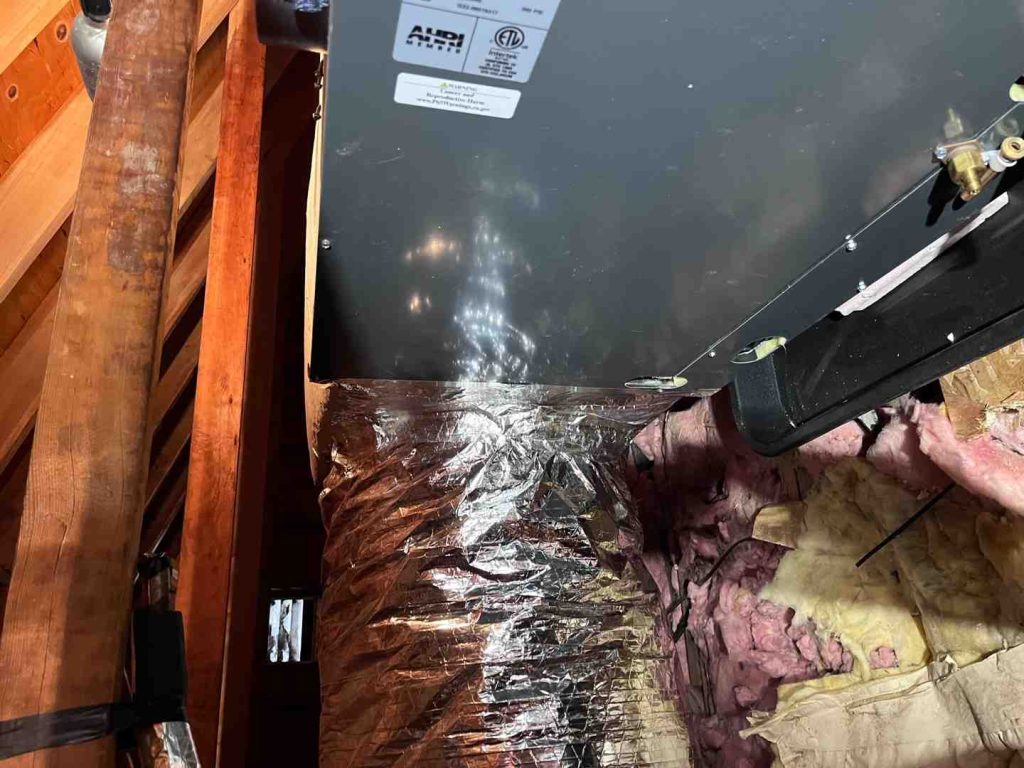
Is Adding a Heat Duct the Right Fix for Your Cold Room?
Adding a heat duct is one of the most effective ways to eliminate cold spots and deliver consistent warmth to underserved rooms in your home. Here’s a quick overview of how it works:
- Check your system capacity – Confirm your blower and ductwork can handle the extra airflow without robbing heat from other rooms.
- Size the new duct – Use the 1 CFM per square foot rule (e.g., a 120 sq ft room needs ~120 CFM).
- Cut a takeoff into the trunk line – Mark, drill, and cut a precise opening in your existing supply duct.
- Connect and seal – Attach a takeoff collar, run new duct to the register, and seal every joint with mastic or foil tape.
- Balance the system – Adjust dampers so the new vent doesn’t steal airflow from the rest of your home.
That’s the short version. The details matter a lot – especially step one.
A room that’s always too cold in winter (or too hot in summer) is a frustrating problem. You might have one supply vent where you really need two, or an addition or finished basement that was never connected to your central system at all. Before reaching for a space heater, it’s worth asking: can your existing ductwork actually support a new run?
The answer depends on your system’s capacity. A blower rated at 1,600 CFM serving 8 vents delivers about 200 CFM per vent. Add 2 more vents and that drops to 160 CFM each – enough to create uneven temperatures throughout your whole house, not just the new room. Done right, adding a duct improves comfort everywhere. Done wrong, it makes things worse.
I’m Richard Marcello, President of Advanced Heating & Cooling, and with over 30 years of hands-on HVAC experience in Rhode Island, I’ve helped countless homeowners solve comfort problems by correctly adding a heat duct without overloading their existing systems. In this guide, I’ll walk you through every step so you can make a smart, informed decision.
Know your adding a heat duct terms:
Assessing Your HVAC System Capacity Before Adding a Heat Duct
Before you ever pick up a pair of tin snips, you must determine if your furnace or air handler can actually handle the extra load. Think of your HVAC system like a heart: it has a specific capacity for “pumping” air (measured in Cubic Feet per Minute, or CFM). If you add more “arteries” (ducts) without increasing the pump’s strength, the pressure drops everywhere.
In Smithfield and North Smithfield, we often see older homes where the system is already working at its absolute limit. If your blower is rated for 1,200 CFM and you are already utilizing all of it, adding a heat duct will simply result in weaker airflow at every single vent in the house. This leads to the very problem you’re trying to solve: why one room is always hotter or colder.
Professional technicians use a Manual J calculation to determine the heat load of the room and a Manual D calculation to size the ductwork. We also look at External Static Pressure (ESP). For example, a clean standard air filter adds about .08 inches of ESP, and grilles add roughly .03 inches. If the total static pressure exceeds the blower’s rating, the motor will work harder, wear out faster, and fail to move enough air. To avoid these issues, it is essential to understand your HVAC system size and its current performance baseline.

Determining the Right Size for Adding a Heat Duct
Sizing isn’t a guessing game. A common rule of thumb is to aim for approximately 1 CFM per square foot of room area. If you are conditioning a 150-square-foot home office in Johnston, you need roughly 150 CFM of airflow.
To achieve this, you need to choose the right duct diameter. A 6-inch round flexible duct is typically rated for about 100-110 CFM at standard velocities. If you need 150 CFM, you might need to step up to a 7-inch or 8-inch duct. The maximum recommended velocity in flex duct is 600 feet per minute (fpm). Exceeding this makes the air “whoosh” loudly, which is the last thing you want in a quiet bedroom or office.
Also, consider the trunk line capacity. You cannot tap a large 10-inch duct into a small 8×8-inch branch line; you must tap into the main supply plenum or a large trunk line that has the volume to spare.
Essential Tools and Materials for the Job
If you’ve decided your system has the capacity, you’ll need a specific set of tools. Working with sheet metal is a bit like origami with sharp edges—precision is everything.
Required Tools:
- Aviation Snips: You’ll want “reds” (left-cut) and “greens” (right-cut) for making curved cuts in the metal trunk.
- Drill with a Step Bit: Perfect for starting the hole in the metal.
- Screwdriver or Nut Driver: For securing self-tapping sheet metal screws.
- Duct Knife: If you are working with flexible duct or duct board.
Required Materials:
- Takeoff Collar: This is the fitting that connects the new duct to the existing trunk. We recommend one with a built-in manual damper.
- Flexible or Rigid Duct: Flexible duct is easier for DIY, but must be stretched tight to prevent friction loss.
- Register Box (Boot): The piece that holds the vent cover in your ceiling or floor.
- Mastic Sealant or Foil Tape: Never use “duck” tape. You need UL-181 rated foil tape or, better yet, water-based mastic sealant.
- Zip Ties and Hangers: To support the duct every 4-5 feet.
For a deeper dive into the components of your home’s air network, check out our Understanding HVAC systems: A Smithfield homeowner’s guide.
Safety Precautions When Adding a Heat Duct
Safety is paramount. Sheet metal edges are razor-sharp, and attics can be hazardous environments.
- Power Shutoff: Always turn off the furnace at the service switch or breaker before starting. You don’t want the blower kicking on while you’re half-way through a cut.
- Protective Gear: Wear heavy-duty gloves and safety glasses. Metal shards can fly when using snips or a drill.
- Attic Safety: If you’re working in a Stillwater attic, stay on the joists. One wrong step and you’re going through the drywall ceiling.
- Insulation Awareness: According to the Environmental Protection Agency (EPA), if you find wet or moldy insulation in your existing ducts, it cannot be cleaned; it must be replaced. Always wear a mask if you’re disturbing old insulation.
Step-by-Step Process for Connecting to Existing Ducts
Once you have your plan and your tools, it’s time to get to work. The most critical connection is where you “tap” into the existing system.
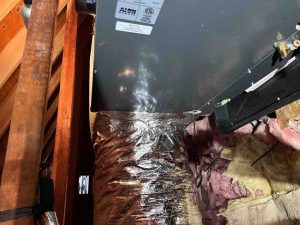
1. Locate the Connection Point: Find a straight section of the main supply plenum (the big box attached to the furnace) or the main trunk line. Avoid tapping into corners or right next to existing vents, as this creates turbulence.
2. Mark and Cut the Starter Hole: Use your takeoff collar as a template. Trace the inner circle onto the metal. Drill a starter hole using a step bit, then use your aviation snips to cut the hole. Pro tip: Cut the hole slightly smaller than the line to ensure a snug, airtight fit.
3. Install the Takeoff: Insert the takeoff collar into the hole. If it has “tabs,” reach inside and bend them over to lock it to the trunk. Secure it further with 1/2-inch self-tapping sheet metal screws.
4. Run the New Duct: Attach your flexible or rigid duct to the takeoff. If using flex duct, ensure it is pulled tight. Every 90-degree turn in flex duct adds friction equal to 15 feet of straight pipe! Use zip ties to secure the inner liner and the outer insulation jacket.
5. Install the Register Box: In the room, cut a hole in the ceiling or floor between the joists. Secure the register box (boot) to the framing and connect the other end of your new duct.
DIY vs. Professional Installation Costs
As shown above, the DIY cost for adding a heat duct typically ranges from $100 to $500, depending on the length of the run. Hiring a professional in the Smithfield or Johnston area usually costs between $200 and $500 for a single vent. While the price is similar, a professional ensures the system stays balanced—something that’s hard to do without specialized gauges.
Properly Sealing and Insulating the New Run
Air leaks are the enemy of efficiency. Even a small gap at the takeoff can lead to significant energy loss. Apply a thick layer of water-based mastic sealant over the joint between the takeoff and the trunk. Once dry, it creates a permanent, airtight seal.
If your new duct runs through an unconditioned space, like a cold attic in Mapleville or a crawlspace in Esmond, it must be insulated. Use ductwork with at least an R-6 or R-8 rating. This prevents heat from escaping before it reaches the room and, more importantly, prevents condensation from forming on the duct during the summer when the AC is running. Condensation leads to rust and mold—two things you definitely don’t want in your air supply.
Balancing Airflow and Maintaining System Health
After adding a heat duct, the rest of your house will likely feel a change in temperature. Because air follows the path of least resistance, the new, short duct run might “steal” all the air, leaving the upstairs bedrooms freezing.
This is where manual dampers come in. Every new run should have a damper—a small metal plate inside the duct that you can turn with a handle.
- Parallel handle: Fully open.
- Perpendicular handle: Restricted airflow.
Start with all dampers fully open. If the new room is too hot, slowly close its damper until the airflow is balanced with the rest of the house. You may also need to adjust the blower speed on your furnace, but this should only be done by a professional to avoid overheating the heat exchanger.
The Importance of Return Air
A common mistake when adding a heat duct is forgetting about the return air. For every cubic foot of hot air you pump into a room, a cubic foot of air must leave that room to go back to the furnace. If the door is closed and there is no return vent, the room becomes “pressurized,” and the new supply vent will stop blowing effectively.
In some cases, you can simply undercut the door by an inch to allow air to escape. However, for large rooms or basements, adding a return air duct is the best way to maintain neutral pressure and ensure the system operates efficiently.
Alternatives to Cutting Into Your Existing Ductwork
Sometimes, your existing system simply cannot handle another vent. If your furnace is 20 years old and already struggling to keep up with a Rhode Island winter, adding a heat duct might be the “straw that breaks the camel’s back.”
In these scenarios, we often recommend:
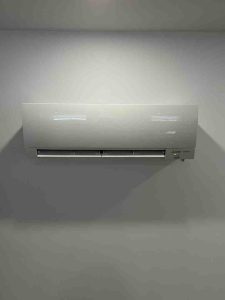
- Ductless Mini-Splits: These are incredibly efficient systems that provide heating and cooling to a single room without any ductwork. According to Department of Energy research on heat pump systems, high-performance heat pumps can reduce electricity use for heating by up to 75% compared to electric resistance heat.
- Smart Zoning: Instead of adding ducts, we can install motorized dampers in your existing lines and use multiple thermostats to direct heat only where it’s needed.
- Baseboard Heaters: While less efficient than a heat pump, electric baseboards can be a quick fix for a small, isolated cold spot.
Frequently Asked Questions about Adding Heat Ducts
Can my existing furnace handle an extra vent?
It depends on the blower’s CFM rating and the current static pressure. If your system was “right-sized” perfectly for your home’s original square footage, adding more space (like a finished basement) will likely overtax the blower. We recommend a professional pressure test before proceeding.
Should I add a return vent along with the supply vent?
Ideally, yes. Proper air circulation requires a balance between supply and return. Without a return path, the new supply vent will struggle to deliver air once the room reaches a certain pressure, leading to poor performance.
How much does it cost to add a single heat duct?
For a DIYer in North Smithfield, materials (flex duct, takeoff, boot, and register) will cost between $150 and $300. Professional installation usually starts around $200-$500 per run. While DIY saves on labor, professional installation includes the peace of mind that your system won’t become unbalanced or noisy.
Conclusion
Adding a heat duct is a practical way to reclaim a cold room and make your home more livable. However, it’s more than just cutting a hole and taping a tube. It requires a clear understanding of airflow dynamics, static pressure, and system capacity to ensure you don’t accidentally ruin the comfort of the rest of your home.
At Advanced Heating & Cooling, we’ve spent over 30 years serving our neighbors in Smithfield, Greenville, Johnston, and throughout Rhode Island. We know the local climate and the unique challenges of New England homes. Whether you need a single duct added or a complete system redesign, our team provides the honest, high-quality workmanship you deserve.
Don’t settle for “good enough” heating. If you’re tired of cold spots and uneven temperatures, let the experts handle the calculations and the heavy lifting. Schedule your heating installation or repair today for a free estimate and a more comfortable home tomorrow.