Why Data Center Cooling Solutions Are More Critical Than Ever
Data center cooling solutions are the systems and strategies used to remove heat generated by servers and IT equipment, keeping hardware running safely and efficiently. Here’s a quick overview of the main types:
| Cooling Method | Best For | Key Benefit |
|---|---|---|
| Air cooling (CRAC/CRAH) | Standard density racks | Low cost, widely used |
| Chilled water systems | Large-scale facilities | Scalable, energy efficient |
| Direct-to-chip liquid cooling | High-density AI servers | Up to 1,000x more cooling capacity |
| Immersion cooling | Extreme heat loads | Best thermal performance |
| Free cooling / economizers | Energy efficiency goals | Reduces or eliminates compressor use |
| Hybrid systems | Mixed workload environments | Flexible, future-proof |
Data centers are under enormous pressure right now. AI, cloud computing, and high-density servers are pushing heat loads to levels that traditional cooling simply wasn’t built to handle. In fact, data centers are forecast to double their annual energy consumption by 2030 — and over half of that energy goes directly to cooling and computing.
That’s not just an IT problem. It’s a thermal management problem.
When servers overheat, performance drops, hardware fails, and operational costs spike. Getting the cooling right isn’t optional — it’s the foundation of a reliable, efficient facility.
I’m Richard Marcello, President of Advanced Heating & Cooling, and with over 30 years of hands-on HVAC experience serving businesses across Rhode Island, I’ve seen how the right data center cooling solutions can mean the difference between seamless uptime and costly downtime. Let’s break down exactly how these systems work — and how to choose the right one.
Data center cooling solutions terms to remember:
- Commercial HVAC replacement cost
- Commercial air conditioner installation
- Commercial HVAC replacement
The Evolution of Data Center Cooling Solutions
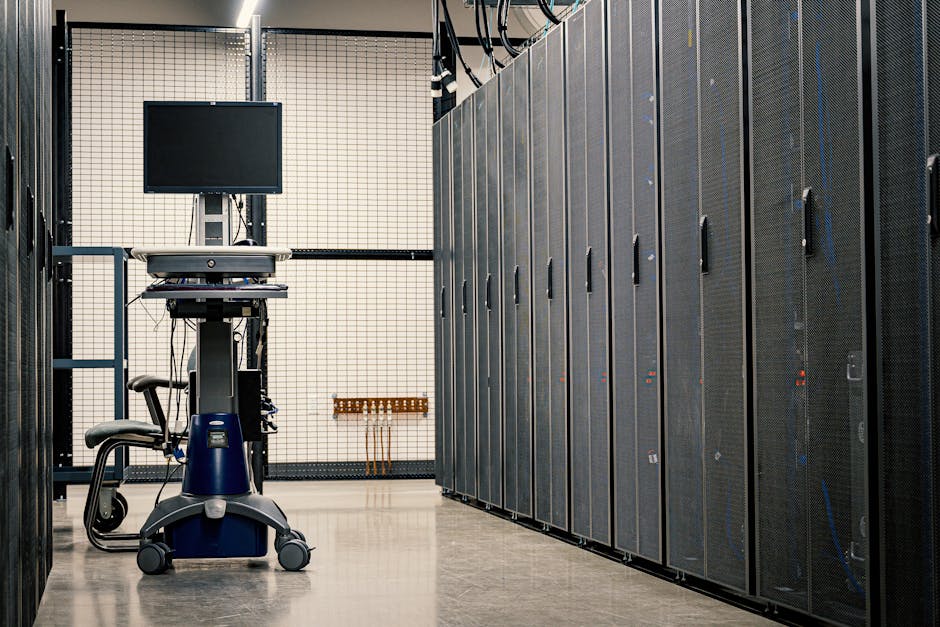
In the early days of computing, cooling a server room was a lot like cooling your living room—just on a slightly larger scale. You’d blast cold air into the room, hope it reached the racks, and call it a day. But as we move deeper into the era of hyperscale facilities and edge computing, those “brute force” methods are becoming obsolete.
The primary driver for this evolution is the sheer density of modern computing. Artificial Intelligence (AI) and High-Performance Computing (HPC) require chips that run incredibly hot. We are seeing thermal loads that were unimaginable a decade ago. According to Innovative cooling market data, companies like Vertiv are leading the charge in this space, scoring 81.1 out of 100 in innovation for their ability to handle these intense demands.
As we look toward the future, the industry is moving away from just “keeping things cold” and toward sophisticated thermal management. This involves tracking Power Usage Effectiveness (PUE) metrics religiously. PUE is the ratio of the total amount of energy used by a computer data center facility to the energy delivered to computing equipment. A “perfect” PUE is 1.0. In the past, PUEs of 2.0 or higher were common—meaning for every watt spent on computing, another watt was spent on cooling and power loss. Today, modern data center cooling solutions are pushing that number closer to 1.1 or even lower.
Whether you are operating a small server room in Smithfield or a larger facility in Johnston, understanding this shift is vital. We aren’t just cooling boxes anymore; we are managing a complex ecosystem of heat rejection and energy recovery.
Traditional Air Cooling and Airflow Management
For many facilities in our neck of the woods, from Greenville to North Smithfield, traditional air cooling remains the primary line of defense. These systems generally fall into two categories: Computer Room Air Conditioning (CRAC) units and Computer Room Air Handler (CRAH) systems.
- CRAC Units: These function much like a standard air conditioner. They use a direct expansion (DX) cycle where air is cooled by blowing it over a cooling coil filled with refrigerant.
- CRAH Units: These are usually found in larger facilities. Instead of a refrigerant cycle, they use fans to blow air over a cooling coil filled with chilled water provided by a separate chiller system.
One of the most effective ways we improve these systems is through airflow optimization. If you walk into an old-school server room, you might feel a mix of hot and cold air swirling around. That is a recipe for inefficiency. We solve this through “containment.” By creating hot and cold aisles—and physically separating them with plastic curtains or solid panels—we ensure that the cold air goes exactly where it’s needed (into the server intakes) and the hot air is funneled directly back to the cooling unit.
For more information on how these systems integrate with your building’s overall climate, check out our guide to commercial HVAC services.
Proper “rack hygiene” is another simple but powerful tool. This involves using blanking plates to cover empty spaces in a server rack. Without them, cold air can bypass the servers entirely, or hot exhaust air can “leak” back into the cold intake area. According to Scientific research on cooling systems, even small gaps in airflow management can significantly drive up operational costs.
Optimizing Air-Based Data Center Cooling Solutions
Even the best air-based data center cooling solutions need regular fine-tuning to stay efficient. One common issue we see in Rhode Island facilities is “atmospheric stratification,” where air separates into layers of different temperatures. This can lead to hot spots at the top of racks while the bottom stays freezing.
To combat this, we utilize:
- Variable Speed Fans: Instead of running at 100% all the time, these fans adjust based on the actual heat load, saving massive amounts of energy.
- Chilled Water Optimization: By raising the temperature of the chilled water slightly (while staying within safe limits), we can reduce the workload on the chillers.
- Humidity Control: If the air is too dry, static electricity can fry components. If it’s too humid, condensation can cause shorts. Finding that “Goldilocks” zone is essential.
Routine maintenance is the secret weapon here. A dirty coil or a worn-out fan belt can drop your efficiency by 20% overnight. You can learn more about commercial AC maintenance to see how we keep these systems humming.
One standout innovation in the air-cooled world is Daikin’s RapidRestore® technology. In the event of a power loss, their chillers can restart in as little as 35 seconds. When you’re managing mission-critical data in a place like Stillwater or Esmond, those seconds matter.
High-Density Liquid Cooling Technologies
As server densities climb, we eventually hit a wall where air just can’t move heat fast enough. Think of it this way: water is about 24 times better at conducting heat than air and can hold 3,200 times more heat per unit of volume. This is why high-density liquid cooling technologies are becoming the new standard for AI-ready infrastructure.
Liquid cooling works by bringing a cooling fluid (usually water or a specialized dielectric fluid) much closer to the heat source. This drastically improves thermal conductivity and allows for much tighter rack configurations.
Comparison: Air Cooling vs. Liquid Cooling Performance
| Feature | Traditional Air Cooling | Liquid Cooling (Direct-to-Chip) |
|---|---|---|
| Heat Transfer Efficiency | Low | High (25x better) |
| Cooling Capacity | Up to 15-20 kW per rack | Up to 100+ kW per rack |
| Energy Use | High (Fans/Compressors) | Low (Pumps/Small Fans) |
| Space Requirement | Large (Aisles/Ducts) | Compact |
| Noise Levels | High | Very Low |
The biggest concern most operators have with liquid cooling is, understandably, leaks. Nobody wants water dripping on a $50,000 GPU. However, modern data center cooling solutions use advanced leak prevention systems, including vacuum-based loops and non-conductive fluids, to make these systems incredibly safe.
The Rise of Liquid Data Center Cooling Solutions
There are several ways to implement liquid cooling, and we’re seeing more of these “hybrid” setups in modern enterprises.
- Direct-to-Chip (Cold Plates): A small metal plate is attached directly to the CPU or GPU. Coolant flows through the plate, absorbing heat directly from the silicon.
- Immersion Cooling: This is the “sci-fi” version of cooling. The entire server is submerged in a bath of non-conductive, dielectric fluid. It’s incredibly efficient because every single component is cooled equally.
- Rear-Door Heat Exchangers: This is a hybrid approach. A liquid-filled coil is attached to the back of a server rack. As hot air exits the servers, it passes through the coil and is cooled before it even enters the room. This can remove 100% of the heat load from a rack, making the room “thermally neutral.”
For businesses in Slaterville or Mapleville looking to upgrade their mechanical infrastructure to support these technologies, check out our insights on commercial mechanical services.
Strategies for Energy Efficiency and Sustainability
Sustainability isn’t just a buzzword in the HVAC world—it’s a financial necessity. With electricity prices and environmental regulations on the rise, we focus on several key strategies to keep your PUE low and your efficiency high.
Free Cooling (Economizers) In Rhode Island, we are blessed with a climate that allows for “free cooling” for a good portion of the year. Instead of running energy-hungry compressors, we can use an economizer to pull in cool outside air or use the cold outside air to chill the water in our loops. This “compressor bypass” can save millions of dollars across an enterprise over the life of the system.
Low-GWP Refrigerants The industry is moving away from traditional refrigerants that have a high Global Warming Potential (GWP). New solutions, like R1234ze, have a GWP of less than 1, compared to older refrigerants that could be in the thousands. This is a major part of the “circular economy” programs being implemented by top providers like Johnson Controls and Schneider Electric.
Predictive Maintenance and Digital Monitoring We no longer have to guess when a bearing is about to fail. Using AI-driven digital monitoring tools, we can track vibrations, temperatures, and power draws in real-time. This allows for predictive maintenance—fixing a small problem during a scheduled window rather than dealing with a catastrophic failure at 2:00 AM on a Sunday. If you ever find yourself in a bind, our commercial HVAC repair services are always available to get you back online.
Heat Reuse One of the coolest (pun intended) trends in sustainability is heat reuse. Instead of just venting all that server heat into the atmosphere, some facilities are using it to provide hot water or space heating for the rest of the building. It’s a great way to turn a waste product into a resource.
Frequently Asked Questions
What is the recommended temperature for a data center?
The generally accepted “sweet spot” for most data centers is between 70 and 75°F (21 to 24°C). While some modern equipment can handle temperatures up to 80°F or higher, staying in the low 70s provides a safety margin in case of a cooling hiccup. Following ASHRAE standards ensures that you aren’t wasting money by over-cooling (keeping it at 65°F is usually unnecessary and expensive) while still protecting your hardware.
How does liquid cooling improve PUE?
Liquid cooling improves PUE by eliminating or drastically reducing the need for large, power-hungry CRAH fans and room-scale air conditioners. Because liquid is so much more efficient at moving heat, you can use smaller pumps that consume a fraction of the energy. Additionally, liquid systems often allow for higher “return water temperatures,” which makes it easier to use free cooling and reduces the time the chiller’s compressor needs to run.
What are the benefits of free cooling in data center cooling solutions?
The primary benefit is massive energy savings. By using ambient outside air or evaporating water to cool your facility, you can bypass the refrigeration cycle (the compressor) entirely. This reduces your carbon footprint, extends the lifespan of your HVAC equipment, and can lower your cooling-related energy costs by up to 70% in favorable climates like ours in New England.
Conclusion
Managing data center cooling solutions is a balancing act between performance, reliability, and cost. As AI and high-density computing continue to change the landscape, the “standard” ways of doing things are being replaced by smarter, more adaptive technologies.
At Advanced Heating & Cooling, we’ve spent three decades helping businesses in Smithfield, Forestdale, and across Rhode Island navigate these complexities. Whether you’re looking to optimize a traditional air-cooled room or you’re ready to explore liquid cooling and hybrid systems, we’re here to provide the professional expertise and honest workmanship you need to keep your servers safe.
From initial design and installation to long-term predictive maintenance, we ensure your system is built for longevity and scalability. If you’re ready to future-proof your facility, we’d love to help.
Contact us for expert commercial HVAC solutions today for a free estimate and let’s keep your data—and your business—running cool.