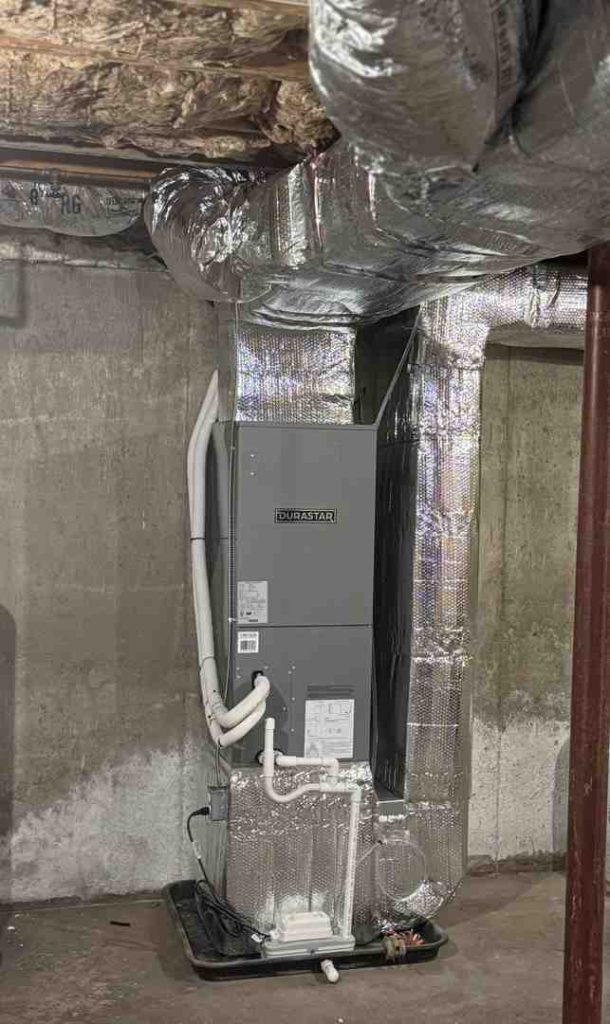
Can You Add AC to an Oil Furnace? (Short Answer: Yes)
Adding AC to an oil furnace is not only possible — it’s one of the most practical home comfort upgrades you can make if you already have a forced-air heating system.
Here’s the quick version:
- Yes, it works. If your oil furnace uses a blower to push warm air through ducts, that same system can distribute cool air from a central AC unit.
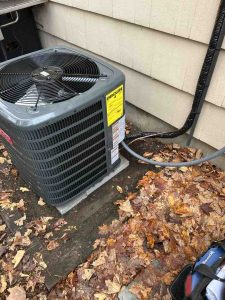
- What gets added: An evaporator coil (installed in your furnace plenum), an outdoor condenser unit, refrigerant lines, and a condensate drain.
- Cost range: Typically $4,000–$10,000 in Rhode Island, depending on system size and any ductwork upgrades needed.
- Time to install: Usually one full day, sometimes two if duct repairs are required.
- Key requirements: Your existing blower, ductwork, and electrical panel must be up to the task — a professional assessment tells you where you stand.
Nearly 90% of American households now have air conditioning. But many older New England homes — especially those heated by oil — were built without it. Window units are loud, inefficient, and only cool one room at a time. Central AC through your existing ductwork is a cleaner, quieter, and more cost-effective solution.
That said, oil furnaces come with specific considerations that gas systems don’t — from exhaust flue clearances to heat-tolerant drain pan requirements. Getting it right matters.
I’m Richard Marcello, President of Advanced Heating & Cooling, and I’ve spent over 30 years helping Rhode Island homeowners navigate exactly this kind of upgrade — including the unique challenges of adding AC to an oil furnace. In that time, I’ve seen what works, what doesn’t, and what contractors sometimes get wrong. Let me walk you through everything you need to know.
Adding ac to oil furnace vocabulary:
Assessing Your Home for Adding AC to Oil Furnace
Before we start cutting into your ductwork, we have to make sure your home is actually a good candidate for this retrofit. Not every oil furnace is ready to pull double duty as an air conditioner.
Blower Motor Capacity and Static Pressure
One of the biggest differences between heating and cooling is the “weight” of the air. Cold air is denser than warm air. To move that heavy, cold air through your home effectively, your furnace’s blower motor needs enough “oomph.” If the blower is too weak, the air won’t reach the furthest rooms, and worse, the evaporator coil might freeze over because there isn’t enough airflow to keep it from turning into a block of ice.
We also check the static pressure. Think of this like blood pressure for your HVAC system. If the resistance in your ducts is too high, it puts massive stress on the motor. When adding ac to oil furnace systems in Smithfield, we often find that older blowers need a speed adjustment or an upgrade to handle the increased load.
Ductwork Integrity and Air Loss
Your ducts were designed to carry hot air, which naturally rises. Cooling air likes to sink. If your ductwork is leaky—which is common in older Rhode Island homes—you could be losing up to 30% of your conditioned air into your attic or crawlspace before it ever reaches your living room. We perform a thorough inspection to ensure your ducts are sealed and insulated. Adding a high-efficiency AC to leaky ducts is like trying to fill a bucket with a hole in the bottom; it’s a waste of your hard-earned money.
Manual J Load Calculation
We don’t just guess the size of the AC unit you need based on square footage. That’s a recipe for disaster. Instead, we perform a Manual J load calculation. This industry-standard calculation looks at your home’s insulation, window types, orientation to the sun, and local climate.
An oversized AC unit will “short-cycle,” turning on and off rapidly, which leaves your home feeling clammy because the system didn’t run long enough to remove humidity. An undersized unit will run forever and never get the house cool. We make sure it’s “just right.”
Electrical and Insulation
Central AC requires a dedicated 220V circuit. If your electrical panel is already full, we may need to add a sub-panel or upgrade your service. Additionally, we look at your home’s insulation R-values. Many homes over 20 years old are under-insulated by today’s standards. Improving your attic insulation can significantly reduce the workload on your new AC, leading to lower bills and a longer-lasting system.
The Technical Process and Heat Tolerance Requirements
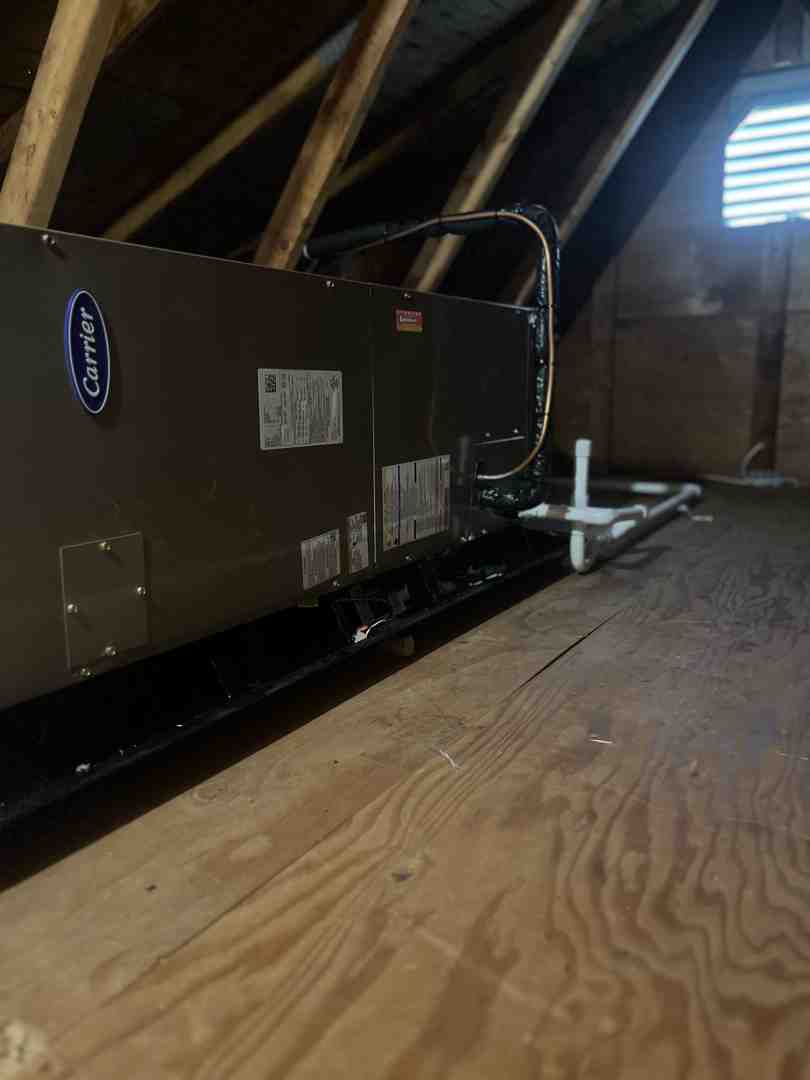
Once we’ve confirmed your home is ready, the real work begins. The heart of the installation is the evaporator coil. This is the component that actually removes heat from your indoor air.
Integrating the Components
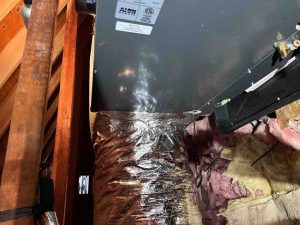
We install the evaporator coil inside the “plenum”—the large metal box sitting right on top of your furnace. We offer both cased and uncased coils. Cased coils come in their own insulated cabinet, which is often easier to seal and looks cleaner. Uncased coils are sometimes necessary if space is tight and we need to custom-fit them into your existing ductwork.
Other essential parts include:
- Refrigerant Line Sets: Copper pipes that carry refrigerant between the indoor coil and the outdoor condenser.
- Condensate Drain Lines: As the AC removes humidity, water collects in a pan. This water must be drained away safely to prevent basement flooding.
- TXV Metering Valves: We prefer using Thermal Expansion Valves (TXV) over standard pistons because they regulate refrigerant flow much more precisely, boosting efficiency.
After the lines are connected, we perform a nitrogen leak test. We pressurize the system to ensure there are zero leaks before we ever introduce refrigerant. This is a critical step in our ultimate guide to hooking up AC to your furnace.
Critical Heat Tolerance When Adding AC to Oil Furnace
This is where oil furnaces require special expertise. Oil burns much hotter than natural gas, and the exhaust flue (the pipe carrying smoke and gases out) can reach very high temperatures.
If the AC coil is placed too close to the furnace’s heat exchanger or the flue pipe, the plastic components—specifically the drain pan—can melt. We mitigate this by:
- Using High-Temperature Drain Pans: Manufacturers like Goodman/Amana specifically recommend high-temperature drain pans for oil furnace installations. These are designed to withstand the radiant heat that would melt a standard plastic pan.
- Maintaining Clearances: We ensure there is adequate physical space (usually 4–6 inches of transition) between the top of the furnace and the bottom of the coil.
- Plenum Insulation: We often insulate the inside of the plenum box to protect the coil from the intense heat of the furnace’s combustion byproducts.
- Flue Placement: We position the refrigerant lines and the coil access so they don’t interfere with the exhaust pipe, ensuring safety and easy maintenance.
Costs, Efficiency, and Warranty Considerations
When adding ac to oil furnace setups, the financial side is just as important as the technical side.
What’s the Investment?
In the Smithfield area, you can expect to spend between $4,000 and $10,000. Why such a wide range? It depends on:
- The size (tonnage) of the unit your home requires.
- The efficiency (SEER2) rating you choose.
- Whether we need to modify your electrical panel or repair old ductwork.
- The complexity of the refrigerant line run (e.g., through a finished basement vs. a crawlspace).
Efficiency and SEER2 Ratings
Efficiency is measured by the Seasonal Energy Efficiency Ratio (SEER2). As of 2023, the minimum SEER2 rating for new installations in Rhode Island is 13.4 (which is roughly equivalent to the old 14 SEER).
| SEER2 Rating | Efficiency Level | Potential Energy Savings |
|---|---|---|
| 13.4 | Standard (Minimum) | Baseline |
| 16.0 | High Efficiency | 15-20% Savings |
| 18.0+ | Ultra-High Efficiency | 30-40% Savings |
Choosing a higher SEER2 unit costs more upfront but can save you thousands in electricity over the 15-year lifespan of the system. We always recommend checking Energy Star cooling guidance to maximize your long-term ROI.
Warranties and Registration
One thing many homeowners miss is equipment registration. For example, brands like ThermoPride or Amana often require you to register your new system within 60 to 90 days to unlock the full warranty (often 10 years for parts). If you forget, that warranty could drop to just 5 years. At Advanced Heating & Cooling, we help our customers through this process to ensure their investment is protected.
Alternatives and Professional Installation Risks
While adding ac to oil furnace systems is a great choice for many, it isn’t always the best choice.
When to Consider Alternatives
If your oil furnace is over 15–20 years old, it might be nearing the end of its life. Installing a brand-new AC on a dying furnace can be risky. If the furnace fails next year, you might have to pay for labor all over again to move the AC coil to a new furnace. In these cases, we often discuss:
- Full System Replacement: Replacing the furnace and AC at the same time ensures perfectly matched components and maximum efficiency.
- Heat Pumps: A heat pump can provide both heating and cooling. You can even keep your oil furnace as a “backup” for the coldest nights—this is called a dual-fuel or hybrid system. Check out our heat pump vs traditional furnace guide for more details.
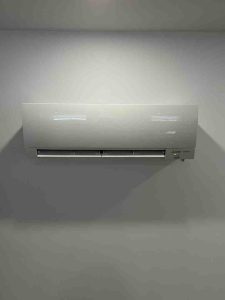
- Ductless Mini-Splits: If your existing ductwork is in terrible shape or doesn’t reach the second floor, ductless systems are an excellent alternative. They allow for room-by-room temperature control without any ductwork at all.
Why Professional Installation is Non-Negotiable
This is not a DIY project. Here is why:
- Refrigerant Handling: It is illegal (and environmentally dangerous) to handle refrigerants without EPA Section 608 certification.
- Safety: Oil furnaces involve combustion. If the plenum isn’t sealed correctly or the flue is disturbed, you risk carbon monoxide leaks.
- Warranty: Most manufacturers will void your warranty immediately if the system isn’t installed by a licensed professional.
- Airflow Balancing: Without the right tools to measure static pressure and airflow, you could end up with a system that freezes up or burns out its motor prematurely. For tips on what to look for, see these ductwork inspection tips.
Conclusion
Adding ac to oil furnace units is a smart, cost-effective way to bring modern comfort to a classic Rhode Island home. By leveraging the ductwork you already have, you can ditch the noisy window units and enjoy a cool, dehumidified home all summer long.
At Advanced Heating & Cooling, we’ve been serving Smithfield and the surrounding areas (including Greenville, Johnston, and North Smithfield) for over 30 years. We pride ourselves on honest advice and quality workmanship. Whether you’re looking for a simple AC add-on or considering a full hybrid heat pump transition, we’re here to help.
Ready to stay cool this summer? We offer free estimates and a team of experts ready to assess your home’s unique needs. Schedule your heating installation and repair assessment today!
Frequently Asked Questions about Adding AC to an Oil Furnace
Can I add AC to a furnace over 20 years old? Technically, yes, but we usually advise against it. If the furnace fails shortly after, you’ll face high labor costs to move the AC components to a new unit. It’s often more cost-effective to replace both at once.
How long does the installation process take? Most installations are completed in a single day. If we need to perform significant ductwork repairs or electrical upgrades, it may take a second day.
Will adding central AC increase my home’s resale value? Absolutely. Central air is one of the most requested features by homebuyers in Rhode Island. It not only improves comfort but also significantly boosts the marketability and value of your property.