Why Adding AC to a Gas Forced Air Furnace Is Easier Than You Think
Adding AC to a gas forced air furnace is not only possible for most homes — it’s one of the most practical and cost-effective home comfort upgrades you can make. If you already have a gas furnace with ductwork, you’re halfway there.
Here’s what the process involves at a glance:
- Assess compatibility — Check your furnace blower capacity, ductwork condition, and electrical panel
- Choose your system — Select a matched evaporator coil and outdoor condenser unit
- Install the indoor coil — Mount it above your furnace in the plenum
- Connect refrigerant lines — Run lines from the indoor coil to the outdoor condenser
- Upgrade your thermostat — Wire it to control both heating and cooling
- Commission the system — Have a certified technician charge the refrigerant and test everything
Nearly 90% of American households now have air conditioning — and for homeowners in Rhode Island, where summers can get genuinely uncomfortable, central cooling isn’t a luxury anymore.
The good news? If your home already has a forced-air gas furnace, you have the core infrastructure in place: ductwork, a blower, and thermostat wiring. Adding central AC means working with what you already have, not starting from scratch.
That said, not every furnace or duct system is ready for AC without some evaluation first. Older blower motors, undersized ducts, or an overloaded electrical panel can all create problems if they’re not addressed before installation.
I’m Richard Marcello, President of Advanced Heating & Cooling in Smithfield, RI, and over my 30+ years in the HVAC industry, I’ve helped hundreds of Rhode Island homeowners successfully navigate adding AC to a gas forced air furnace without overpaying or running into surprise complications. In this guide, I’ll walk you through exactly what’s involved — from feasibility checks to final commissioning — so you can make a confident, informed decision.
Adding ac to gas forced air furnace terms to know:
Is Adding AC to a Gas Forced Air Furnace Possible for Your Home?
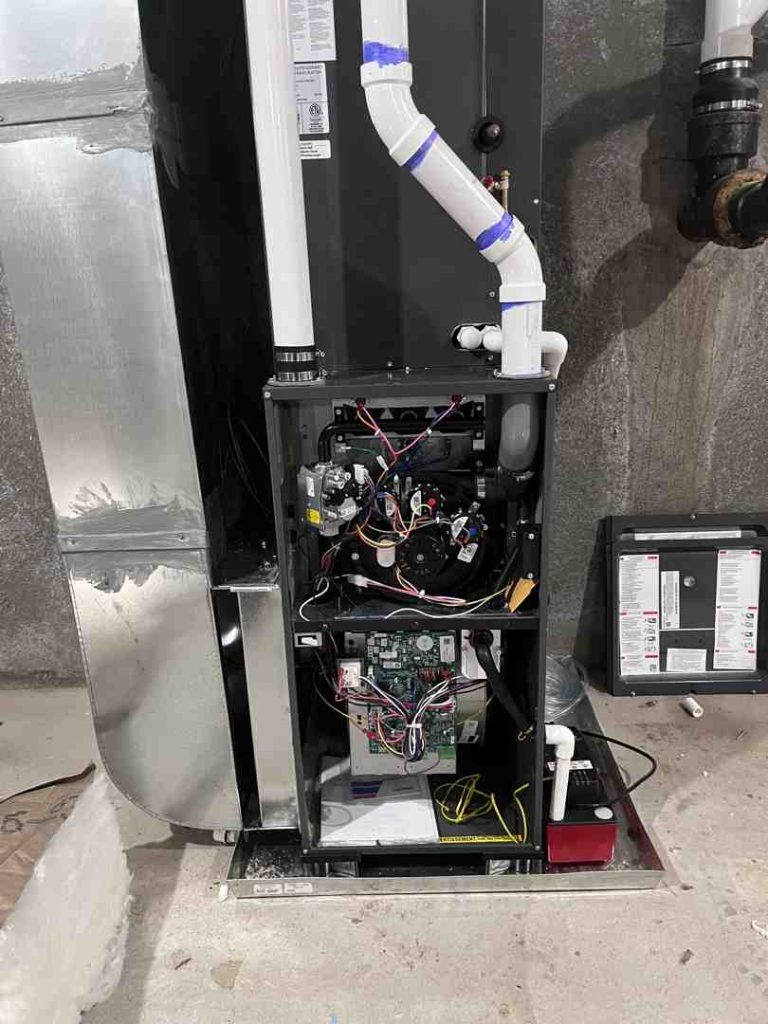
The short answer is: almost certainly. If you have a forced-air heating system, your home is already equipped with the “delivery vehicle” for cool air. However, adding ac to gas forced air furnace units requires more than just bolting on a new box. We have to ensure the existing “vehicle” can handle the extra weight of a cooling cycle.
Furnace Compatibility and Blower Capacity
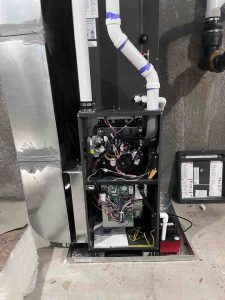
The heart of your furnace is the blower motor. In the winter, it pushes warm air through your home. In the summer, that same motor must push cold air. Here’s the catch: cold air is denser and “heavier” than warm air. It takes more force to move it. We need to verify your blower’s CFM (Cubic Feet per Minute) capacity. If the blower is too weak, the evaporator coil might freeze over, or the upstairs rooms in your Johnston or Smithfield home will stay sweltering while the basement turns into an icebox.
Ductwork Evaluation
Just because you have ducts doesn’t mean they are “AC ready.” Heating ducts in older Rhode Island homes were often designed for “heat rise”—the natural tendency of warm air to float upward. Cooling air behaves differently; it likes to sink. Furthermore, leaky ducts can waste 20–30% of your conditioned air before it ever reaches your living room. We look for:
- Sizing: Are the ducts wide enough to handle the increased airflow required for cooling?
- Condition: Are there gaps or disconnected sections in the attic or crawlspace?
- Insulation: Uninsulated ducts in a hot attic will sweat, leading to mold and efficiency loss.
The Retrofit vs. Replacement Dilemma
Sometimes, the furnace is so old (20+ years) that it makes more sense to replace the whole “ride” rather than just adding a new “stereo system.” If your furnace is nearing the end of its life, the labor costs for adding ac to gas forced air furnace components might be better spent on a complete high-efficiency system.
| Feature | AC Retrofit Only | Full HVAC Replacement |
|---|---|---|
| Upfront Cost | Lower ($4,000 – $8,000) | Higher ($8,000 – $15,000+) |
| Energy Efficiency | Limited by old furnace blower | Maximum (Modern SEER2 ratings) |
| Warranty | AC components only | Full system coverage |
| Longevity | Furnace may fail soon | 15-20 years of peace of mind |
| Best For | Furnaces under 10-12 years old | Furnaces over 15 years old |
For more details on how we handle these upgrades, check out our heating installation services.
Essential Components and Pre-Installation Requirements
When we talk about adding ac to gas forced air furnace systems, we are essentially building a “split system.” This means half the equipment sits inside, and half sits outside.
The Evaporator Coil (The Indoor Half)
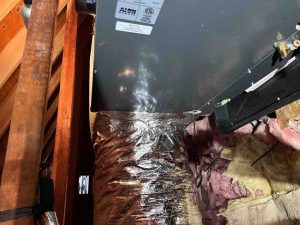
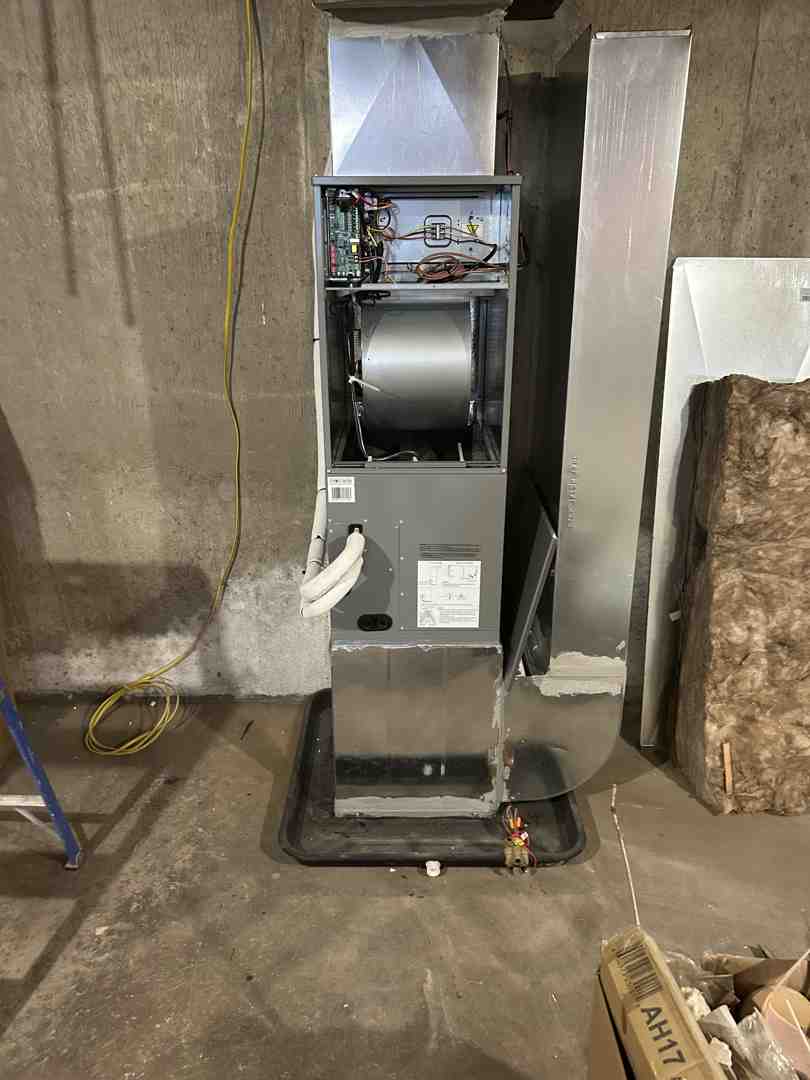
This is a series of copper or aluminum tubes housed in a metal cabinet. It is installed directly into the “plenum”—the large metal box sitting on top of your furnace. As the furnace blower pushes air across these ice-cold coils, the heat is pulled out of the air and carried away by refrigerant.
The Outdoor Condenser (The Outdoor Half)
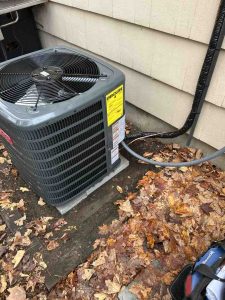
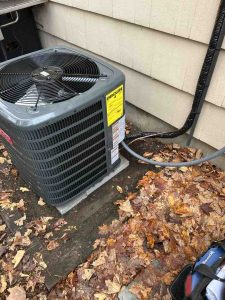
This is the large unit that sits in your yard. It contains the compressor (the “engine” of the AC) and a large fan. Its job is to release the heat collected from inside your home into the outside air.
Refrigerant Line Sets and Electrical
We connect the indoor and outdoor units with copper “line sets.” One line carries cold liquid refrigerant in, and the other carries hot gas out. We also need to ensure your electrical panel can handle the load. A central AC unit usually requires a dedicated 220V circuit. If your home in North Smithfield or Greenville still has an older fuse box or a crowded breaker panel, an electrical upgrade might be necessary.
Insulation and R-Value
Beyond the mechanical parts, your home’s “envelope” matters. Homes over 20 years old are often under-insulated by today’s standards. Improving your R-Value and home insulation standards ensures that the cold air you’re paying for actually stays inside. Additionally, sealing leaky ducts is vital; refer to the Energy Star guide on duct system efficiency to see why sealing can save you up to 30% on energy bills.
Condensate Drain Lines
Cooling air also removes humidity. That moisture turns into water (condensate) on the indoor coil. We must install a drain line or a condensate pump to safely move that water to a floor drain or the outdoors. Without it, you’ll end up with a puddle in your basement!
Step-by-Step Process for Integrating Cooling
Performing a Manual J Load Calculation
The most common mistake in the HVAC world is “guesstimating” the size of the AC. An oversized unit will “short-cycle,” turning on and off rapidly, which fails to remove humidity and wears out the compressor. An undersized unit will run forever and never get the house cool.
We perform a Manual J Load Calculation, which takes into account your square footage, window orientation, insulation levels, and local Smithfield climate. This ensures we provide the exact BTU (British Thermal Unit) capacity your home needs. You can learn more about understanding HVAC system sizing for your home to see how we get these numbers right.
Installing the Evaporator Coil and Condenser
Once the sizing is confirmed, the physical work begins. We modify the furnace plenum to fit the cased evaporator coil. Outside, we pour or set a level composite pad for the condenser. It’s crucial that the condenser is level and has at least 12-24 inches of clearance for proper airflow.
Final Integration: Adding AC to Gas Forced Air Furnace Controls
The final step is the “brain” of the system. We wire the new AC to your existing furnace control board and install a new thermostat. In some cases, older furnaces have 24V transformers that are too small to power a modern smart thermostat and the AC contactor simultaneously, so we may perform a small transformer upgrade.
Once wired, we perform “system commissioning.” This involves vacuuming the refrigerant lines to remove moisture and air, then “charging” the system with the precise amount of refrigerant. For a deeper dive, see our AC installation 101 for homeowners.
Costs, Efficiency, and Integration Options
Choosing Between Standard AC and Heat Pump Coils
When adding ac to gas forced air furnace setups, you have a choice: a standard AC coil or a heat pump coil.
- Standard AC: Provides cooling only. Your gas furnace handles all the heating.
- Heat Pump (Dual Fuel): This is the modern favorite in Rhode Island. A heat pump can both cool and heat. In a “Dual Fuel” setup, the heat pump handles heating during the chilly fall and spring days (down to about 35-40°F), and your gas furnace kicks in only when it gets truly “Rhode Island cold.”
This hybrid approach is incredibly efficient. When choosing, pay attention to Seasonal Energy Efficiency Ratio (SEER) ratings—the higher the number, the lower your electric bill. Read more about heat pumps vs traditional furnaces to see which fits your budget.
Estimating the Cost of Adding AC to a Gas Forced Air Furnace
While every home in Mapleville or Esmond is different, national averages and our local experience show that homeowners typically spend between $4,000 and $10,000 for this project.
What drives the price?
- System Size: A 3-ton unit (typical for 1,500–2,100 sq. ft.) costs more than a 1.5-ton unit.
- Efficiency (SEER2): High-efficiency units have a higher upfront cost but lower monthly bills.
- Ductwork Repairs: If we need to seal or resize ducts, it adds to the labor.
- Electrical Upgrades: Adding a new circuit or upgrading a panel.
For a personalized quote, visit our AC installation and repair page.
Frequently Asked Questions about Adding AC to a Furnace
Can I add AC to a very old furnace?
Technically, yes, but it’s often not advisable. If your furnace uses a “standing pilot” (a flame that stays lit all the time), it is likely 25-30 years old. These blowers weren’t designed for the resistance of an AC coil. If your furnace is over 15 years old, we usually recommend a full system replacement. The ROI (Return on Investment) is much higher because you get a new warranty and significantly lower utility bills.
Is DIY installation possible for central AC?
We strongly advise against it. In fact, federal law (EPA Section 608) requires a certification to handle and purchase refrigerant. Beyond the legalities, adding ac to gas forced air furnace components involves high-voltage electricity, pressurized gases, and complex airflow physics. A DIY mistake can void your equipment warranty, lead to refrigerant leaks (which are expensive to fix), or even create a fire hazard.
How does adding AC improve indoor air quality?
It’s not just about the temperature! Central AC acts as a massive dehumidifier. By pulling moisture out of the air, you prevent mold growth and dust mite infestations. Plus, because the air is being pulled through your furnace’s high-quality filter year-round, you’ll notice a significant reduction in dust and allergens. For more on keeping your system clean, see our HVAC repair and maintenance guide.
Conclusion
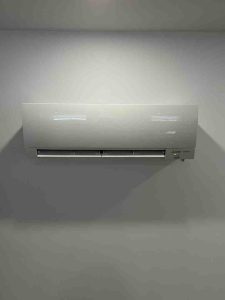
Retrofitting your home for central cooling is one of the best investments you can make for your family’s comfort and your property’s resale value. By adding ac to gas forced air furnace infrastructure already in your home, you can achieve whole-home comfort without the noise and inefficiency of window units.
At Advanced Heating & Cooling, we’ve been serving our neighbors in Smithfield, RI, and surrounding areas like Johnston, Greenville, and North Smithfield for over 30 years. We pride ourselves on honest, quality workmanship and providing the right solution for your specific home—not a one-size-fits-all sales pitch.
Ready to beat the Rhode Island humidity? We offer free estimates to help you determine the best path forward for your home. Schedule your professional HVAC services today and let’s get your “ride” ready for summer!