Introduction
When the temperatures drop in Smithfield or North Smithfield, your furnace starts working overtime. While that keeps you warm, it also strips the moisture right out of the air. You might notice the “desert effect”: static shocks when you touch a doorknob, a scratchy throat every morning, or even gaps appearing in your beautiful hardwood floors.
A central humidifier is the “hero” of winter comfort. Unlike those small, noisy portable units you have to refill every few hours, a whole-house system integrates directly with your furnace. It uses your existing ductwork to distribute perfectly balanced moisture to every single room in your home. By installing one of these systems, you aren’t just adding water to the air; you are investing in a healthier home environment.
Understanding Central Humidifier Installation Near Me
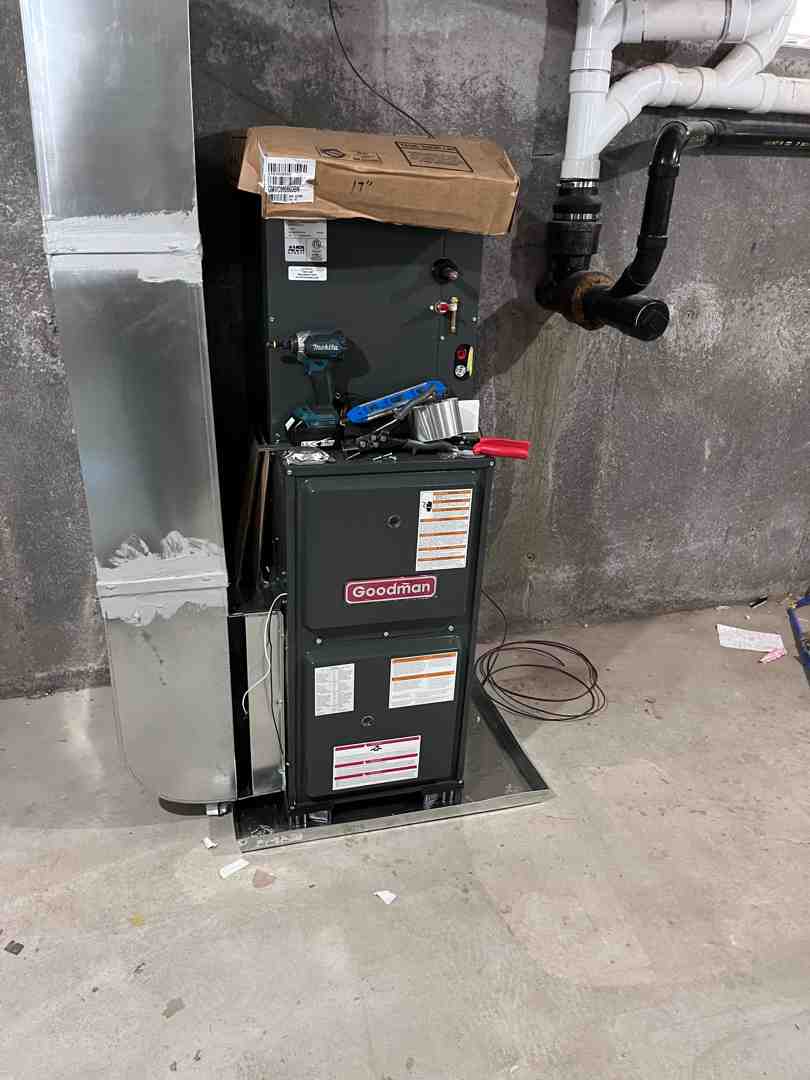
If you are searching for central humidifier installation near me, it is important to understand exactly what the process involves. This isn’t a “plug-and-play” appliance. A whole-house humidifier is a sophisticated add-on that requires three distinct skill sets: HVAC (for ductwork), plumbing (for the water line), and electrical (for the controls and power).
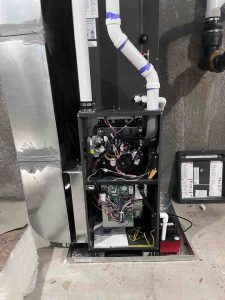
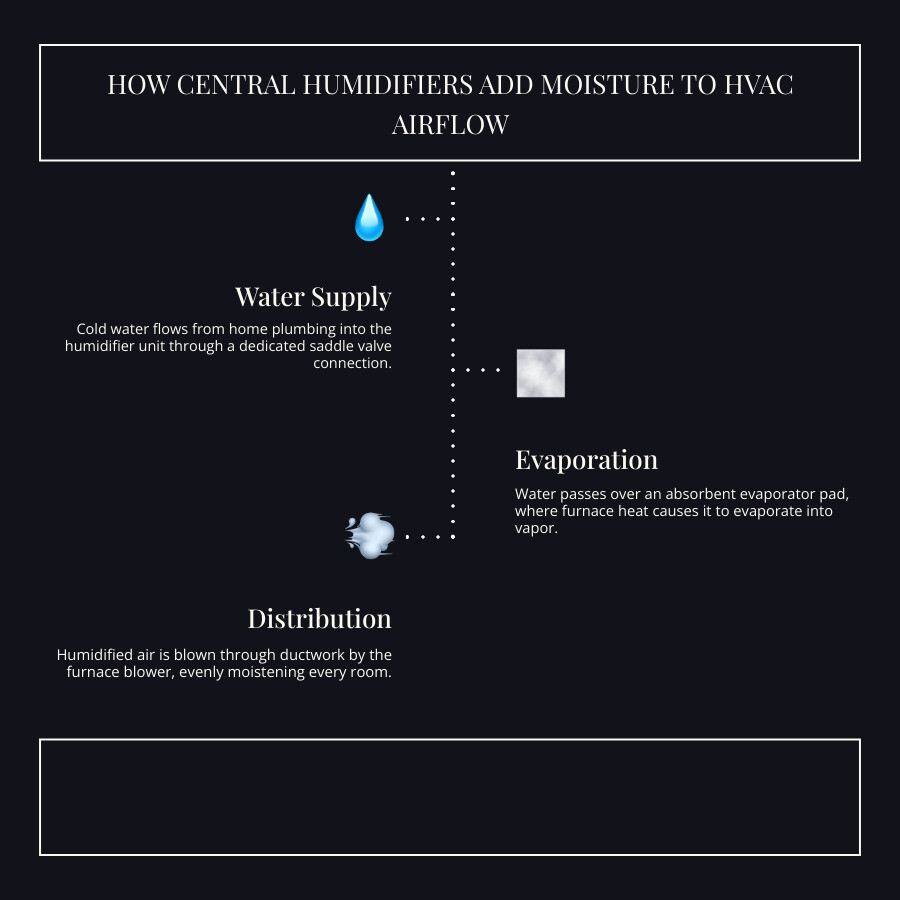
The unit is typically mounted on either the “supply” or “return” duct of your furnace. Inside the unit is an evaporator pad (also called a water panel). When your home’s humidity drops below the setting on your humidistat, a solenoid valve opens to allow water to soak the pad. As the furnace blower pushes warm air through that saturated pad, the water evaporates and is carried through your vents.
How Central Humidifiers Work
The beauty of a central system is its “set it and forget it” nature. It works in tandem with your heating system. When the furnace turns on, the humidifier checks the air. If it’s too dry, it adds vapor. This ensures consistent moisture levels throughout the house, preventing the “humid in the bedroom, dry in the kitchen” problem common with portable units.
Why Professional Central Humidifier Installation Near Me Outperforms DIY
We often see homeowners attempt a DIY install after watching a quick video online. However, there are significant impacts humidity has on your HVAC system if the installation goes wrong.
Professional installation is vital for several reasons:
- HVAC Warranty Protection: Many furnace manufacturers will void your warranty if a secondary component (like a humidifier) is installed incorrectly and causes damage to the heat exchanger.
- Precision Duct Cutting: You have to cut a large hole in your metal ductwork. If it’s not sealed perfectly, you lose air pressure and efficiency.
- Electrical Safety: Some units require 110v power, while others use low-voltage transformers. Getting the wiring wrong can fry your furnace’s control board.
- Plumbing Integrity: We avoid the “saddle valves” often found in DIY kits. These are notorious for leaking after 10–12 months. We prefer a professional plumbing bypass with a dedicated shut-off valve for long-term reliability.
Comparing Whole-House Humidifier Types and Benefits
Not all humidifiers are created equal. Depending on the size of your home in Johnston or Greenville, we might recommend different technologies.
| Feature | Bypass Humidifier | Fan-Powered Humidifier | Steam Humidifier |
|---|---|---|---|
| Moisture Output | 17 Gallons/Day | 18 Gallons/Day | Up to 34 Gallons/Day |
| Energy Source | Furnace Blower | Internal Fan | Internal Heater |
| Best For | Small to Mid-size Homes | Mid to Large Homes | Large/Luxury Homes |
| Maintenance | Annual Pad Change | Annual Pad Change | Annual Cleaning/Canister |
Bypass and Fan-Powered Models
Bypass humidifiers are the most common. They use the pressure difference created by the furnace blower to pull air through the water panel. They are incredibly reliable because they have very few moving parts.
Fan-powered models are similar but include their own internal fan. This allows them to produce about a gallon more moisture per day and makes them ideal for homes where duct space is limited. Both types are excellent for improving indoor air quality in Rhode Island homes without a massive upfront cost.
High-Capacity Steam Humidifiers
For our clients in larger homes (3,000+ sq. ft.) or those with expensive musical instruments and fine art, steam is the gold standard. Steam humidifiers don’t rely on the furnace’s heat to evaporate water; they boil the water themselves using electrodes. This allows them to produce up to 34 gallons of moisture per day and operate even when the furnace isn’t actively heating, providing the most precise control possible.
Signs Your Home is Suffering from Dry Air
How do you know if you actually need central humidifier installation near me? Your home and your body will tell you.
Common physical symptoms include:
- Frequent nosebleeds or “crusty” sinuses in the morning.
- Itchy, flaky skin that lotion can’t seem to fix.
- Staticky hair and constant “shocks” when touching metal.
- Increased respiratory irritation or snoring.
Ideal Humidity Levels for Winter
According to ENERGY STAR, the “sweet spot” for indoor humidity is between 30% and 50%. However, in cold climates like ours in Smithfield, we recommend aiming for 30% to 40% during the dead of winter. If you push it higher than 40% when it’s 10 degrees outside, you might see condensation or even ice forming on the inside of your windows. This is a sign to turn the humidistat down slightly to protect your window frames.
Protecting Your Home Investment
Dry air is a silent thief. It sucks moisture out of everything organic in your home. This leads to:
- Wood Flooring: Gaps between planks or “cupping.”
- Furniture: Joints in wooden chairs and tables can loosen and wobble.
- Musical Instruments: Pianos and violins can go out of tune or even crack.
- Aesthetics: Peeling wallpaper and “popping” drywall nails are often caused by the house shrinking and expanding due to humidity swings.
The Real Cost of Whole-Home Humidity Solutions
When budgeting for central humidifier installation near me, you should look at the total “installed” cost. While you might see a unit at a big-box store for $400, the labor, specialized tools, and additional materials (piping, wiring, sheet metal) usually bring the total investment to a range of $500 to $2,000.
- Unit Cost: Typically $400 to $1,100 depending on whether it is bypass or steam.
- Labor: Can account for roughly half of the total cost. A professional install usually takes 3 to 5 hours.
- Location Matters: If your furnace is in a tight crawlspace or an attic, labor costs may be slightly higher due to the complexity of the workspace.
Long-Term Value and Maintenance
A quality whole-house humidifier typically lasts 10 to 15 years. To get that lifespan, you must perform annual maintenance. This usually involves swapping out the water panel (which costs about $10–$30) once a year. If a unit is neglected, repairs average around $230.
When deciding on a system, many homeowners ask about the humidifier vs dehumidifier for Rhode Island homes debate. In our region, you almost always need a humidifier for the winter and a dehumidifier (or a high-efficiency AC) for our humid summers.
Energy Efficiency and Heating Savings
Believe it or not, a humidifier can actually save you money on your heating installation and repair costs. Moist air holds heat better than dry air. More importantly, moisture on your skin evaporates slower in humid air, which makes you feel warmer. Most homeowners find they can turn their thermostat down by 2 or 3 degrees and feel just as comfortable, leading to lower monthly utility bills.
Frequently Asked Questions about Humidifiers
How often should I change my humidifier filter?
You should replace the water panel (filter) at least once per year, typically at the start of the heating season. If you have “hard water” with high mineral content, you may need to change it twice—once in November and again in February—to prevent scale buildup from blocking the airflow.
Can a central humidifier cause mold?
This is a common concern. As long as you keep your humidity below 50% and your system is professionally installed with a proper drain line, the risk is minimal. Modern “flow-through” designs ensure that water never sits stagnant in a reservoir; any water that doesn’t evaporate goes straight down the drain.
Does a whole-house humidifier help with allergies?
Yes! Dry air irritates the mucous membranes in your nose and throat, making you more susceptible to allergens and viruses. By maintaining proper moisture, your body’s natural filtration system works better. Additionally, humidified air helps keep dust from becoming airborne, which can significantly reduce allergy symptoms.
Conclusion
Choosing the right partner for central humidifier installation near me shouldn’t be a stressful process. At Advanced Heating & Cooling, we’ve spent three decades serving our neighbors in Smithfield, Johnston, and North Smithfield. We know the local climate, we know the local water conditions, and we know exactly how to integrate a humidifier into your specific HVAC setup for maximum comfort.
Our team is known for honest, quality workmanship. We don’t just “slap a unit on”; we ensure the plumbing is leak-proof, the electrical is safe, and the humidistat is calibrated perfectly. Whether you are looking for a simple bypass unit or a high-capacity steam system, we are here to help you breathe easier this winter.
Finding Reliable Central Humidifier Installation Near Me in Smithfield
Ready to stop the static shocks and start sleeping better? Don’t wait until the middle of a January freeze to fix your dry air problems.
Schedule your professional humidifier installation today with Advanced Heating & Cooling. We offer free estimates and the peace of mind that comes with 30+ years of local experience. Give us a call, and let’s make your home the comfortable sanctuary it deserves to be!