What Is Commercial Mechanical Service — and Why It Matters for Your Business
Commercial mechanical service covers the installation, maintenance, repair, and replacement of the mechanical systems that keep your building running — think HVAC, plumbing, refrigeration, and building controls.
Here’s a quick look at what’s typically included:
| Service Area | What It Covers |
|---|---|
| HVAC | Heating, cooling, ventilation for commercial spaces |
| Plumbing | Water supply, drainage, gas piping, water heaters |
| Refrigeration | Commercial cooling units, chillers, refrigerant systems |
| Building Controls | Thermostats, automated climate controls, monitoring |
| Preventative Maintenance | Scheduled inspections to prevent breakdowns |
| Emergency Repairs | Rapid-response service when systems fail |
If your building gets too hot, too cold, or loses running water — operations stop. It’s that simple.
And the costs add up fast. Commercial HVAC systems alone account for roughly 40% of a building’s total energy consumption. That means an inefficient or poorly maintained system isn’t just uncomfortable — it’s eating into your bottom line every single month.
This guide walks you through everything you need to know: from the core systems involved, to choosing the right contractor, to keeping those systems running efficiently for years to come.
I’m Richard Marcello, President of Advanced Heating & Cooling, with over 30 years of hands-on experience delivering reliable commercial mechanical service to businesses across Rhode Island and nearby Massachusetts. Let’s break down what great commercial mechanical service actually looks like — and how to make sure you’re getting it.
Commercial mechanical service terms to remember:
The Core Components of Commercial Mechanical Service
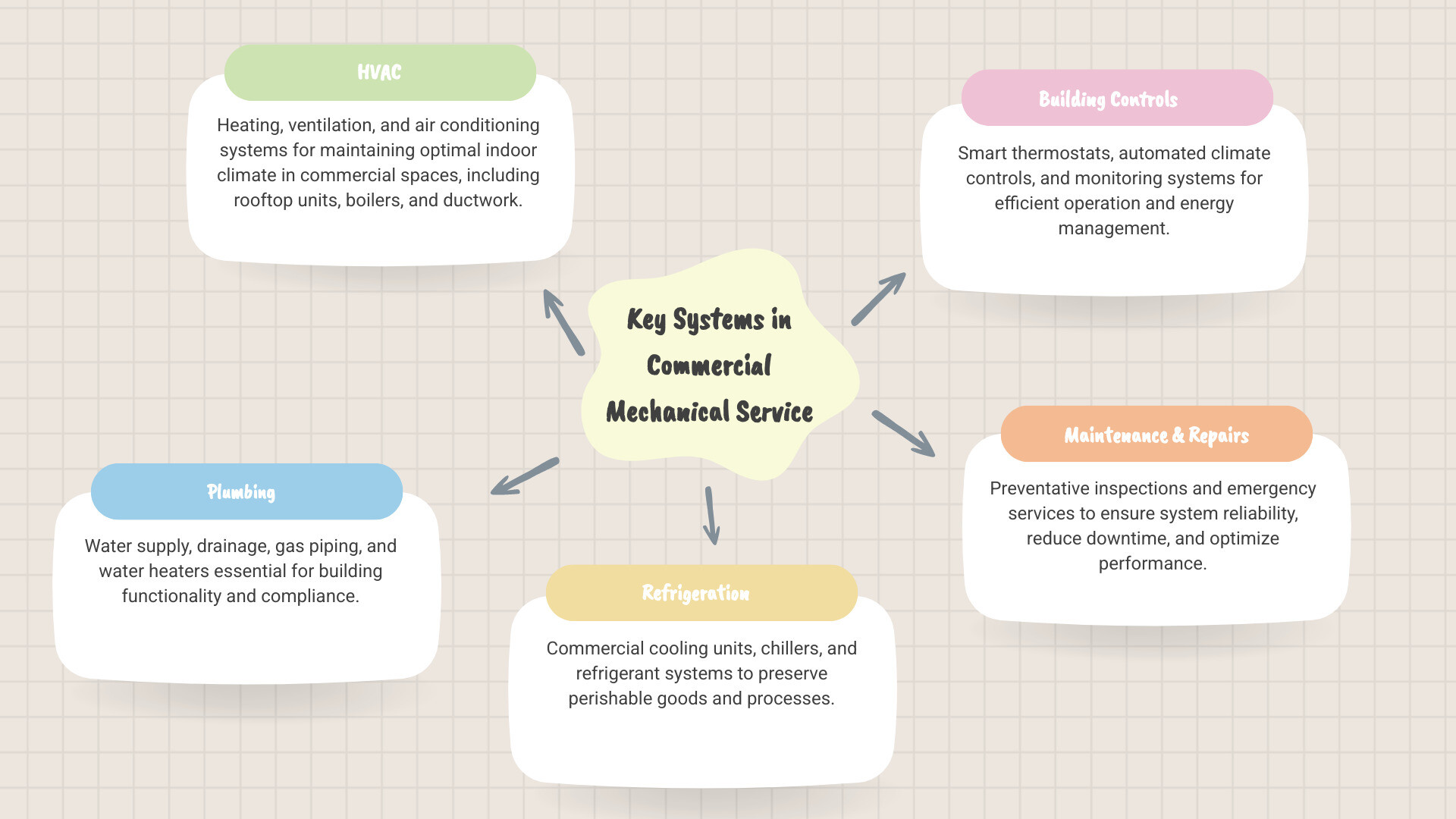
When we talk about commercial mechanical service, we are referring to the “internal organs” of a building. Just as a human body needs a heart to pump blood and lungs to breathe, a modern enterprise needs these systems to function. If these systems fail, the building becomes uninhabitable or, at the very least, unproductive.
HVAC Systems
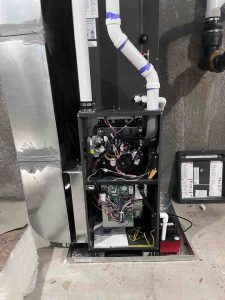
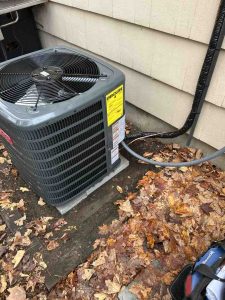
Heating, Ventilation, and Air Conditioning (HVAC) is usually the largest piece of the mechanical puzzle. In a commercial setting, this isn’t just a bigger version of a home furnace. We are talking about massive rooftop units (RTUs), chillers, cooling towers, and complex ductwork systems. These systems must manage the comfort of hundreds or thousands of people while balancing external temperatures and internal heat loads from computers and machinery.
Plumbing Systems
Commercial plumbing goes far beyond fixing a leaky faucet. It includes high-capacity water heaters, backflow prevention, grease traps for restaurants, and complex gas piping. In Smithfield and surrounding areas, ensuring these systems meet local codes is a vital part of our commercial mechanical service.
Commercial Refrigeration
For businesses in the food service or medical sectors, refrigeration is a mission-critical service. This includes walk-in coolers, freezers, and specialized chillers. If a compressor goes out in a medical lab, thousands of dollars in sensitive materials could be lost in hours.
Piping and Building Controls
Piping refers to the hydronic systems that move hot or chilled water throughout a building to provide climate control. To manage all this, we use building controls—the “brain” of the operation. Modern controls allow facility managers to monitor energy use and adjust temperatures from a single interface, often remotely.
Understanding Your Commercial Mechanical Service Needs
Every business has a different lifecycle for its equipment. We generally categorize these needs into three buckets:
- New Installations and Retrofits: Whether you are building from the ground up or need a seamless commercial AC & heating replacement, the goal is to install the most efficient system for your specific square footage.
- System Upgrades and Tenant Build-outs: As businesses grow or move into new spaces, the mechanical systems often need to be reconfigured. This might involve adding commercial zone control for office buildings to ensure the CEO isn’t freezing while the sales floor is sweltering.
- Emergency Repairs and Diagnostics: When things go wrong, you need total HVAC solutions that get you back online fast. In our experience, diagnostic assessments are the most critical part of an emergency call—identifying the why behind a failure prevents it from happening again.
Industries and Their Unique Mechanical Requirements
Not all buildings are created equal. A “one size fits all” approach to commercial mechanical service is a recipe for disaster.
- Healthcare Facilities: These are perhaps the most demanding environments. They require strict adherence to AHCA (Agency for Health Care Administration) requirements. We often deal with clean rooms and negative pressure rooms, where the ventilation system must ensure that airborne contaminants do not spread to other parts of the hospital.
- Education Sector: Schools and universities have high occupancy rates and vary significantly in usage between summer and winter. Reliability is key here to prevent school closures.
- Hospitality: In hotels and restaurants, the customer experience is everything. A broken AC in a hotel or a failed walk-in freezer in a restaurant can result in immediate revenue loss and a damaged reputation.
- Industrial & Manufacturing: These sites often have specialized requirements for process cooling or high-intensity ventilation to remove fumes or heat generated by machinery.
- Data Centers: Here, the mechanical system isn’t for human comfort; it’s for the equipment. Servers generate massive amounts of heat, and a failure in the cooling system can lead to catastrophic data loss and hardware damage.
Project Delivery and Modern Technology
The days of a contractor showing up with just a pipe wrench and a ladder are over. Modern commercial mechanical service is a high-tech field that requires precision planning to stay on time and within budget.
Design-Build Approach
One of the most efficient ways to handle a mechanical project is the Design-Build approach. Instead of hiring an architect, then an engineer, then a contractor, the Design-Build model puts everything under one roof. We handle the design, the execution, and the maintenance. This integrated approach creates a balance of cost, function, and maintainability. Because the team building the system is the same team that designed it, there is far less “finger-pointing” and much more accountability.
Leveraging Technology for Precision and Efficiency
We use several high-tech tools to ensure your project goes off without a hitch:
- CAD (Computer-Aided Design): Allows us to create detailed 2D and 3D blueprints of your systems.
- BIM (Building Information Modeling): This is the gold standard for modern construction. BIM creates a digital representation of the building’s physical and functional characteristics.
- Clash Detection: Through BIM, we can see if a planned HVAC duct is going to hit a plumbing line before we even arrive on-site. This saves an incredible amount of time and money during the construction phase.
- Energy Modeling: We can simulate how much energy a system will use before it’s installed, allowing us to make adjustments that save you money on utility bills for the next 20 years.
The Hallmarks of a Top-Tier Contractor
Choosing a partner for commercial mechanical service is a major decision. You aren’t just buying a piece of equipment; you are entering into a long-term relationship. In Smithfield, RI, and the surrounding areas, we believe your contractor should be an extension of your facility management team.
Technician Qualifications and Safety Standards
You should never settle for “handyman” level work on commercial systems. The complexity is simply too high. Here is what we consider the baseline for a qualified technician:
- Journeyman Certification: This ensures the technician has completed years of supervised training and passed rigorous exams.
- EPA Certification: Specifically Section 608, which is required for any technician handling refrigerants.
- Apprenticeship Programs: We value technicians who have come through structured, multi-year programs that teach the “right way” to do things from day one.
- OSHA Safety Training: Safety isn’t just a buzzword; it’s a culture. Technicians should be OSHA-10 or OSHA-30 certified.
- EMR Metrics: A professional contractor will track their Experience Modification Rate (EMR). A low EMR indicates a strong safety record and an incident-free workplace commitment.
Key Considerations When Selecting a Partner
When you are vetting HVAC contractors in Smithfield, RI, look for these indicators of quality:
- 30+ Years of Experience: There is no substitute for having seen it all. Experience helps us anticipate problems before they happen.
- 24/7 Emergency Availability: Mechanical systems don’t wait for business hours to break. You need a partner who answers the phone at 2:00 AM on a Sunday.
- Use of OEM Parts: Original Equipment Manufacturer (OEM) parts are designed specifically for your unit. While “will-fit” parts might be cheaper upfront, they often lead to lower efficiency and shorter equipment life.
- Service Guarantees: A reputable company stands behind their work. If it’s not fixed right, they should make it right.
- Free Estimates: You should know what you are getting into before the work starts. We believe in transparency from the first handshake.
Maximizing System Performance and ROI
Your mechanical systems are an investment, not just an expense. The goal of high-quality commercial mechanical service is to maximize the Return on Investment (ROI) by extending system longevity and lowering operational costs.
The Role of Preventative Maintenance in Commercial Mechanical Service
If you wait until something breaks to call us, you’re already losing money. The importance of regular HVAC maintenance cannot be overstated.
Consider this: Regular preventative maintenance can reduce energy consumption in commercial HVAC systems by up to 15%. In a large building, that 15% can translate into thousands of dollars in annual savings.
Beyond the utility bill, maintenance provides:
- Fewer Breakdowns: We catch the worn belt or the leaking valve during a scheduled visit, rather than during a heatwave.
- Improved Air Quality: Clean filters and coils mean your employees and customers are breathing healthier air.
- System Longevity: A well-maintained chiller can last 20-25 years, while a neglected one might fail in 10. Proactive care is how regular HVAC maintenance can save you money in the long run.
Handling Emergencies and Ensuring Sustainability
Even with the best maintenance, emergencies happen. When they do, response time is everything. We pride ourselves on rapid response because we know that for a business, time is literally money. Whether it’s an emergency heating repair in Smithfield or a cooling failure in a server room, you need a team that arrives prepared with the right tools and parts.
Sustainability is also a major focus of modern service. We help businesses transition to “greener” operations through:
- Energy-Efficient Upgrades: Replacing aging units with high-SEER (Seasonal Energy Efficiency Ratio) equipment.
- Smart Technology: Asking are smart thermostats really worth it? for your business. For most commercial spaces, the answer is a resounding yes, as they allow for precise scheduling and remote monitoring.
- Sustainable Building Practices: Using refrigerants with lower global warming potential and ensuring all old fluids are recovered according to EPA standards.
Conclusion
Navigating commercial mechanical service can feel overwhelming, but it boils down to one thing: finding a partner you can trust. Your building’s mechanical systems are the foundation of your business’s comfort, safety, and efficiency. By investing in qualified technicians, modern technology, and proactive maintenance, you aren’t just fixing pipes and wires—you are protecting your livelihood.
At Advanced Heating & Cooling, we’ve spent over 30 years serving the Smithfield, RI area, including North Smithfield, Johnston, Greenville, and Esmond. We pride ourselves on honest, quality workmanship and a deep understanding of the unique needs of Rhode Island businesses.
Whether you need a new installation, a complex retrofit, or a reliable maintenance partner to keep your energy bills in check, we are here to help. For comprehensive and reliable solutions in the Smithfield, RI area, explore our efficient and reliable commercial HVAC services and let us help you build a more comfortable, sustainable future for your enterprise.