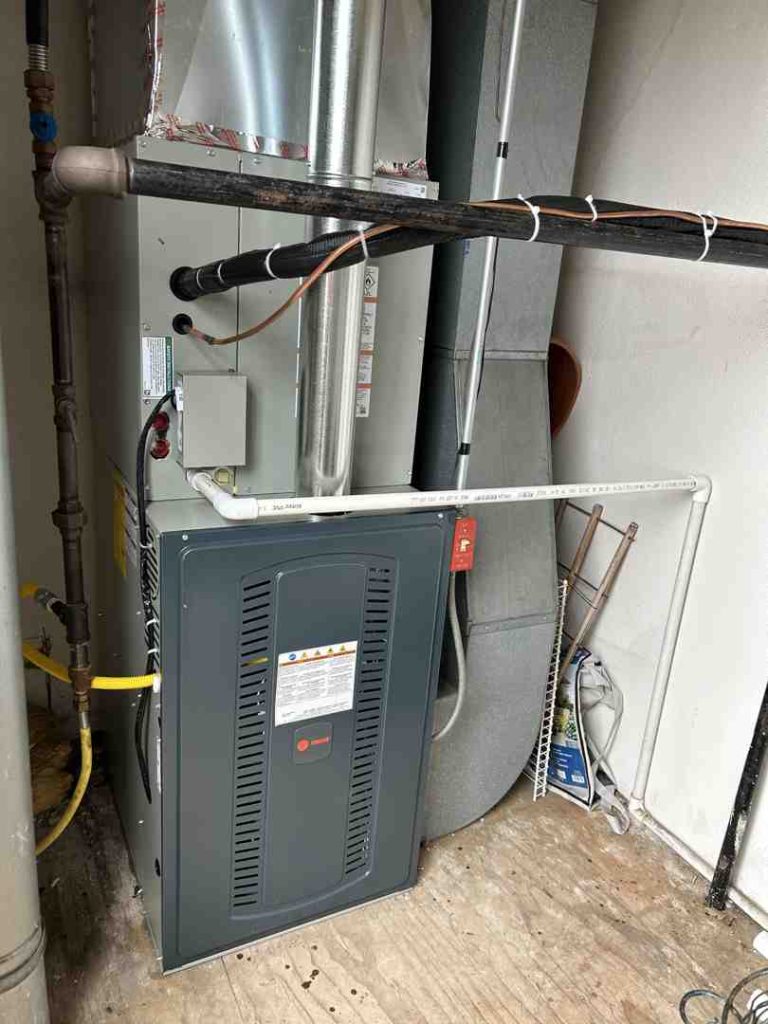
Is It Time for a Gas Boiler Replacement? Here’s What You Need to Know
Gas boiler replacement is one of the most important home heating decisions you’ll make — and one of the most expensive if you get it wrong.
Quick answers for Rhode Island homeowners:
| Question | Answer |
|---|---|
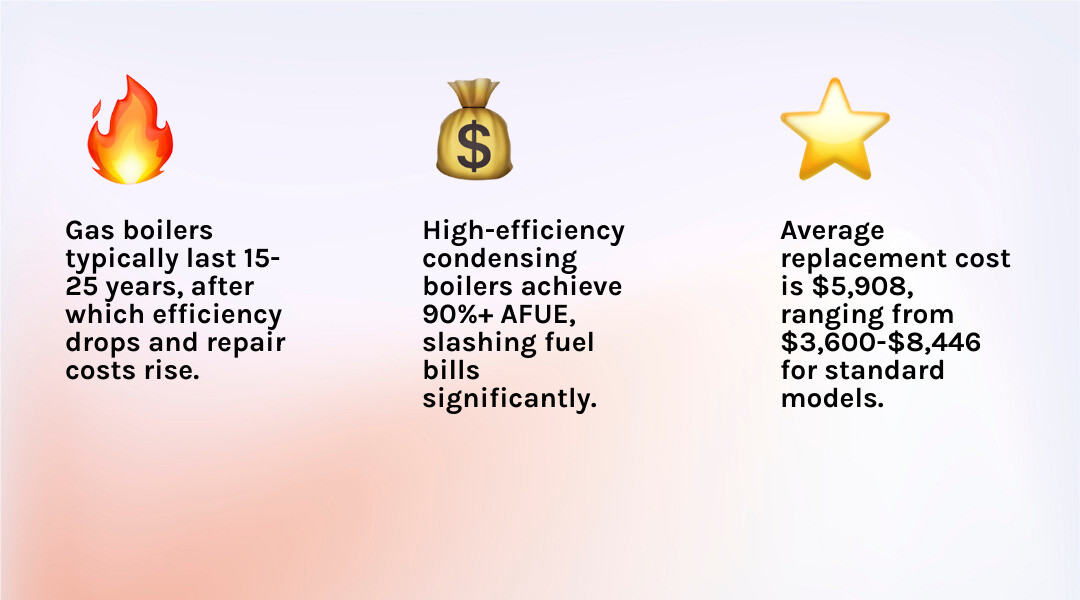
| Average cost | $3,600 – $8,446 (typical range); avg. ~$5,908 |
| High-efficiency models (90%+ AFUE) | $6,000 – $12,000 installed |
| Standard-efficiency models (80–89% AFUE) | $3,000 – $6,000 installed |
| Labor cost | $1,500 – $5,000 |
| Typical boiler lifespan | 15–25 years |
| When to replace | Age 15+, frequent repairs, rising bills |
| Best efficiency rating to look for | 90%+ AFUE (condensing boiler) |
| Available rebates | Up to $1,750 for qualifying high-efficiency units |
Most boilers in New England were installed 15 to 20 years ago. If yours is in that range — and your heating bills keep climbing — you’re probably not imagining it. Older boilers lose efficiency fast, and repairs start adding up quickly.
The good news: a properly sized, high-efficiency replacement can cut your fuel costs, improve comfort, and run reliably for another two decades.
But there’s a lot to get right: sizing, boiler type, efficiency ratings, venting, rebates, and finding a contractor you can actually trust. This guide walks you through all of it — no fluff, no overselling.
I’m Richard Marcello, President of Advanced Heating & Cooling in Smithfield, RI, and I’ve been helping homeowners navigate gas boiler replacement decisions for over 30 years. Let’s make sure you get the right system at a fair price.
Important gas boiler replacement terms:
Understanding the Costs of Gas Boiler Replacement
When we talk about the cost of a gas boiler replacement, it’s easy to get sticker shock. As of April 2026, the market has stabilized, but the technology has also become more sophisticated. Most homeowners in the Smithfield and North Smithfield areas spend between $4,290 and $10,070 for a full installation, though the average lands right around $5,908.
Why the big range? It comes down to the “Genius” vs. “Dummy” approach. A “Dummy” approach is just swapping the old box for a new one without looking at the pipes. A “Genius” approach looks at the long-term ROI.
Cost Breakdown: Standard vs. High-Efficiency
| Expense Item | Standard Efficiency (80-89% AFUE) | High-Efficiency (90%+ AFUE) |
|---|---|---|
| Boiler Unit Cost | $2,500 – $4,000 | $5,000 – $9,000 |
| Labor & Installation | $1,500 – $3,000 | $2,500 – $5,000 |
| Venting/Chimney Liner | $500 – $1,500 | $1,000 – $2,500 |
| Permits & Disposal | $300 – $700 | $300 – $700 |
| Total Estimated Cost | $4,800 – $9,200 | $8,800 – $17,200 |
Factors That Move the Needle
- Labor Rates: In Rhode Island, specialized HVAC labor costs between $75 and $200 per hour. A complex gas boiler replacement can take anywhere from a few hours to several days.
- Material Expenses: If we have to run new gas lines (which can cost $500–$2,000) or install a chimney liner ($1,500–$4,000), the price goes up.
- Removal Costs: Taking out that old 500-pound cast iron beast and disposing of it properly usually costs between $200 and $500.
- Regional Variations: Being in Smithfield, we deal with “New England Basement Syndrome”—narrow stairs and tight spaces—which can occasionally add to the labor time.
Selecting the Ideal System: Types and AFUE Ratings
Choosing a boiler isn’t just about the brand (though we love reliable names like Weil-McLain and Rheem). It’s about the technology inside the box.
AFUE Ratings Explained
AFUE stands for Annual Fuel Utilization Efficiency. Think of it like MPG for your house. If a boiler has an 80% AFUE, 80 cents of every dollar you spend on gas goes into heating your home, while 20 cents literally goes up the chimney. High-efficiency condensing boilers boast 90% to 98.5% AFUE. Over a lifetime, a high-efficiency natural gas boiler can save you roughly $780 in fuel costs, and often much more if you’re upgrading from a 56% efficiency “dinosaur.”
Comparing Boiler Types
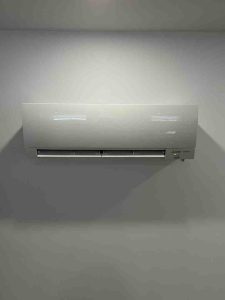
- Combi Boilers: These are the “Swiss Army Knives” of heating. They provide both space heating and on-demand hot water from one compact, wall-mounted unit. They are perfect for smaller homes in Johnston or Greenville. However, if you already have a functional indirect hot water tank, a combi might be overkill. Check out our guide: Is An Electric Combi Boiler Right For You Installation And Costs Explained.
- System Boilers: These work with a separate hot water cylinder. They are great for larger homes with multiple bathrooms where everyone wants to shower at the same time.
- Regular (Conventional) Boilers: These are the traditional setups with a tank in the attic and a cylinder in the basement. We usually only install these as a like-for-like gas boiler replacement if the existing pipework is too old to handle the pressure of a modern system.
- Condensing vs. Non-Condensing: Modern condensing boilers capture “waste” heat from the exhaust gases and reuse it. Non-condensing (standard) boilers let that heat escape. While condensing units cost more upfront, they are the gold standard for 2026.
Sizing and Heat Loss: The Science of Comfort
Here is where the “Genius” part comes in. Most boilers in Rhode Island are oversized. Contractors in the 90s used to just “guess” and then add 20% for good measure. This leads to short cycling, where the boiler turns on and off rapidly, wearing out the components and wasting gas.
The Manual J Calculation
To get your gas boiler replacement right, we perform a Manual J load calculation. This isn’t a guess; it’s physics. We look at:
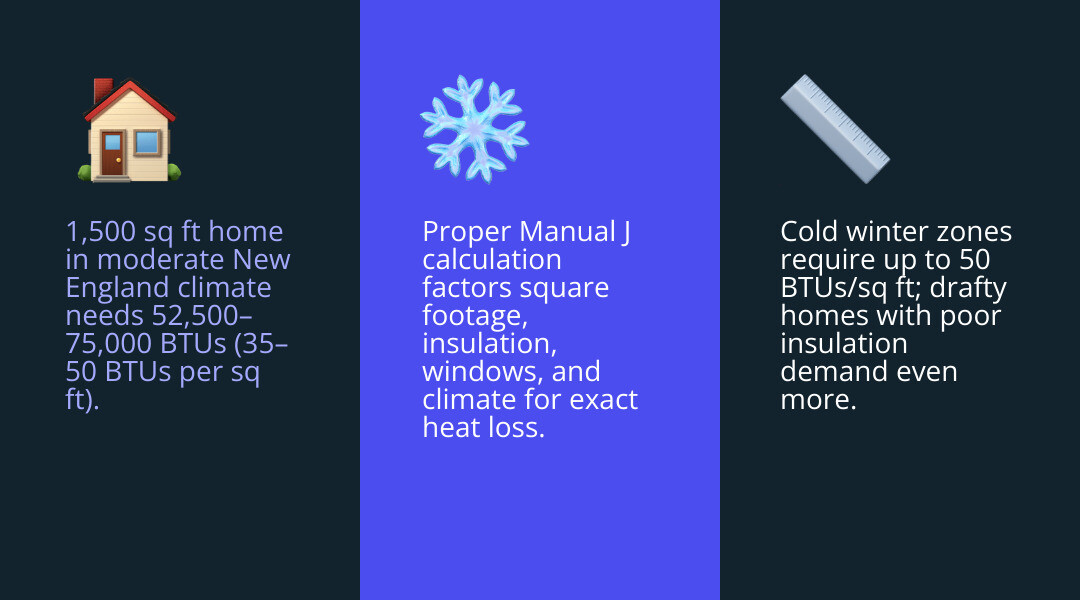
- Square Footage: A 1,500 sq. ft. house in North Smithfield needs much less power than a 4,000 sq. ft. commercial space.
- Insulation: Do you have old horsehair insulation or modern spray foam?
- Climate Zone: We live in a “Moderate heat/Cold winter” zone, requiring roughly 35–50 BTUs per square foot.
- Windows and Air Sealing: A drafty 200-year-old home in Scituate loses heat much faster than a new build in Esmond.
If you want to avoid “getting burned” by a bad installation, make sure your tech actually measures your radiators. You can read more on this here: How To Get A New Combi Boiler Fitted Without Getting Burned.
The Gas Boiler Replacement Process and Maintenance
Once we’ve picked the unit and sized it perfectly, it’s time for the “surgery.”
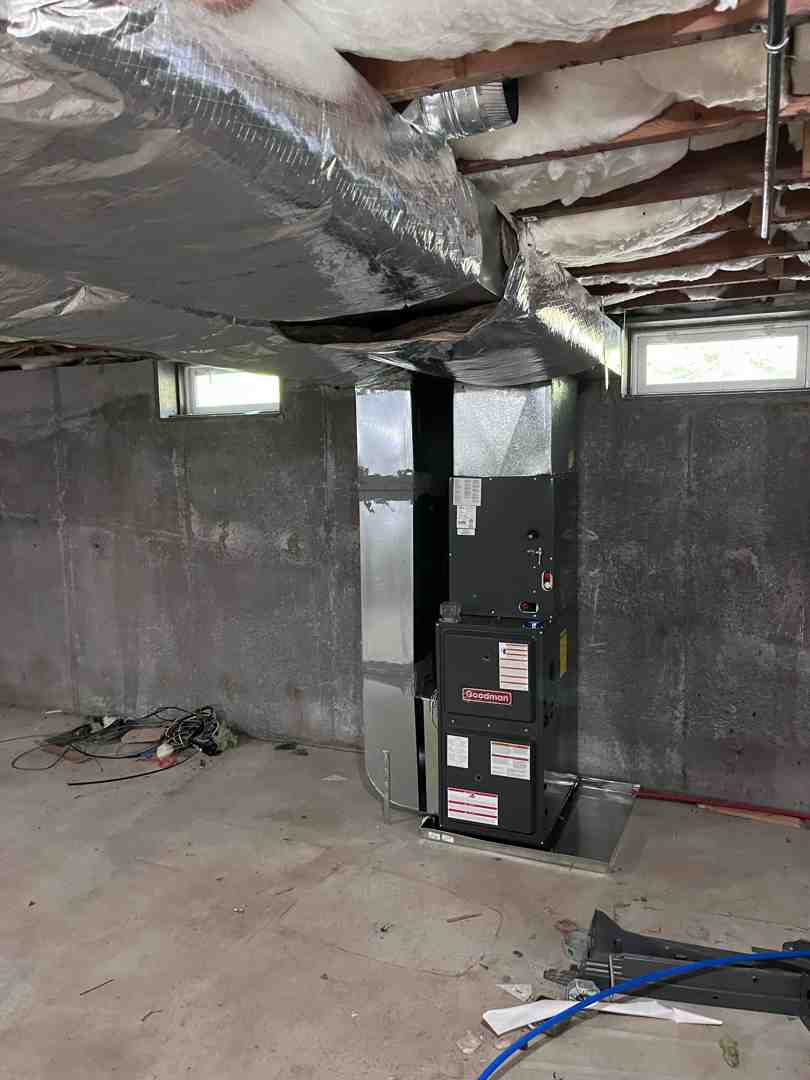
Step-by-Step Gas Boiler Replacement Procedure
- Consultation & Assessment: We visit your home in Smithfield or surrounding areas to calculate heat loss and check your venting.
- System Drainage: We drain the old water out of your radiators and pipes.
- Old Unit Disposal: We haul away the old unit (and we recycle it!).
- System Flush: This is critical. We clean the old pipes to make sure sludge doesn’t ruin your shiny new boiler.
- Installation & Hookup: We mount the new unit, connect the gas lines, and integrate it with your thermostat.
- Venting Requirements: High-efficiency units usually need PVC venting out the side of the house, while standard units might need a new chimney liner.
- Final Safety Testing: We check for gas leaks and carbon monoxide, and perform a combustion-efficiency test.
For more tips on finding the right person for this job, see The Homeowners Guide To Hiring A Reliable Boiler Technician.
Maintaining Your Gas Boiler Replacement for Longevity
A new boiler should last 15 to 25 years, but only if you treat it right.
- Annual Servicing: Just like a car, your boiler needs a yearly tune-up. We check the heat exchanger, clean the burners, and test the safety controls.
- Water Quality: Rhode Island water can be hard. We often install magnetic filters to catch metallic debris before it clogs the boiler.
- Warranty Validation: Most manufacturers (like Carrier or Rinnai) require annual professional maintenance to keep your 10-year warranty valid.
If you are a business owner looking for larger systems, check out our guide on Full Steam Ahead With Professional Commercial Boiler Installation.
Frequently Asked Questions about Boiler Upgrades
How long do gas boilers typically last?
Most modern gas boilers last between 15 and 25 years. Cast iron units tend to last longer (sometimes 30+ years) but are much less efficient. High-efficiency “ModCon” (modulating-condensing) boilers usually have a lifespan of 15-17 years because their components work harder to save you fuel. If your boiler is over 15 years old and starts needing repairs that cost more than 50% of a new unit, it’s time to replace it.
What is the difference between a boiler and a furnace?
This is the most common question we get!
- Boilers heat water. That water (or steam) is pushed through pipes to radiators, baseboards, or underfloor radiant heating.
- Furnaces heat air. That air is blown through ductwork and out of vents in your floor or ceiling. Boilers generally provide a “gentler” heat and don’t blow dust around, but they are typically more expensive to install than furnaces.
Are there rebates available for high-efficiency models?
Yes! In Rhode Island, homeowners can often access significant incentives. High-efficiency units (95% AFUE or higher) can qualify for rebates up to $1,750, especially for combi units. Additionally, federal tax credits through the Inflation Reduction Act and 0% APR financing programs are often available to help offset the upfront cost. Upgrading from a 56% efficiency unit to a 90% unit can also save 1.5 tons of CO2 emissions annually-good for your wallet and the planet.
Conclusion
A gas boiler replacement is a big project, but it doesn’t have to be a stressful one. Whether you’re a “Genius” who wants the highest-spec condensing system or a “Dummy” (we say that lovingly!) who just wants the heat to turn on when you flick the switch, the key is professional installation and proper sizing.
At Advanced Heating & Cooling, we’ve spent over 30 years serving our neighbors in Smithfield, Johnston, North Smithfield, and across Rhode Island. We’re locally owned, we’re honest, and we provide the kind of quality workmanship that keeps your home warm through the toughest New England winters.
Ready to see how much you could save with a new system? We offer free estimates and straightforward advice. Schedule your heating installation today and let’s get your home ready for 2026 and beyond.