Why Commercial HVAC Replacement Matters for Your Business
Commercial HVAC replacement is the process of removing an outdated or failing heating and cooling system and installing a new, more efficient unit to maintain comfort, reduce energy costs, and ensure business continuity. Here’s what you need to know:
The Commercial HVAC Replacement Process:
- Assessment – A qualified technician evaluates your current system and building needs
- System Selection – Choose the right type and size based on your building requirements
- Contractor Selection – Vet licensed professionals with commercial experience
- Installation – Schedule work to minimize business disruption (typically hours to days)
- Commissioning – Test and calibrate the new system for optimal performance
- Maintenance Plan – Establish regular service to protect your investment
Key Replacement Indicators:
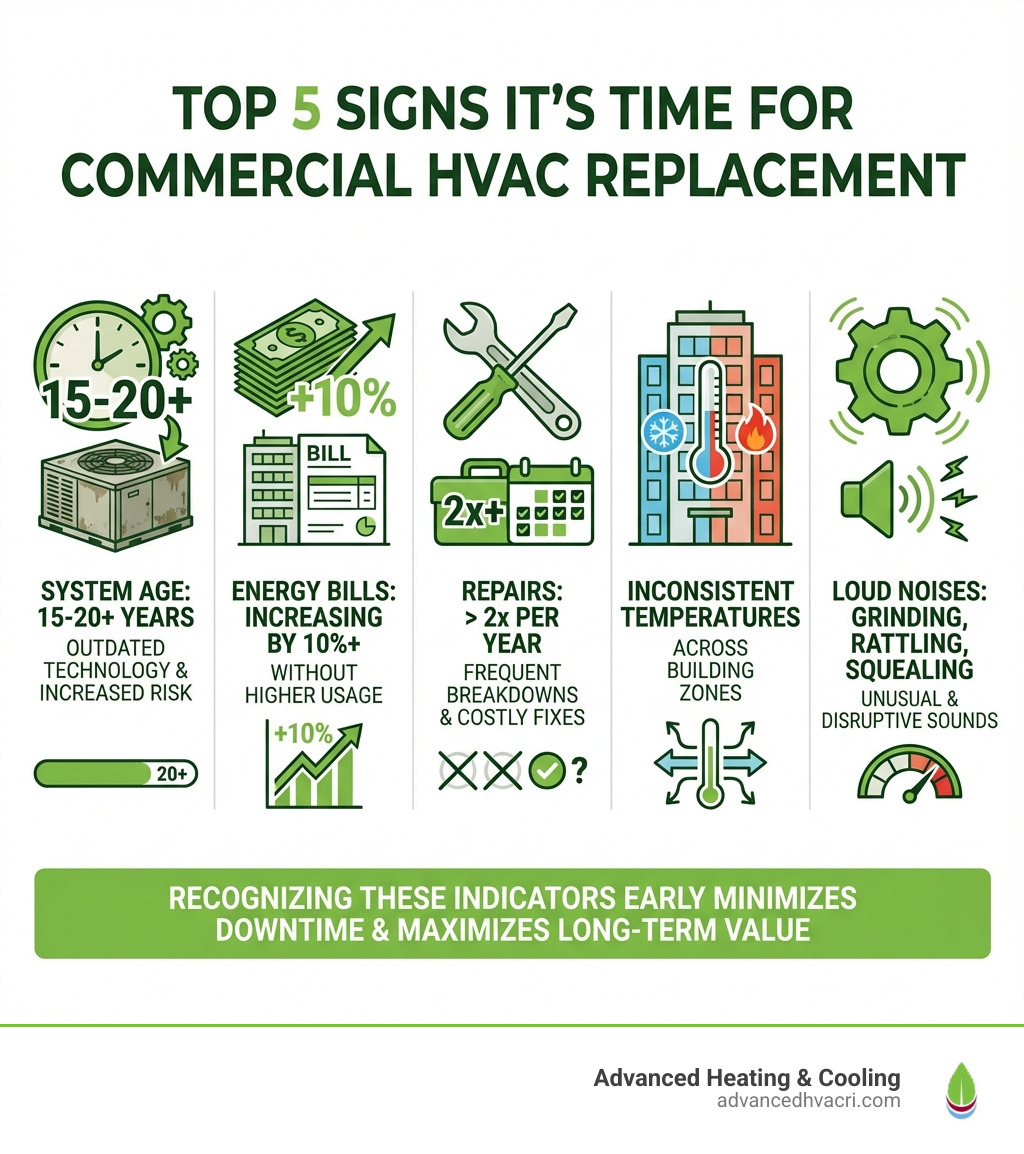
- System age of 15-20 years or older
- Rising energy bills without increased usage
- Frequent breakdowns and costly repairs
- Inconsistent temperatures throughout your building
- Unusual noises like grinding or squealing
When a commercial HVAC system fails, it disrupts productivity, revenue, and the comfort of your employees and customers. The decision to replace rather than repair can feel overwhelming, but understanding the process—from recognizing warning signs to selecting the right system—makes this investment far less stressful.
I’m Richard Marcello. For over 30 years, my team at Advanced Heating & Cooling has helped Rhode Island businesses with commercial HVAC replacement projects, providing honest guidance and reliable service. We focus on practical solutions that minimize downtime and maximize long-term value.
Is It Time? Key Signs Your Commercial HVAC Needs Replacement
Deciding when to undertake a commercial HVAC replacement is a critical business decision. Often, the signs are subtle, but they accumulate to impact your bottom line and building comfort. Recognizing these indicators early can save you significant costs and headaches.
The Telltale Signs of an Aging System
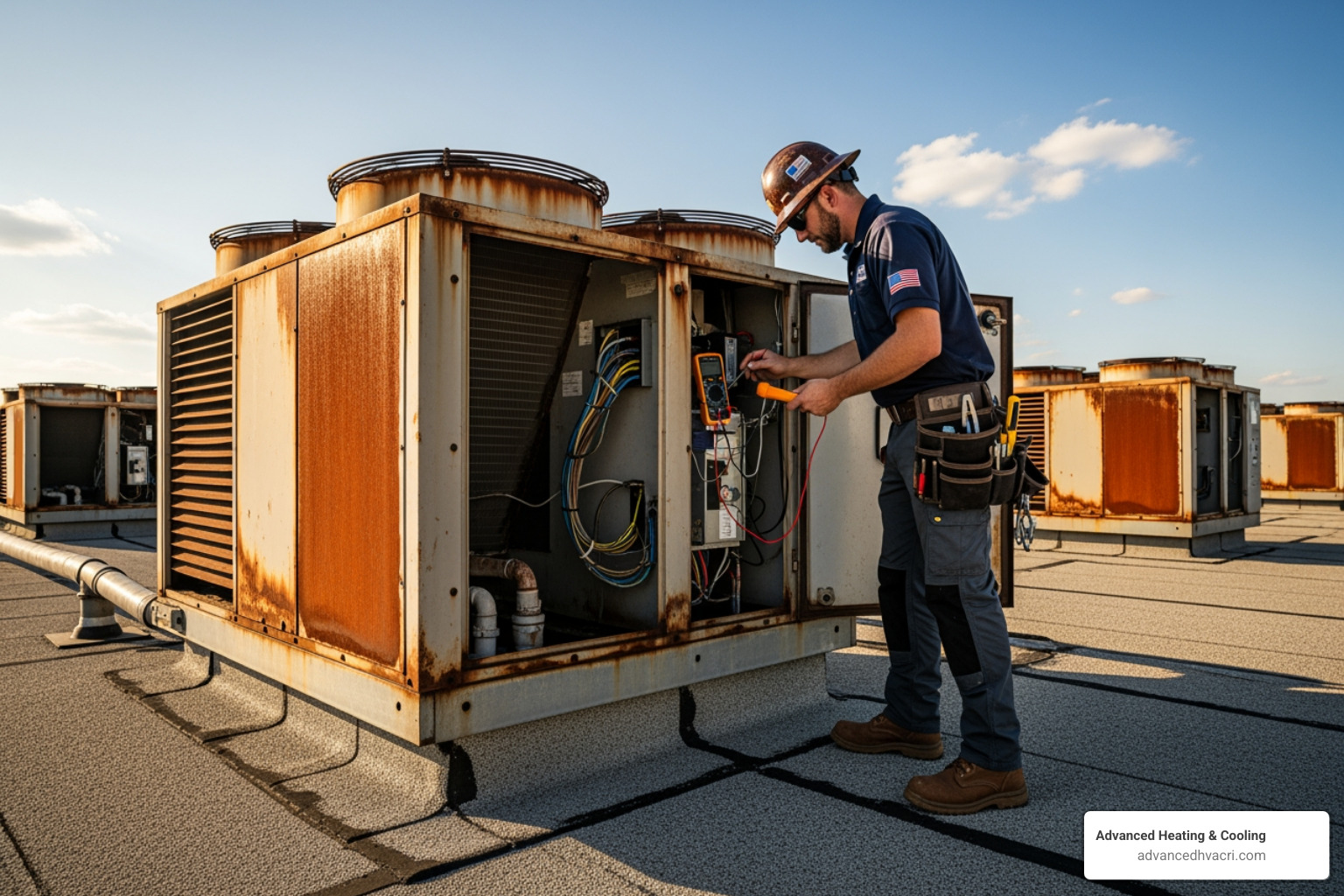
The age of a commercial HVAC system is a primary factor. The average lifespan is 15 to 20 years, but this can vary based on usage intensity, the local climate in areas like Smithfield, RI, and the quality of preventive maintenance. As a system ages, repair frequency often increases, escalating from minor fixes to costly breakdowns.
Another significant issue with older units is the use of obsolete refrigerants. Many older systems rely on refrigerants with high Global Warming Potential, which are being phased out. Replacing a unit allows for an upgrade to newer, eco-friendly refrigerants. Furthermore, sourcing parts for an aging system can become difficult and expensive as models become obsolete, leading to longer downtimes.
Rising Operational Costs as a Red Flag
A steady increase in operational costs, especially energy bills, is a compelling indicator for a commercial HVAC replacement. If energy consumption spikes without a corresponding increase in usage, your aging, inefficient HVAC system is likely the cause. Older units work harder and consume more energy for the same output.
The U.S. Department of Energy highlights that upgrading to high-efficiency HVAC equipment can cut a building’s heating-and-cooling energy use by up to 50 percent. Even a thin layer of dirt can raise energy use by 5–10% on HVAC coils. Older systems also lack modern features like variable-frequency drives (VFDs), which can significantly cut fan energy.
When you weigh the cost of frequent repairs against the potential for significant energy savings with a new unit, the cost-benefit analysis often favors replacement. For more insights on energy efficiency, the U.S. Department of Energy provides valuable resources.
Performance and Comfort Decline
Your HVAC system’s performance directly affects comfort and productivity. A common complaint from business owners in areas like Greenville or Johnston is inconsistent heating and cooling, which creates uncomfortable hot and cold spots. This makes it difficult for employees to focus and for customers to enjoy their experience.
Unusual noises like grinding, rattling, or squealing are clear warning signs of mechanical failure or significant wear and tear. These noises often precede more serious breakdowns.
Finally, declining indoor air quality and humidity issues can also signal a need for commercial HVAC replacement. An aging system may struggle to filter air or manage humidity, leading to stuffiness, increased allergens, or even mold growth. This impacts the health and well-being of everyone in your building. Modern systems offer superior filtration and humidity control, creating a healthier environment. To explore more about how we can improve your commercial space, visit our page on More info about our commercial services.
Choosing Your New System: A Strategic Investment
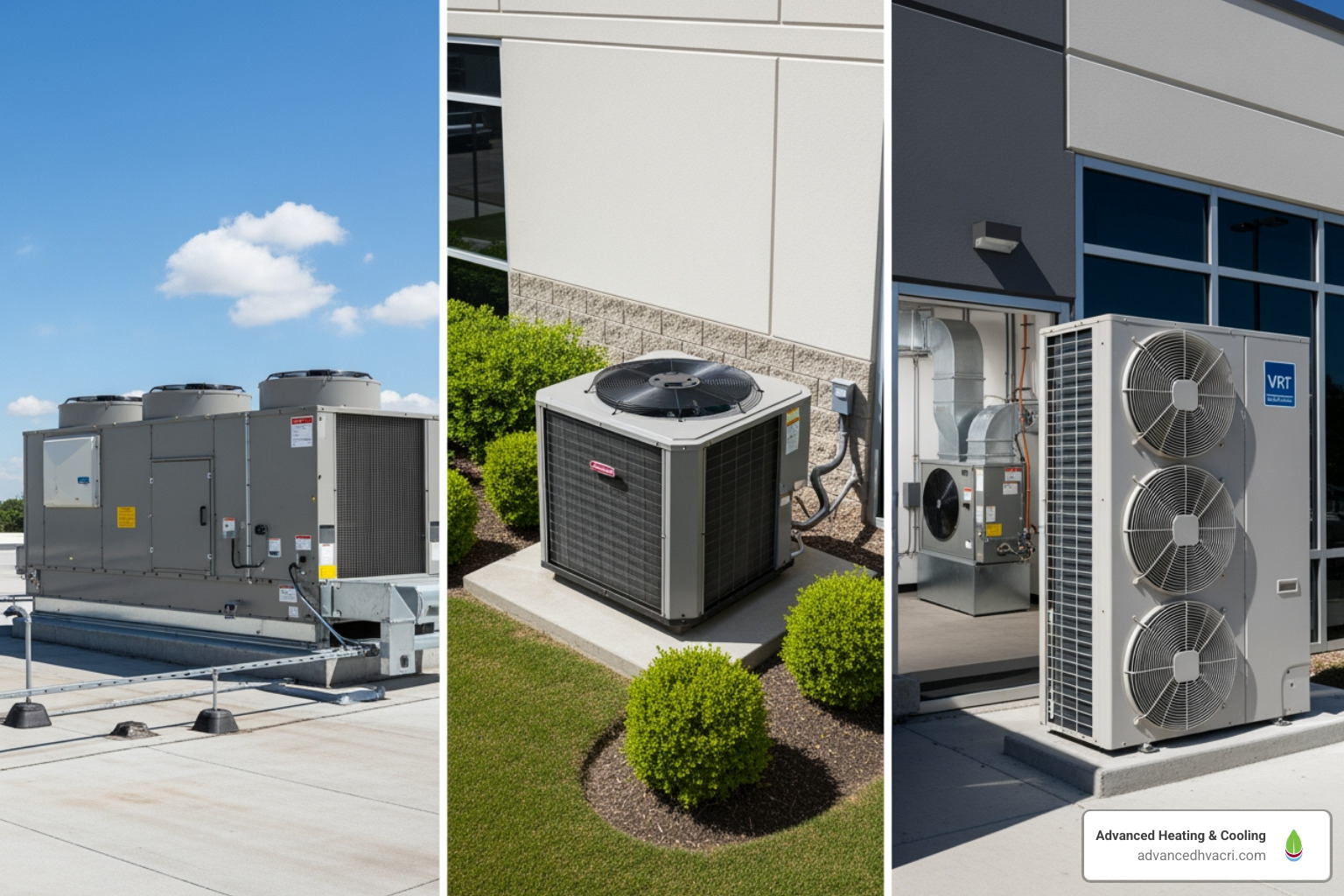
Investing in a new commercial HVAC system is a strategic decision that impacts your operational efficiency, occupant comfort, and financial health. The right commercial HVAC replacement offers tangible benefits, from energy savings to improved air quality.
The Tangible Benefits of a Modern HVAC Upgrade
Upgrading to a new, high-efficiency commercial HVAC system offers several key advantages:
- Energy Savings: High-efficiency equipment can cut heating and cooling energy use by up to 50% compared to older systems, leading to substantial savings on utility bills.
- Reduced Carbon Footprint: Modern systems use more eco-friendly refrigerants and are designed for greater energy efficiency, helping your business meet sustainability goals.
- Improved Occupant Health: New systems with better filtration (MERV-13 or higher) improve indoor air quality, creating a healthier, more productive environment for employees and customers.
- Lower Maintenance Costs: Modern units have advanced features that flag issues early, leading to fewer breakdowns and lower repair costs over the system’s lifespan.
- Increased Comfort: Consistent temperatures and better humidity control create a more comfortable space for employees and customers.
- Improved Property Value: A modern, efficient HVAC system is a significant asset that can increase your commercial property’s value.
These benefits make a commercial HVAC upgrade a core part of improving your overall facility, not just a one-off equipment swap.
Evaluating Commercial HVAC System Types
When considering a commercial HVAC replacement, it’s crucial to evaluate the different systems available for your building’s specific requirements.
| System Type | Best For | Installation Complexity | Cost | Efficiency |
|---|---|---|---|---|
| Rooftop Units (RTUs) | Single-story buildings, retail, warehouses, large open spaces. Easy access for maintenance. | Moderate (crane often needed for placement) | Moderate to High | Good to Excellent |
| Split Systems | Buildings with limited roof access, multi-zone needs, smaller commercial spaces. | Moderate (indoor and outdoor units connected by refrigerant lines) | Moderate | Good to Excellent |
| Variable Refrigerant Flow (VRF) | Multi-zone buildings, offices, hotels, healthcare, where simultaneous heating/cooling is needed in different areas. | High (complex refrigerant piping and controls) | High | Excellent (precise zone control) |
Other specialized systems like chilled-water plants or dedicated outdoor-air systems (DOAS) might be considered for unique needs in places like Slaterville or Esmond. Your building’s size, purpose, and occupancy will influence the best choice.
Sizing and Efficiency: The Keys to Your Commercial HVAC Replacement
Proper system sizing is paramount. An undersized unit runs constantly, causing premature wear, while an oversized one short-cycles, wasting energy and failing to dehumidify. Correctly sized equipment can trim 15–25 percent off capital and utility costs.
A formal load calculation by a qualified professional is the only way to right-size your commercial HVAC replacement. It considers factors beyond simple square footage, including:
- Building size, layout, and insulation
- Window types and orientation
- Number of occupants
- Internal heat gains from equipment
- Local climate data for Rhode Island
System capacity is measured in “tonnage” (1 ton = 12,000 BTU/hour). A professional load calculation is far more accurate than a rule-of-thumb estimate. Energy efficiency ratings are also crucial. For cooling, look for high SEER (Seasonal Energy Efficiency Ratio) and EER (Energy Efficiency Ratio) ratings. For heating, a high AFUE (Annual Fuel Utilization Efficiency) indicates better performance. Adhering to ASHRAE guidelines ensures best practices in design and efficiency.
Navigating the Commercial HVAC Replacement Process Step-by-Step
A commercial HVAC replacement is a significant undertaking, but a structured approach ensures it’s executed smoothly. We’ve refined our process over 30 years to minimize disruption for businesses in Smithfield, Forestdale, and beyond.
Step 1: Professional Assessment and Load Calculation
The process starts with a thorough assessment of your existing system and building. Our expert team will:
- Analyze Your Building: We consider your building’s size, layout, insulation, window types, and sun exposure.
- Inspect Ductwork: The condition of your existing ductwork is critical. We check for leaks, proper sizing, and overall integrity to ensure the new system’s efficiency isn’t compromised.
- Identify System Requirements: We discuss your operational needs, occupancy patterns, critical temperature zones, and air quality goals.
- Perform a Load Calculation: This crucial step ensures your new system is perfectly sized, avoiding the performance and efficiency problems of an incorrectly sized unit.
This initial step ensures the recommended commercial HVAC replacement system is customized to your business. Learn more about our approach on our Commercial AC & Heating page.
Step 2: Selecting a Qualified HVAC Contractor
Choosing the right contractor is as important as the equipment itself. For a commercial HVAC replacement, you need a partner with proven expertise. Look for:
- Licensing and Insurance: Verify the contractor is fully licensed and insured for commercial work in Rhode Island to protect your business.
- Experience and References: Look for a company with experience in projects like yours. Ask for references from businesses in North Smithfield or Mapleville. Advanced Heating & Cooling has over three decades of dedicated service.
- Written Proposals: A reputable contractor provides a detailed proposal outlining the scope of work, equipment, timeline, and all costs.
- Reputation and Trust: Choose a company known for honest, quality workmanship. Our team is built on these principles, as you can see on our About Us page.
Step 3: Installation and Commissioning
Once the system and contractor are chosen, the physical commercial HVAC replacement begins. We aim to execute this phase with minimal disruption to your business.
- Minimizing Business Disruption: We schedule installation at the most convenient time, such as off-hours or weekends.
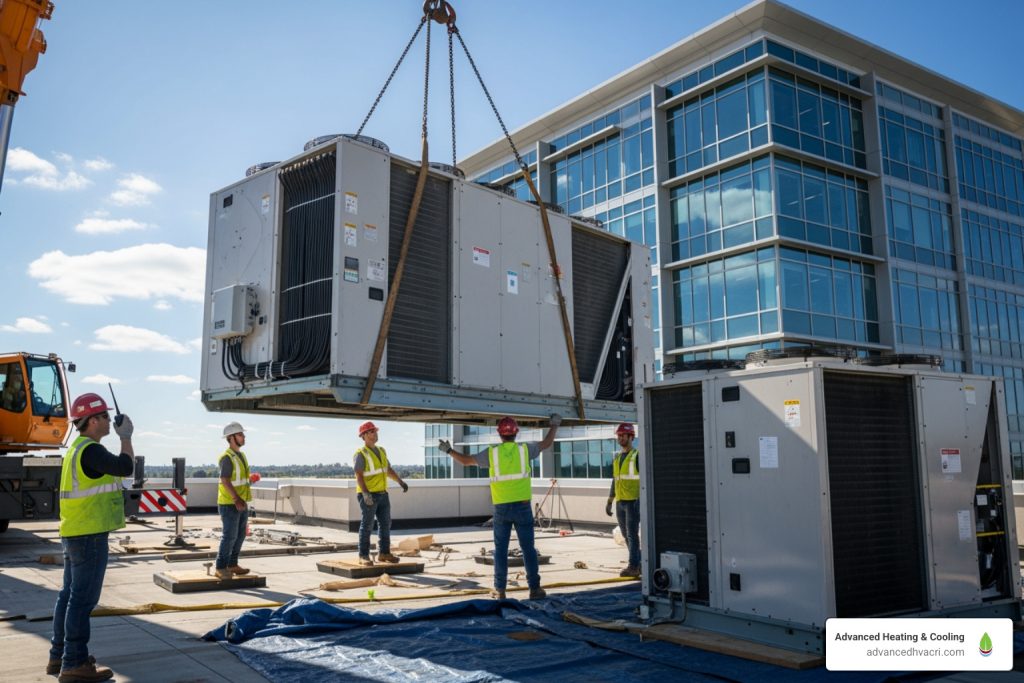
- Safe Removal of Old Unit: The old system is safely disconnected, removed, and responsibly disposed of, often using cranes for rooftop units.
- Proper Installation: The new system is installed according to manufacturer specifications and local building codes, including any ductwork modifications.
- System Testing and Commissioning: We thoroughly test the new system to ensure it operates at peak performance. This includes calibrating controls, verifying airflow, and checking refrigerant levels to confirm your investment delivers the promised efficiency.
Understanding the Costs of Commercial HVAC Replacement
The cost of a commercial HVAC replacement varies based on several factors:
- Unit Cost: Influenced by system type (RTU, split, VRF), capacity, brand, and efficiency ratings (SEER, EER).
- Labor Rates: Based on installation complexity, crew size, and project duration. Crane operation or ductwork modifications add to this.
- Ductwork Modifications: Significant repairs or replacement of old or damaged ductwork will add to the expense.
- Permit Fees: Local regulations in places like Stillwater or Georgiaville require permits for HVAC installations.
- Additional Features: Zone control, smart thermostats, or air purification systems increase initial cost but can offer greater control and efficiency.
While costs can seem daunting, correctly sized equipment can trim 15–25 percent off capital and utility costs. A trusted HVAC professional can walk you through a detailed cost breakdown and help you prioritize options that fit your budget and long-term goals.
Maximizing Your Investment: Post-Installation and Financials
Your new commercial HVAC replacement is installed, but the journey isn’t over. To maximize your investment, focus on preventive maintenance and smart financial planning. This will extend your system’s life and improve your bottom line. Integrating solutions like Commercial Zone Control for Office Buildings can further optimize performance.
The Crucial Role of Preventive Maintenance
A structured preventive maintenance plan is crucial for your new commercial HVAC system. It protects your investment and ensures peak performance.
Here’s why it’s so important:
- Ensuring Peak Efficiency: Regular cleaning and calibration keep your system running efficiently. Even a thin layer of dirt on HVAC coils can raise energy use by 5–10%.
- Extending System Lifespan: Proactive maintenance catches small issues before they become major breakdowns, extending the life of your commercial HVAC replacement.
- Protecting Your Warranty: Many manufacturers’ warranties require documented routine maintenance to remain valid.
- Improved Indoor Air Quality: Regular filter changes and system cleaning maintain good indoor air quality.
- Energy Savings: An additional 15-20 percent in energy savings can be achieved over the equipment’s life through proper maintenance.
A typical preventive maintenance checklist includes:
- Inspecting and replacing air filters.
- Cleaning condenser and evaporator coils.
- Checking refrigerant levels.
- Verifying belt tension and alignment.
- Calibrating thermostats and sensors.
- Inspecting electrical connections.
- Lubricating moving parts.
- Sealing duct leaks.
- Scheduling a full tune-up for each season.
Our team offers comprehensive maintenance plans customized to your needs. Explore our offerings on our Services page.
Financing Your Commercial HVAC Upgrade
The upfront cost of a commercial HVAC replacement can be substantial, but various financing options can make it manageable for businesses in our service area.
- Leasing Options: Leasing allows you to acquire a new system without a large capital outlay, which is beneficial for cash flow.
- Equipment Loans: Traditional bank loans or specialized equipment loans can provide the necessary capital.
- SBA Loan Programs: The U.S. Small Business Administration (SBA) offers loan programs like the 7(a) and 504 loans with favorable terms. Find more information on the SBA website.
- Tax Incentives and Rebates: Federal, state, or local incentives for energy-efficient installations can significantly offset your cost. We can help you identify applicable programs for businesses in Smithfield, RI.
- Calculating ROI: Calculate the Return on Investment (ROI) by factoring in energy savings and reduced maintenance costs to see how quickly the investment pays for itself.
Frequently Asked Questions about Commercial HVAC Replacement
We understand that commercial HVAC replacement can bring up many questions. Here are answers to some of the most common inquiries we receive from business owners in communities like Woodville and Forestdale.
How long does a commercial HVAC unit typically last?
The average lifespan of a commercial HVAC unit is 15 to 20 years. However, this is a general guideline. Many factors can influence how long your specific unit will last, with some well-maintained units lasting longer and neglected ones failing sooner. These factors include:
- Usage Intensity: A system running continuously in a data center will likely have a shorter lifespan than one in a retail space with more moderate use.
- Climate: The extreme temperatures we can experience in Rhode Island, both hot and cold, put stress on units, potentially reducing their life.
- Quality of Installation: Proper installation is crucial. A poorly installed system will experience more issues and wear out faster.
- Preventive Maintenance: Regular, professional maintenance is the single most important factor in extending your system’s life. Skipping tune-ups and inspections allows small problems to escalate.
- Manufacturer and Model: The quality of the equipment itself plays a role, with some brands and models being inherently more durable.
How can I estimate the potential energy savings from a new system?
Estimating potential energy savings from a new, high-efficiency commercial HVAC replacement is a smart way to justify the investment. Here’s how you can approach it:
- Benchmark Your Current Use: The U.S. Environmental Protection Agency’s Energy Star Portfolio Manager is an excellent tool to benchmark your building’s current energy consumption against similar buildings. This gives you a baseline for comparison.
- Review Energy Bills: Look at your past 12-24 months of energy bills to understand your current consumption patterns and costs.
- Consult with a Qualified HVAC Contractor: We can perform a detailed energy audit of your existing system and building. Based on this, and the efficiency ratings (SEER, EER for cooling; AFUE for heating) of a proposed new system, we can provide a much more accurate projection of your potential energy savings. Upgrading to high-efficiency HVAC equipment can cut a building’s heating-and-cooling energy use by up to 50 percent versus systems installed a few decades ago!
- Use Manufacturer Comparison Tools: Some HVAC manufacturers and industry organizations offer online tools that compare the efficiency of different systems. While helpful, these should be used as rough estimates, and a professional assessment is always best.
What is the difference between repairing and replacing my system?
Deciding between repairing an existing commercial HVAC system and opting for a full commercial HVAC replacement can be tough. We generally recommend considering the “50% rule”: if a repair costs more than 50% of a new system’s price, replacement is often more economical in the long run.
Here are key considerations that differentiate the two and help guide your decision:
Repair:
- Best For: Minor issues, newer systems (under 10 years old), or when the repair cost is significantly less than replacement and the system is still efficient.
- Pros: Lower immediate cost, less downtime, extends the life of a relatively new system.
- Cons: Doesn’t address underlying inefficiency, may lead to future repairs, doesn’t benefit from modern technology or improved indoor air quality.
Replacement:
- Best For: Systems over 15 years old, units requiring frequent and costly repairs, systems with obsolete parts or refrigerants, significantly high energy bills, or when you need improved indoor air quality and comfort.
- Pros: Significant energy savings (up to 50% vs. old systems), improved reliability, improved indoor air quality, better comfort control, often comes with a new warranty, access to modern technology and smart controls, higher property value.
- Cons: Higher upfront cost, potential for more significant downtime during installation.
The decision should be based on a comprehensive cost-benefit analysis that considers both immediate expenses and long-term operational costs, energy savings, and the impact on your business environment. We can provide a detailed assessment to help you make the best choice for your particular situation.
Your Partner for a Seamless HVAC Transition
A strategic commercial HVAC replacement is an investment in your business’s efficiency, comfort, and long-term success. By understanding the signs of failure, evaluating your options carefully, and partnering with a trusted professional, you can ensure a smooth transition and enjoy the benefits for years to come. With over 30 years of experience serving businesses in the Smithfield, RI area, Advanced Heating & Cooling provides honest, quality workmanship for all your heating and cooling needs. For a comprehensive assessment and a free estimate on your project, explore our efficient and reliable commercial HVAC services.