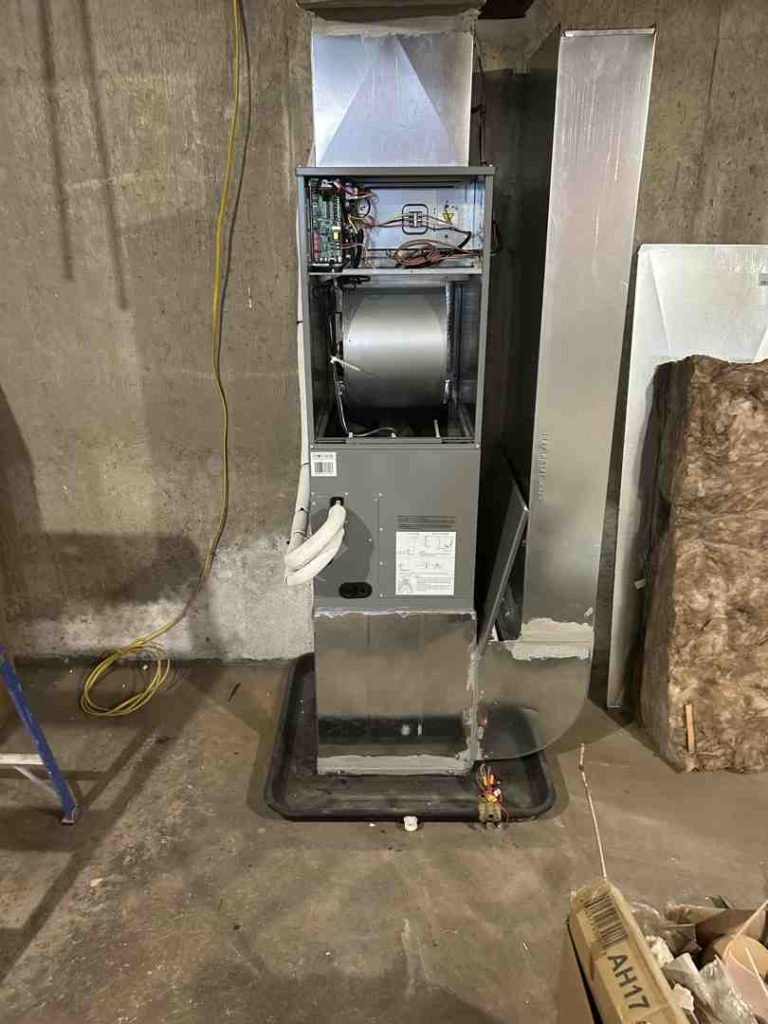
Why Regular Air Filter Replacement Matters for Your Home
Air filter replacement is one of the simplest — and most overlooked — home maintenance tasks you can do. Here’s the quick answer:
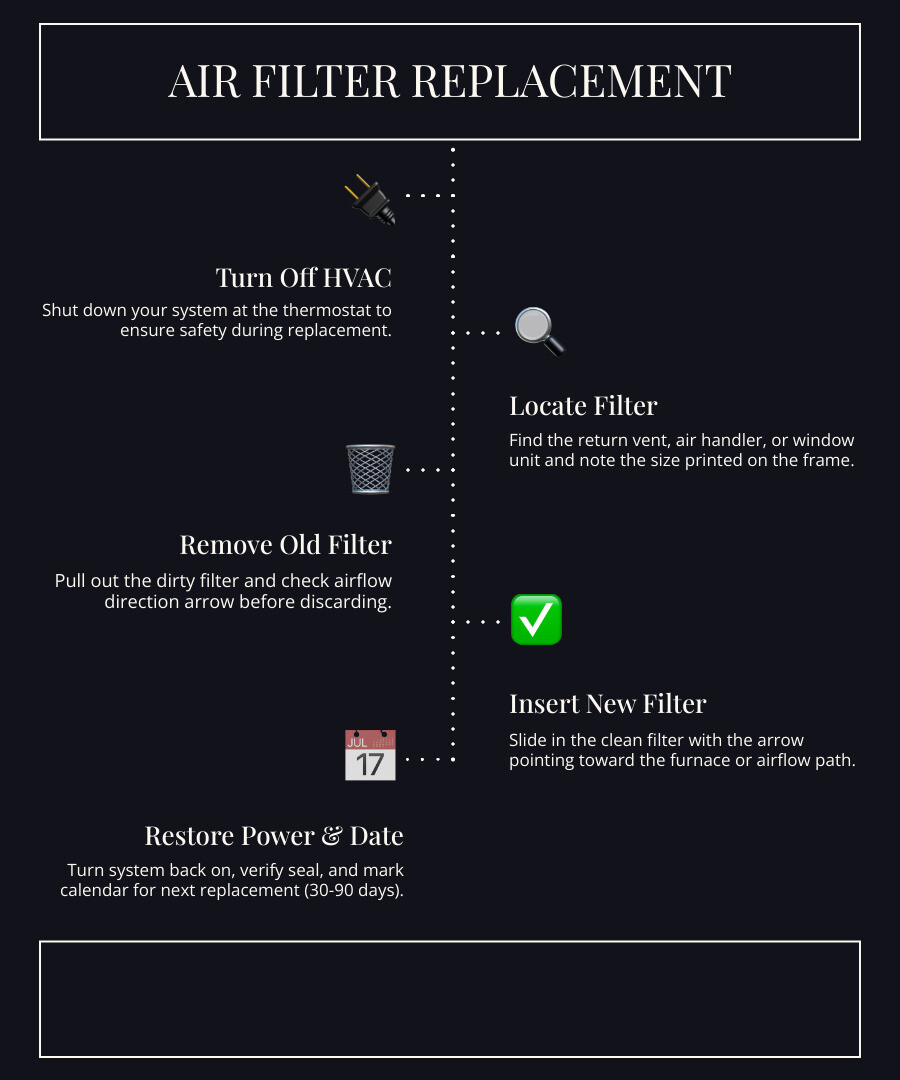
How to replace a home air filter:
- Turn off your HVAC system
- Locate the filter (return vent, air handler, or window unit)
- Remove the old filter and note the size printed on the frame
- Insert the new filter with the arrow pointing toward the furnace
- Restore power and mark the date for your next change
Most homeowners should replace their filter every 30–90 days, depending on household conditions like pets, allergies, or heavy system use.
A dirty filter forces your HVAC system to work harder than it should. That means higher energy bills, more wear on your equipment, and worse air quality inside your home. In fact, a clogged filter can shorten the life of your furnace and allow dust, pollen, and dander to circulate freely through your living space.
The good news? Replacing a filter takes less than five minutes and costs just a few dollars. It’s one of the highest-value maintenance habits any homeowner can build.
I’m Richard Marcello, President of Advanced Heating & Cooling, and with over 30 years of hands-on HVAC experience, air filter replacement is something I’ve seen neglected in homes more than almost any other maintenance task. In the guide below, I’ll walk you through exactly how to do it right.
When we talk about HVAC health in Smithfield or North Smithfield, we often focus on the big components like compressors or heat exchangers. But the humble air filter is the gatekeeper for your entire system. Its primary job isn’t actually to clean the air you breathe—though it does that—it’s to protect the sensitive internal components of your furnace and air conditioner from dust buildup.
When a filter becomes clogged, it creates “static pressure,” which is basically a fancy way of saying your blower motor has to strain to pull air through a wall of dirt. This leads to:
- Reduced HVAC Efficiency: Your system runs longer cycles to reach the temperature set on your thermostat, burning more electricity or gas.
- Higher Energy Bills: Research shows that regular changes can significantly reduce monthly utility costs.
- System Damage: Overheated motors and frozen evaporator coils are common results of restricted airflow.
- Poor Indoor Air Quality: Once a filter is “loaded,” it can no longer capture new pollutants, allowing pollen, bacteria, and dander to bypass the filter and settle on your furniture.
How to Complete an Air Filter Replacement in 5 Steps
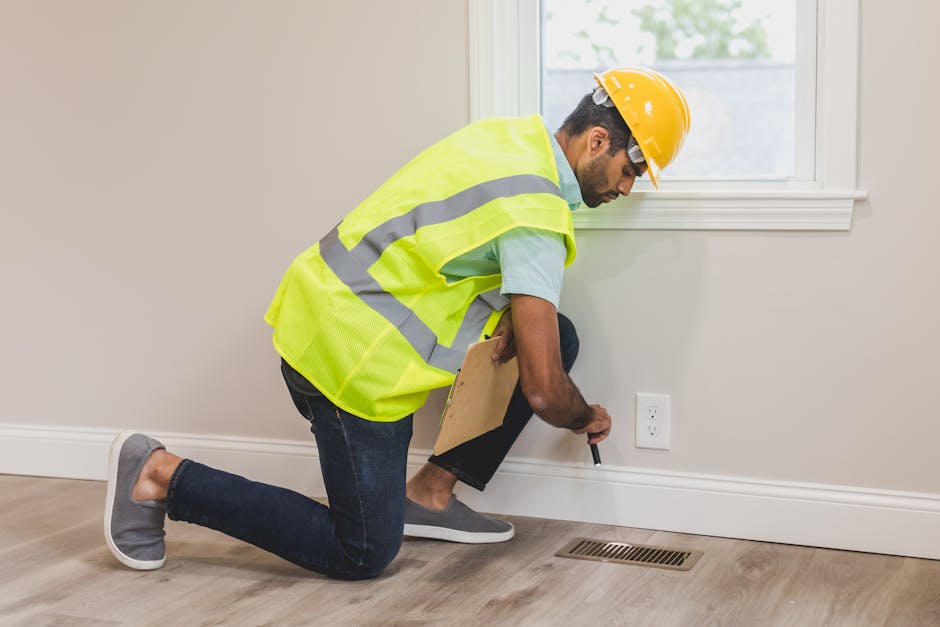
Performing an air filter replacement is a straightforward DIY task, but doing it correctly ensures you don’t accidentally damage your system or install the filter in a way that allows air to bypass it. Before you start, it is helpful to check out our quick guide to AC filter maintenance for extra tips on keeping your system pristine.
Step 1: Locate Your Filter and Identify the Size
The first hurdle is often finding where the filter lives. In most Rhode Island homes, you’ll find it in one of three places:
- The Return Air Duct: This is usually a large metal grille located in a central hallway, ceiling, or floor.
- The Air Handler/Furnace Cabinet: The filter may be tucked into a narrow slot right where the large return duct meets the main furnace unit.
- Window Units: If you are using room air conditioners, the filter is typically located behind the front plastic panel.
Once you find it, look at the cardboard frame of the old filter. You will see numbers like “20x25x1.” This is the nominal size. If the numbers are missing, use a tape measure to find the length, width, and thickness. It’s important to get the exact match; a filter that is too small allows “blow-by,” where dirty air slips around the edges, defeating the purpose of the filter entirely.
Step 2: Perform the Air Filter Replacement
Before you pull the old filter out, turn your thermostat to the “Off” position. You don’t want the system to kick on while the filter is out, as it could suck debris directly into the mechanical parts.
When you slide the new filter in, look for the airflow direction arrow printed on the side of the frame. This arrow must point toward the furnace or air handler (the direction the air is moving). If you install it backward, the structural wire mesh won’t support the filter material correctly, which can cause the filter to collapse into the blower. For more details on timing, read our article on how often you should replace your HVAC air filter.
Step 3: Verify the Seal and Restore Power
Ensure the filter sits flat in the track and that any latches or covers are securely fastened. If you notice a whistling sound after you turn the power back on, the seal might be loose or the filter might be the wrong size.
A pro tip we always share with our Greenville and Johnston customers: use a permanent marker to write the installation date on the edge of the filter frame. This takes the guesswork out of wondering if it’s been two months or five since you last checked it.
Choosing the Best Filter: MERV Ratings and Sizes
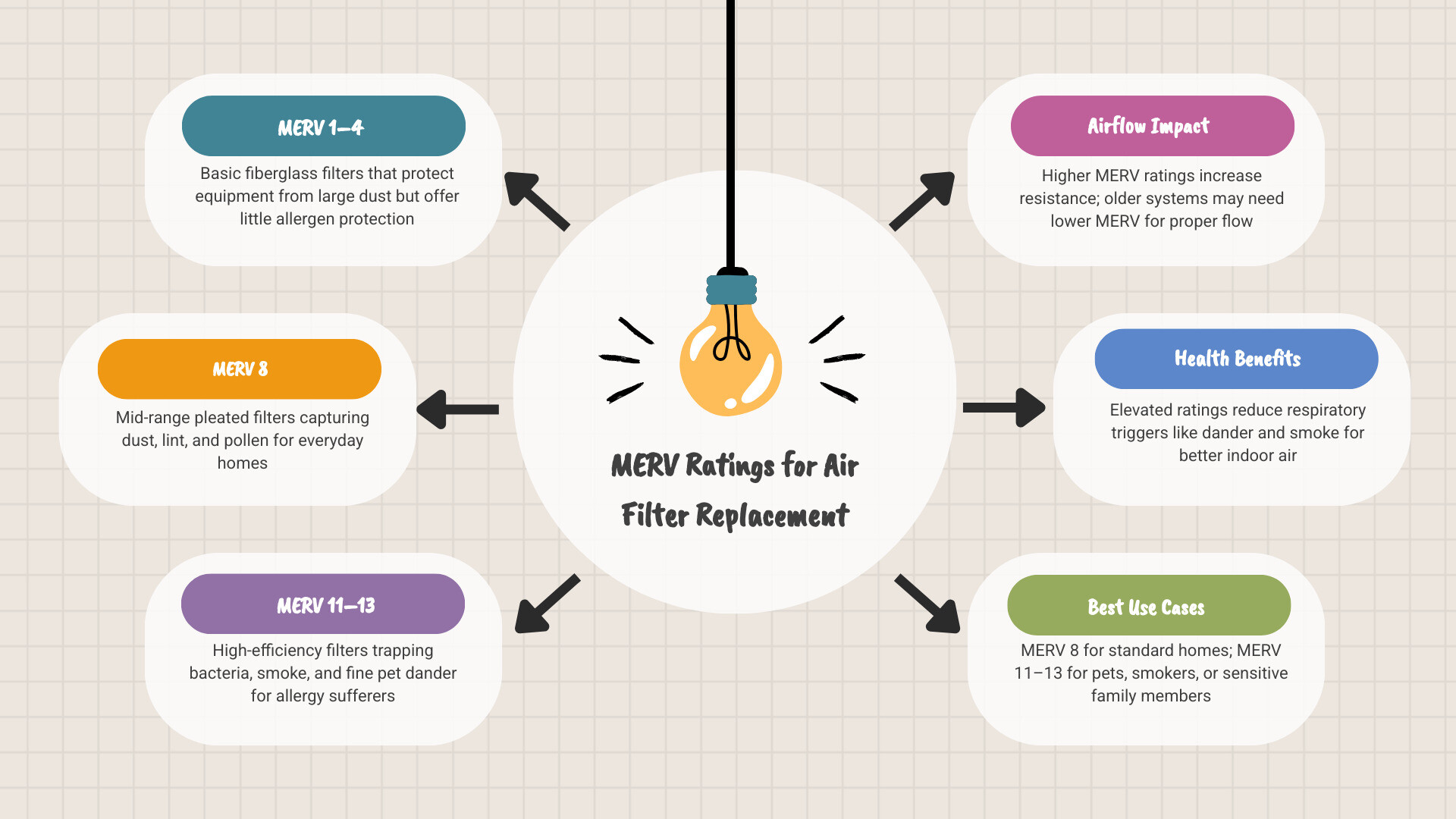
Not all filters are created equal. The effectiveness of a filter is measured by its MERV rating (Minimum Efficiency Reporting Value). This scale ranges from 1 to 20, though most residential systems use filters between MERV 5 and MERV 13.
Understanding MERV for Your Air Filter Replacement
- MERV 1–4: These are usually basic fiberglass filters. They protect the equipment from large dust bunnies but do very little for your health or microscopic allergens.
- MERV 8: A great middle-ground for most homes. These capture dust, lint, and some pollen.
- MERV 11–13: These high-efficiency pleated filters are excellent for homes with pets, smokers, or family members with respiratory issues. They can capture bacteria, smoke, and fine pet dander.
While higher MERV ratings provide better filtration, they also create more resistance to airflow. If your HVAC system is older, a MERV 13 might be too restrictive. If you’re wondering if your specific setup can handle a high-efficiency filter, check our FAQ on whether HVAC maintenance is worth it.
Signs Your Home or Vehicle Needs a New Filter
How do you know it’s time for an air filter replacement without opening the cabinet? Keep an eye out for these red flags:
- Visible Dust: If you notice a thick layer of dust on your vent grilles or if you find yourself dusting your furniture more often than usual, your filter is likely saturated.
- Short Cycling: If your HVAC system turns on and off frequently, it might be overheating due to restricted airflow caused by a dirty filter.
- Rising Utility Bills: An unexplained jump in your energy costs often points to a system struggling to breathe.
Interestingly, your home isn’t the only thing that needs clean air. Your car uses an engine air filter to keep debris out of the combustion chamber. Just like a home filter, a dirty car filter can cause engine misfires and poor fuel economy. If you drive a popular model like a 2016-2025 Honda Civic, you can follow this step-by-step engine air filter guide to save on shop costs. For other makes, AutoZone offers a general guide on car air filter replacement that covers the basics.
Frequently Asked Questions
How often should you replace your home air filter?
For the average home in Rhode Island, we recommend a change every 30 to 90 days.
- 30 Days: If you have multiple pets, someone smokes indoors, or you are currently doing home renovations (which kick up massive amounts of dust).
- 60 Days: If you have one pet or mild allergies.
- 90 Days: For a single-occupant home with no pets.
Regularly swapping your filter is one of the easiest ways to save money in the long run by preventing major breakdowns.
Are washable or reusable air filters a good choice?
Washable filters are marketed as eco-friendly, but they have drawbacks. They often have lower MERV ratings, meaning they don’t catch fine particles as well as pleated disposables. Most importantly, they must be 100% dry before you put them back in. If you reinstall a damp filter, you are essentially inviting mold and mildew to grow inside your ductwork. For most of our clients in Smithfield and Greenville, we recommend high-quality disposable pleated filters for better air quality and convenience.
Can you buy high-quality air filters online?
Yes! Buying online is a great way to find custom sizes that big-box stores might not carry. Many services offer bulk discounts (buying a 4-pack or 12-pack) and doorstep delivery subscriptions. This is particularly helpful if you have a unique system that requires a non-standard thickness, like a 4-inch or 5-inch media filter.
Conclusion
Air filter replacement is the cornerstone of a healthy, efficient home. By spending five minutes every few months to ensure your system can breathe, you protect your wallet from high energy bills and your family from airborne pollutants.
At Advanced Heating & Cooling, we’ve spent over 30 years serving our neighbors in Smithfield, Johnston, North Smithfield, and the surrounding areas. We know exactly what Rhode Island winters and summers can do to an HVAC system. Whether you need a simple tune-up or a complex repair, we pride ourselves on honest, quality workmanship.
Don’t wait for your system to struggle. Understand the importance of regular HVAC maintenance and keep your home comfortable all year long. If you’re unsure about your filter size or need a professional eye on your system, give us a call for a free estimate!