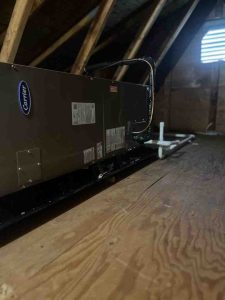
Why Your Downflow Furnace Needs a Different Approach to Humidification
A downflow furnace humidifier is a whole-house humidification system designed specifically for furnaces that push heated air downward—typically installed in attics, closets, or mobile homes. Unlike standard upflow furnaces where warm air naturally rises, downflow systems work against gravity, creating unique installation challenges that require careful planning.
Key Facts About Downflow Furnace Humidifiers:
- Best Type: Fan-powered humidifiers work best because they don’t require complex bypass ducting
- Mounting Location: Return air duct is the preferred spot (95% of installations)
- Avoid: Never cut into the furnace cabinet itself—use the coil box or ductwork instead
- Output: Most models deliver 12 gallons per day, enough for homes up to 3,200 square feet
- Efficiency Note: High-efficiency furnaces produce 75-80% of rated humidifier output due to lower air temperatures
If you’ve ever tried to install a standard humidifier on a downflow furnace, you’ve probably discovered the frustration firsthand. The supply ducts are often buried under floors or tucked into tight spaces where there’s simply no room to work. One HVAC forum user summed it up perfectly: “I have what I think is called a downflow furnace. I bought a Honeywell HE260 bypass humidifier to install… and I’m completely stuck.”
The good news? With the right equipment choice and proper installation techniques, adding whole-house humidity to a downflow system is absolutely doable—you just need to know the tricks that work with your furnace’s unique airflow pattern.
I’m Richard Marcello, and over my 30+ years in the HVAC industry here in Rhode Island, I’ve installed countless downflow furnace humidifiers in mobile homes, attic furnaces, and tight mechanical spaces where standard approaches simply won’t work. In this guide, I’ll walk you through the practical solutions that actually work in real-world installations.
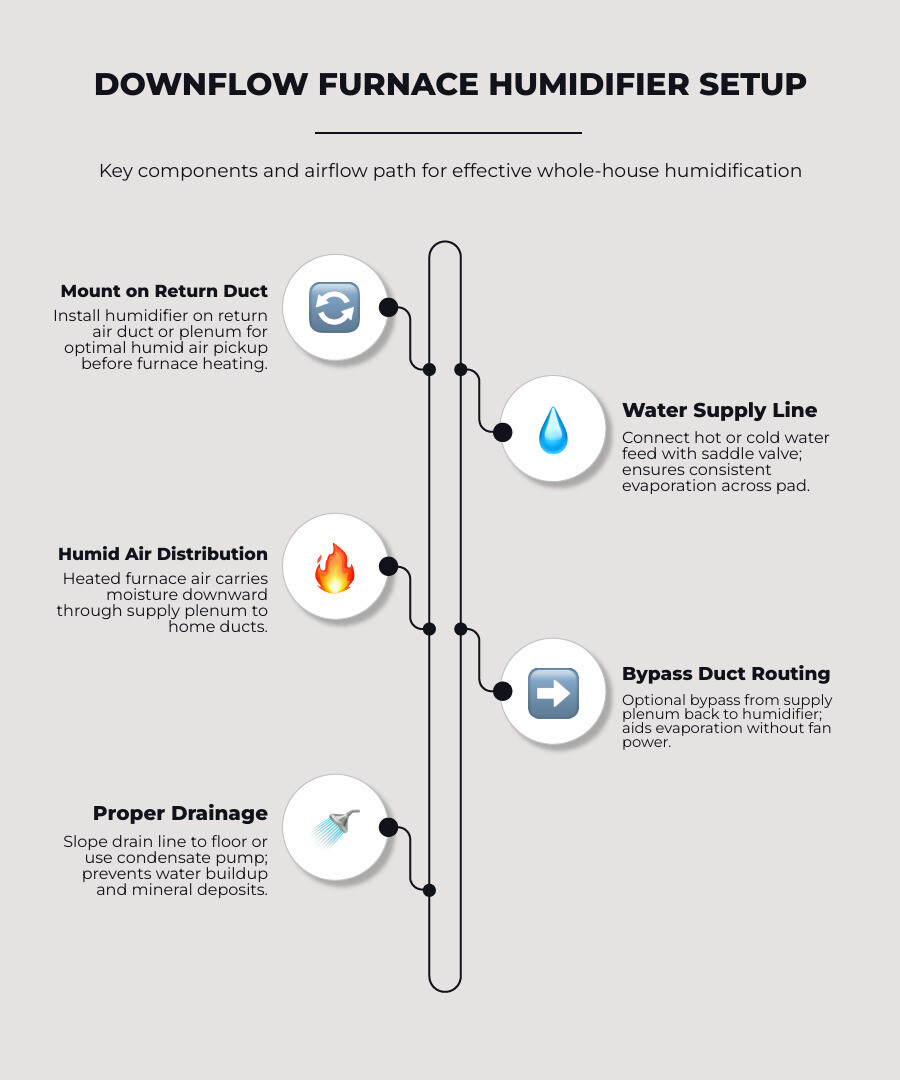
Basic downflow furnace humidifier terms:
- Smithfield HVAC installation services
- Smithfield furnace replacement company
- furnace replacement cost estimate
Understanding the Downflow Furnace Humidifier Challenge
To understand why a downflow furnace humidifier installation is unique, we first have to look at the furnace itself. According to the Trane glossary, a downflow furnace takes in cool air at the top and releases warm air out of the bottom. This is the opposite of the standard upflow furnaces found in most Rhode Island basements.
Downflow units are common in homes where the ductwork is located in a crawlspace or under the floor, such as in mobile homes or houses built on slabs. Because heat naturally rises, a downflow furnace essentially works against gravity, pushing air downward into the floor vents. This configuration significantly impacts humidity has on your HVAC system because the “supply” air (the hot air) is often located in a hard-to-reach plenum under the unit, while the “return” air (the cool air) is easily accessible at the top.
In a standard bypass humidifier installation, you need to connect a duct between the supply and return sides to create a pressure differential. With a downflow furnace, your supply plenum might only be 6 inches tall before it disappears into the floor. This lack of “real estate” on the supply side is the number one reason homeowners struggle with DIY installs. Furthermore, the high static pressure in the compact ductwork of a downflow system—especially in mobile homes—can affect how much moisture the air can actually absorb.
Choosing the Right Downflow Furnace Humidifier
When selecting a downflow furnace humidifier, you generally have three choices: bypass, fan-powered, or steam. Each has its place, but the physical constraints of your home in Smithfield or Johnston will likely dictate the winner.
| Humidifier Type | Best For | Pros | Cons |
|---|---|---|---|
| Bypass | Budget-friendly installs | Simple, no motor, low cost | Requires bypass ducting; lower output |
| Fan-Powered | Downflow & tight spaces | High output; easier to mount | Needs electrical outlet; slightly louder |
| Steam | Large homes/Heat pumps | Most moisture; independent of furnace heat | Higher purchase and energy cost |
Knowing the humidifier vs. dehumidifier for Rhode Island homes distinction is vital. While a dehumidifier removes moisture during our humid Atlantic summers, a whole-house humidifier adds it back during the dry winter months to prevent itchy skin and wood floor cracking. Most units are “flow-through,” meaning they are 30% to 40% efficient—they use a steady stream of water to flush away mineral deposits, ensuring the air stays clean.
Why Fan-Powered is Often the Best Downflow Furnace Humidifier
In our experience at Advanced Heating & Cooling, we often recommend fan-powered models (like the AprilAire 700) for downflow systems. Why? Because a fan-powered unit doesn’t require a bypass duct.
In a downflow setup, finding a place to tap into the supply air for a bypass duct is a nightmare. A fan-powered unit can be mounted directly on the return air duct (the top of the furnace). Its internal fan pulls air through the water panel and pushes it into the system independently. This creates a healthier home environment without the need to cut multiple holes in your supply plenum. If you mount it on the return side, we always recommend using a hot water feed to help with evaporation, as the return air is much cooler than the supply air.
Sizing Your Downflow Furnace Humidifier for Success
Most whole-house humidifiers, like the AprilAire 500 or 600, are rated to deliver about 12 gallons of moisture per 24 hours. This is typically enough to create a cozy atmosphere with your HVAC system in a home up to 3,200 square feet.
However, if you have a high-efficiency (90%+) furnace, you need to be aware of a slight performance dip. High-efficiency furnaces produce lower air temperatures than older “standard” furnaces. Because cooler air evaporates water less effectively, you might only get 75% to 80% of the rated output. If your home is older and less insulated—common in historic parts of North Smithfield or Mapleville—you may want to size up to a larger unit to compensate for the air leakage.
Step-by-Step: Installation Tips and Tricks
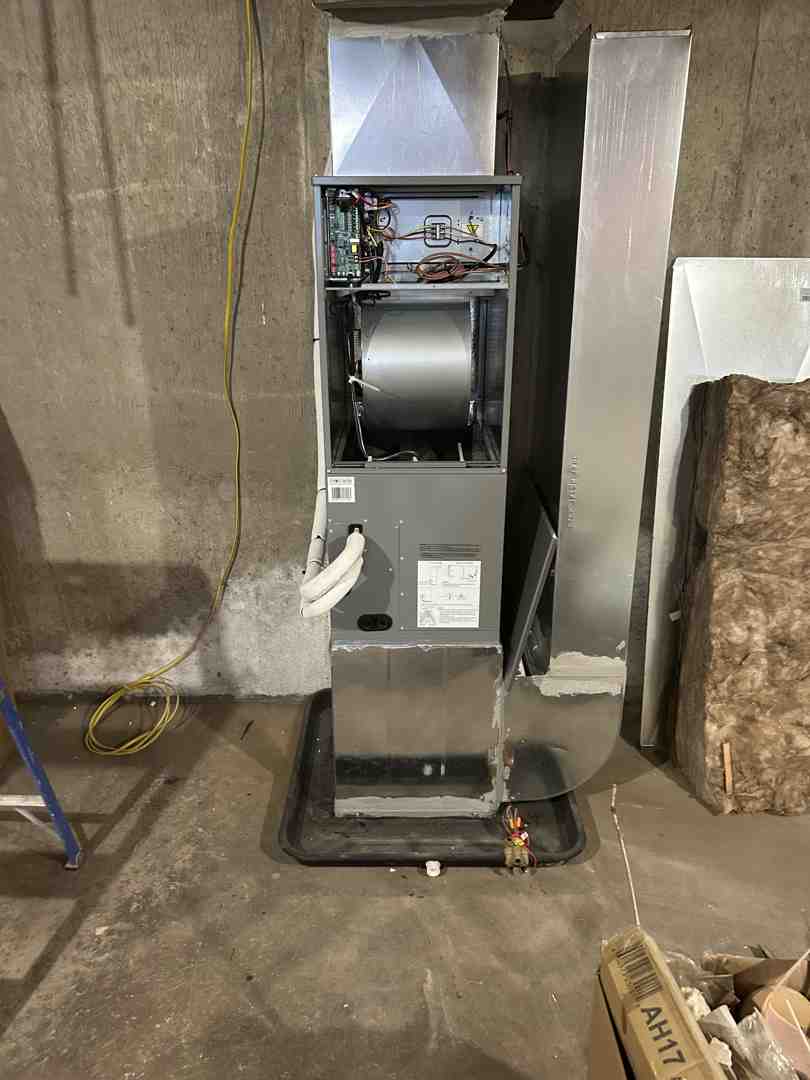
Ready to get to work? Whether you’re doing this yourself or calling us for heating installation services, here is the general workflow for a downflow furnace humidifier.
- Identify the Mounting Spot: For a downflow furnace, the return duct (at the top) is almost always the best place for the main unit.
- The Supply Takeoff: If you are using a bypass model (like the Honeywell HE260), you must find a spot on the supply plenum (at the bottom) for the 6-inch bypass duct. If the supply duct is in the floor, you may need to cut into the “coil box” or “evaporator box” located directly under the furnace.
- Check for Obstructions: Before cutting, ensure you aren’t hitting the A-coil or the heat exchanger. Many coil boxes have splash shields; as long as you don’t puncture the coil itself, you can often mount the bypass collar on the side of this box.
- Water Connection: Use the included saddle valve to tap into a nearby cold or hot water line. For fan-powered units on the return side, hot water is a must for proper evaporation.
- Drainage: Humidifiers produce “blow-down” water to flush minerals. In a downflow attic install, you must ensure the drain line has a consistent downward slope to a floor drain or use a condensate pump if no drain is nearby.
Avoiding Common Mistakes with Your Downflow Furnace Humidifier
The biggest mistake we see? People cutting into the furnace cabinet itself. Never cut into the furnace jacket. Doing so can damage the heat exchanger or internal wiring, creating a fire hazard or carbon monoxide leak. Always stick to the external ductwork or the coil cabinet.
Another common issue is ignoring indoor air quality in Rhode Island by failing to seal the bypass duct. If you leave gaps around your duct cuts, you’ll lose heated air into your attic or closet, driving up your energy bills. Use foil tape or mastic to seal every connection point.
Maintenance and Performance Optimization
Once your downflow furnace humidifier is running, it isn’t “set it and forget it.” Because Rhode Island water can be hard, mineral deposits will build up on the evaporator pad (also called a water panel).
- Annual Maintenance: You must replace the water panel at least once a year. We recommend doing this at the start of the heating season. This is a great time to schedule the importance of regular heating maintenance to ensure your whole system is ready for a Smithfield winter.
- Mineral Control: If you notice white dust around your vents, it’s a sign of mineral carryover. Ensure your flow-through rate is correct; the water trickling down the drain is actually a good thing—it’s carrying those minerals away.
- Digital Humidistats: Use a humidistat with an outdoor sensor. These automatically lower the humidity setting when the temperature drops outside. This prevents “window sweating” and frost buildup on your home’s structure.
- Seasonal Damper: If your humidifier has a “Summer/Winter” damper on the bypass duct, remember to close it when you turn on the A/C. Leaving it open in the summer will cause your air conditioner to work harder by recycling cold air back into the return.
Frequently Asked Questions about Downflow Humidifiers
Can I install a humidifier on a mobile home furnace?
Yes, but it is tricky. Mobile home furnaces (like Miller or Coleman units) are almost always downflow. The supply ducting is often very narrow (14×14 inches), which creates high static pressure. We recommend a fan-powered unit to avoid messing with the sensitive pressure balance of the supply duct. Also, because mobile homes are often less insulated, keep a close eye on condensation on the walls. If you need help, our heating installation and repair experts are familiar with the specific needs of manufactured housing in the North Smithfield area.
Where is the best place to mount the bypass duct?
On a downflow system, the bypass duct should go from the supply plenum (bottom) to the return plenum (top). If your supply plenum is inaccessible, look at the front or side of the coil cabinet. Just be sure to use a flashlight and a small pilot hole to verify you aren’t going to hit the evaporator coil fins.
Does a high-efficiency furnace affect humidifier output?
Absolutely. High-efficiency furnaces (condensing furnaces) typically have lower discharge air temperatures (around 100°F–110°F) compared to older units (130°F+). Since evaporation depends on heat, you’ll get less moisture per hour. This is another reason why a heat pump vs traditional furnace comparison is important—heat pumps also have lower air temperatures, making a steam humidifier or a hot-water-fed fan-powered unit the superior choice for those systems.
Conclusion
Installing a downflow furnace humidifier doesn’t have to be a headache. By choosing the right equipment—ideally a fan-powered model—and respecting the unique airflow of your system, you can enjoy a comfortable, humidified home all winter long. Whether you live in a mobile home in North Smithfield or a traditional home in Greenville, proper humidity is the key to protecting your health and your property.
At Advanced Heating & Cooling, we’ve spent three decades perfecting HVAC solutions for Rhode Island homeowners. We pride ourselves on honest, quality workmanship and are always happy to help you navigate the “down-low” of your heating system.
If you’re tired of dry air and static shocks, don’t wait. Schedule your heating installation or repair today for a free estimate, and let us help you breathe easier this winter!