
Why Getting an Accurate Furnace Replacement Cost Estimate Matters
A furnace replacement cost estimate is essential for homeowners in Smithfield, RI, who are facing a heating system upgrade. Knowing what you’ll actually pay—and what drives those numbers—helps you budget wisely and avoid surprises.
Quick Answer: What Does Furnace Replacement Cost?
- National Average: $4,000 to $10,000 (including installation)
- Typical Range: $2,800 to $6,800 for most residential systems
- Key Cost Drivers:
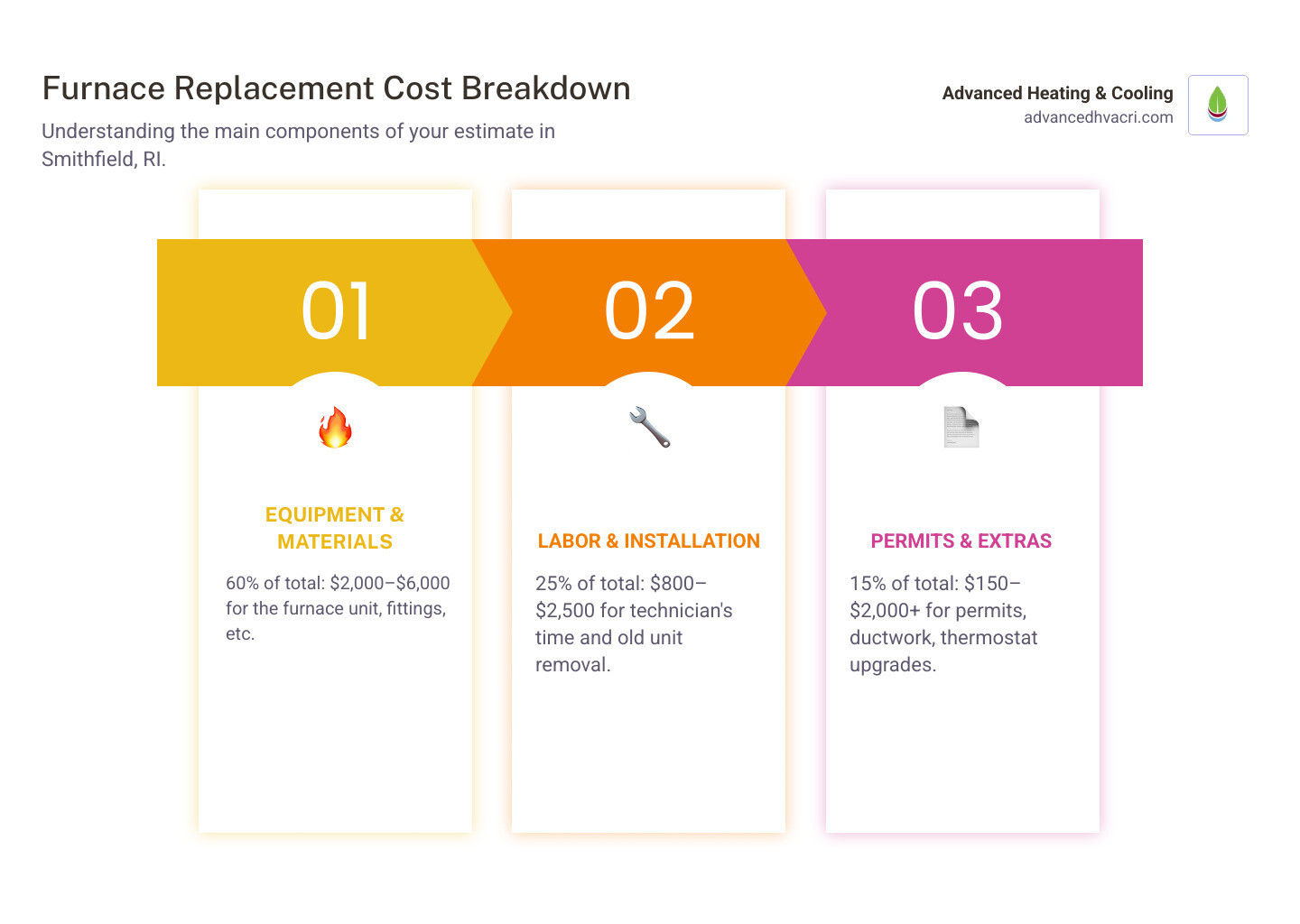
- Equipment & Materials: 60% of total cost ($2,000–$6,000)
- Labor & Installation: 25% of total cost ($800–$2,500)
- Permits & Extras: 15% of total cost ($150–$2,000+)
Here in Rhode Island, our cold winters mean your furnace works hard for months on end. When it’s time for a replacement, you’re not just buying a box of metal—you’re investing in your family’s comfort, your home’s efficiency, and your peace of mind. But if you’ve ever felt overwhelmed by vague quotes, confusing jargon, or the fear of being oversold, you’re not alone. Many homeowners struggle to understand what they’re actually paying for.
This guide breaks down every component of a furnace replacement cost estimate, from the unit itself to labor, permits, and optional upgrades. You’ll learn how furnace type, efficiency ratings, and home size affect your final price. We’ll also share practical strategies to save money without sacrificing quality, including rebates, tax credits, and the importance of regular maintenance.
I’m Richard Marcello, President of Advanced Heating & Cooling, and I’ve spent over 30 years helping Rhode Island homeowners steer furnace replacement cost estimates with transparency and fairness. My goal is to empower you with the knowledge to make a confident, well-informed decision that fits your budget and your home’s unique needs.
Understanding Your Furnace Replacement Cost Estimate
When you’re considering a new heating system, the first question on everyone’s mind is usually, “How much is this going to cost?” While the national average cost to install a furnace is around $4,799, with prices ranging from $1,600 to $10,000, it’s crucial to remember that this is just an average. For homeowners in Smithfield, Rhode Island, and our surrounding communities like Forestdale, Greenville, and North Smithfield, your specific furnace replacement cost estimate will depend on several unique factors.
The total cost of a furnace replacement isn’t just the price tag on the unit itself. It’s a combination of three major factors: the equipment and materials, the labor and installation, and any complementary services or accessories. Understanding each of these components is key to deciphering your estimate and ensuring you’re getting a fair deal. For more general information on costs, you can visit How Much Does It Cost to Replace a Furnace?.
The Unit Itself: Equipment & Materials
The furnace unit itself, along with the necessary materials, typically accounts for about 60% of your total furnace replacement cost estimate, ranging from approximately $2,000 to $6,000. This is where the core of your heating system’s performance and efficiency lies.
Let’s look at some specifics:
- Standard Efficiency Furnaces: For a standard gas furnace with an 80% Annual Fuel Utilization Efficiency (AFUE) rating, the equipment cost alone might be around $1,400. These are typically the most budget-friendly upfront.
- High-Efficiency Furnaces: If you’re looking at a high-efficiency model, say a 96% AFUE two-stage furnace, the equipment cost increases to $2,000-$2,700. For an ultra-high-efficiency 97% AFUE modulating furnace, you might expect to pay $2,500 to $3,000+. While more expensive initially, these units offer significant long-term savings on energy bills, which is especially appealing during our long, cold Rhode Island winters.
- Materials: Beyond the furnace, there are essential materials needed for installation. These typically cost between $150 and $500 and include items like fittings, fasteners, and mounting hardware. These are the unsung heroes that ensure your furnace is securely and correctly connected to your home’s ductwork and fuel lines.
The Work: Labor & Installation
Even the best furnace in the world won’t keep you warm without proper installation. Labor and service charges account for around 25% of the total furnace replacement cost estimate, typically ranging from $800 to $2,500. This isn’t just about hauling the old unit out and sliding the new one in. It’s a precise process that requires specialized skills and experience.
Here’s what goes into those labor costs:
- Hourly Rates: Labor costs for installing a new furnace can run from $75 to $100 per hour, though this can vary slightly depending on the complexity of the job and the specific expertise required.
- Installation Time: A standard furnace installation typically takes 4 to 10 hours. However, this timeframe can extend if your home presents unique challenges or if additional modifications are needed.
- Old Furnace Removal: We can’t just leave your old furnace on the curb! The fee to remove and properly dispose of an existing furnace usually ranges from $60 to $330. This ensures it’s handled safely and responsibly.
- Debris Disposal: Beyond the furnace itself, there’s always some installation waste and debris. Budgeting around $40-$50 for debris disposal is a good idea.
Proper furnace sizing is also crucial for efficient operation, and our experts always conduct a thorough assessment to ensure the perfect fit for your home. You can learn more about how we determine the right system for you by visiting our page on HVAC System Size.
The Extras: Navigating the Full Furnace Replacement Cost Estimate
Sometimes, it’s the little things that add up, but these “extras” are often crucial for safety, efficiency, and your overall comfort. They typically represent about 15% of your furnace replacement cost estimate, adding anywhere from $100 to $2,000 or more.
- Permit Costs: In Smithfield, and many other towns in Rhode Island, a permit is required for furnace installation. This isn’t just bureaucracy; it ensures that the work is done to code and meets safety standards. Permit costs can vary widely, from a typical $150 to a more substantial $400-$1,500, depending on local regulations. We’ll always help you steer this process.
- Ductwork Modifications: While we aim to use your existing ductwork, sometimes modifications are necessary, especially if your new furnace has different airflow requirements or if your old ducts are leaky or inefficient. Expect to budget an additional $300 to $600 per duct run for modifications. If your entire ductwork system needs replacement, that’s a larger project, costing approximately $2,000 to $5,000. For more on ductwork considerations, HomeAdvisor offers insights on Ductwork replacement cost.
- Thermostat Upgrades: A new, high-efficiency furnace deserves a smart thermostat to match! Upgrading to a digital, Wi-Fi, or smart thermostat can range from $100-$300+. These devices offer better control, energy savings, and even rebates. Check out Smart Thermostat Rebates in RI: How to Save on Energy and Installation for more information.
- Humidifiers: Given how dry our homes can get in the winter, a whole-home humidifier can greatly improve comfort. These can range from $750 to $1,500.
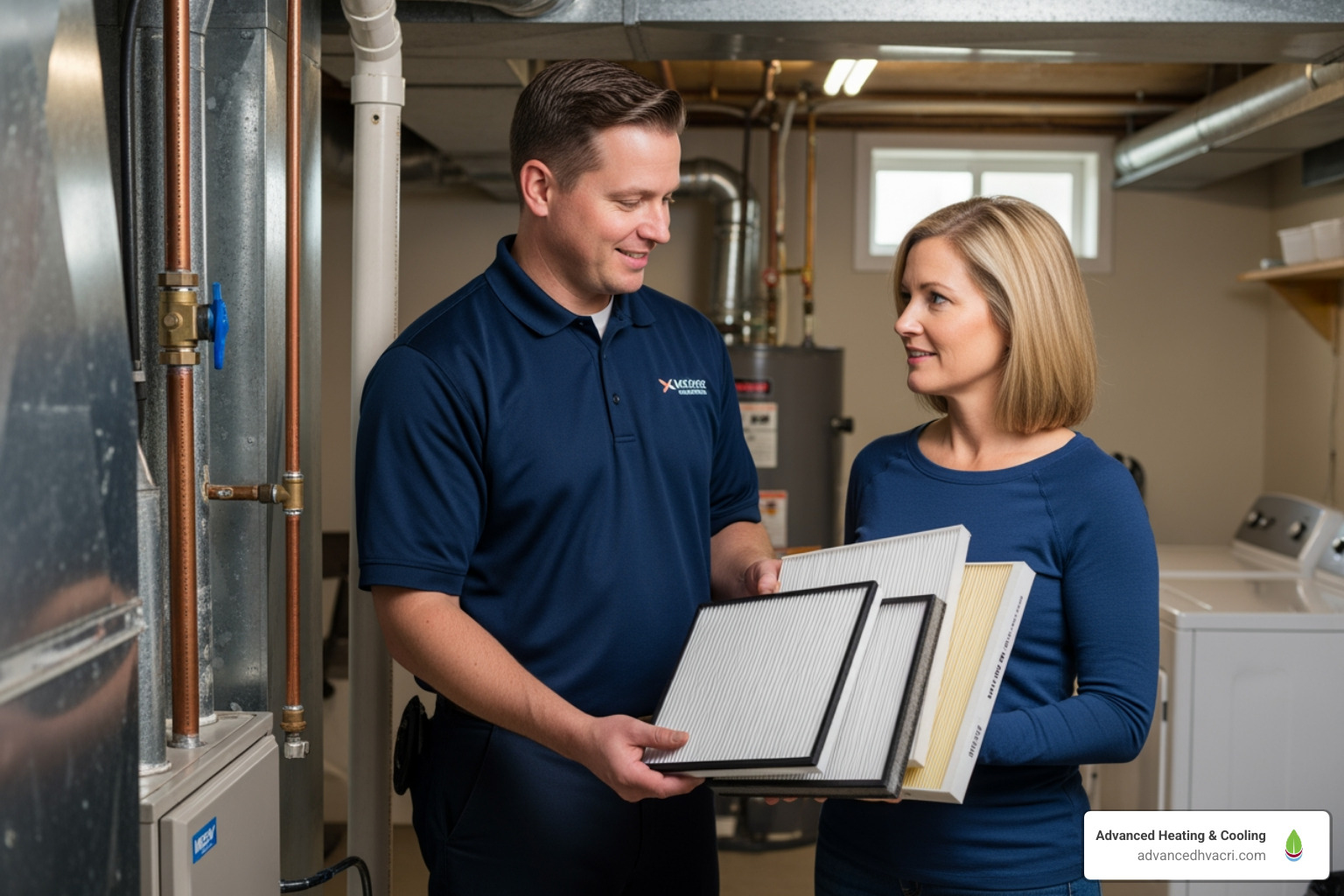
- Air Purification Systems: For those concerned about indoor air quality, integrating an air filtration or purification system with your new furnace is a smart move. Costs vary depending on the system type and features.
Key Factors That Influence Your Final Price
Beyond the basic breakdown, several key variables will significantly influence your final furnace replacement cost estimate. Understanding these helps us tailor a solution that’s perfect for your home in Smithfield, Slaterville, or anywhere in our service area. It’s not a one-size-fits-all situation!
We start every furnace replacement consultation with a thorough assessment, including what’s called a Manual J load calculation. This isn’t just guesswork; it’s a precise calculation that considers your home’s size, insulation quality, window efficiency, and even our local Rhode Island climate to determine the exact heating capacity you need. This prevents us from installing a furnace that’s too big (wasting energy) or too small (leaving you chilly).
Furnace Type: Gas, Electric, or Oil?
The type of fuel your furnace uses is one of the biggest determinants of its upfront cost and long-term operating expenses. In our part of Rhode Island, we commonly see gas, electric, and oil furnaces.
| Furnace Type | Upfront Cost (Installed) | Operating Cost | Efficiency | Common in RI |
|---|---|---|---|---|
| Natural Gas | $3,800 – $10,000 | Relatively Low | High | Very Common |
| Electric | $2,000 – $7,000 | Higher | Moderate | Less Common |
| Oil | $4,500 – $9,000 | High | Moderate-Low | Common in Older Homes |
- Natural Gas Furnaces: These are the most common choice in U.S. homes, and for good reason. They typically range from $3,800 to $10,000, including labor. While they might not be the cheapest upfront, natural gas offers high efficiency and relatively low operating costs, making them a popular and cost-effective choice for many homeowners in areas with access to natural gas lines.
- Electric Furnaces: Electric furnaces are often the most affordable option upfront, typically costing between $2,000 and $7,000 installed. However, electricity often costs more than natural gas, so your monthly energy bills can be significantly higher, especially during the peak heating season here in Rhode Island.
- Oil Furnaces: While less efficient than modern gas furnaces, oil furnaces are durable and still prevalent in many older homes, particularly in the Northeast. Expect to pay between $4,500 and $9,000 (or even up to $10,000+) for an oil furnace replacement. They can have higher fuel and maintenance costs compared to gas, but for homes without access to natural gas, they remain a viable option.
- Propane Furnaces: Propane furnaces can range from $3,700 to $14,200. While similar in performance to natural gas, propane can be more expensive per gallon.
Efficiency Rating: The AFUE Scale
The Annual Fuel Utilization Efficiency (AFUE) rating tells you how efficiently your furnace converts fuel into usable heat for your home. It’s expressed as a percentage, and a higher number means more heat for your buck! The United States Department of Energy provides excellent resources on understanding AFUE.
- Standard Efficiency (80-89% AFUE): Older systems often had AFUE ratings as low as 65-75%. Today’s standard efficiency furnaces start around 80% AFUE, meaning 80 cents of every dollar you spend on fuel goes towards heating your home, with the rest escaping as exhaust. These are generally less expensive upfront.
- High-Efficiency (90%+ AFUE): These furnaces are the champions of energy savings, boasting ratings of 90% to 98.5% or higher. While they have a higher upfront furnace replacement cost estimate, they offer substantial long-term savings. Upgrading to a high-efficiency furnace can lower your heating bills by $200 to $400 annually for the average household, which really adds up over the lifespan of the unit, especially in our colder climate. It’s an investment that pays you back!
Furnace Size: Why BTUs Matter
Furnace size isn’t about physical dimensions; it’s about heating capacity, measured in British Thermal Units (BTUs). Getting the right BTU rating is critical.
- BTU Explained: A BTU is the amount of energy needed to raise the temperature of one pound of water by one degree Fahrenheit. For furnaces, it indicates how much heat the unit can produce.
- Sizing per Square Foot: A common guideline is 30-60 BTUs per square foot, but this can vary significantly based on your home’s insulation, window quality, and the climate zone. For example, a 2,000-square-foot home might need a furnace rated between 60,000 and 120,000 BTUs.
- The Dangers of Mis-sizing:
- Oversized Furnace: Too large a furnace will heat your home too quickly, then shut off (short-cycling). This wastes energy, creates uneven heating, and puts unnecessary wear and tear on components, leading to premature failure. It’s like driving a sports car in stop-and-go traffic – inefficient and frustrating!
- Undersized Furnace: A furnace that’s too small will struggle to heat your home, running constantly without ever quite reaching the desired temperature. This also wastes energy and shortens the unit’s lifespan, leaving you cold and with high bills.
This is why professional sizing is so important. As noted by How Much Does a New Furnace Cost? [2025 Data], we perform a Manual J load calculation to ensure your new furnace is perfectly matched to your home’s specific heating needs.
Brand & Blower Speed: A Note on Quality
While many homeowners focus on brand names, our decades of experience tell us that the quality of the installation often outweighs the brand itself. Many furnace brands are manufactured by a handful of companies, and a reputable installer can make even a standard unit perform exceptionally. That said, well-known brands often offer better warranties and customer support.
Beyond the brand, the type of blower in your furnace significantly impacts comfort and efficiency:
- Single-Stage Furnaces: These are the most basic and typically the least expensive. They operate at full capacity (100% on) until your home reaches the set temperature, then shut off. This can lead to less consistent temperatures and noticeable temperature swings.
- Two-Stage Furnaces: These offer more comfort and efficiency. They have two heat output levels: a lower setting (often 60-70% capacity) for milder days and a higher setting for colder weather. This allows for longer, gentler heating cycles, providing more even temperatures and better humidity control.
- Variable-Speed Blowers: These are the cream of the crop, offering the best comfort and energy savings. A variable-speed blower can precisely adjust its airflow and heat output to match your home’s exact needs. This leads to incredibly consistent temperatures, quiet operation, and improved air filtration. While they come with a higher upfront furnace replacement cost estimate, the comfort and efficiency benefits are undeniable.
Choosing the right heating system for your home is a big decision, and we’re here to help you understand all the options. For more insights into heating services, check out Choosing the Right Heating Services.
Repair or Replace? Making the Most Cost-Effective Choice
This is the million-dollar question, isn’t it? Your furnace is making strange noises, or perhaps it’s just not keeping your home as warm as it used to. The debate between “repair it” or “replace it” can be a tough one. As a rule of thumb, many HVAC professionals use what’s often called the “50% rule” or “one-third rule”: if the cost of repairs exceeds one-third to half the cost of a new furnace, especially for a unit older than 15 years, it’s usually more cost-effective to replace it.
Consider your furnace’s age, the frequency of repairs, and those creeping energy bills. If you’re constantly calling us for service, or if your energy usage has inexplicably spiked, it might be time to say goodbye to your old heating companion. We understand that this is a significant decision, and our goal is always to provide you with an honest assessment to help you make the best choice for your Smithfield home. For all your heating and cooling needs, remember to visit HVAC Repair & Maintenance.
Telltale Signs You Need a New Furnace
Sometimes, your furnace gives you subtle hints that it’s nearing the end of its journey. Other times, it’s as dramatic as a full-blown breakdown. Here are the key signs that indicate it might be time for a new furnace replacement cost estimate:
- Furnace Age (15-20+ years): Most forced-air furnaces last 15 to 25 years with regular maintenance. If yours is approaching or past this age, its efficiency is likely declining, and breakdowns will become more frequent.
- Increasing Energy Bills: Are your heating bills steadily climbing without a significant change in usage or energy prices? An old, inefficient furnace has to work harder to heat your home, consuming more fuel.
- Uneven Heating: Do some rooms feel like a sauna while others are like an icebox? This can be a sign that your furnace is struggling to distribute heat effectively, or that its capacity is no longer adequate for your home.
- Strange Noises or Smells: Grinding, banging, squealing, or persistent rattling sounds are never a good sign. Musty or burning smells, or even a rotten egg smell (which could indicate a gas leak – call us immediately!), are also red flags.
- Yellow Pilot Light: For older gas furnaces, the pilot light should be a strong blue flame. A flickering yellow or orange flame can indicate incomplete combustion, potentially producing carbon monoxide. This is a serious safety hazard.
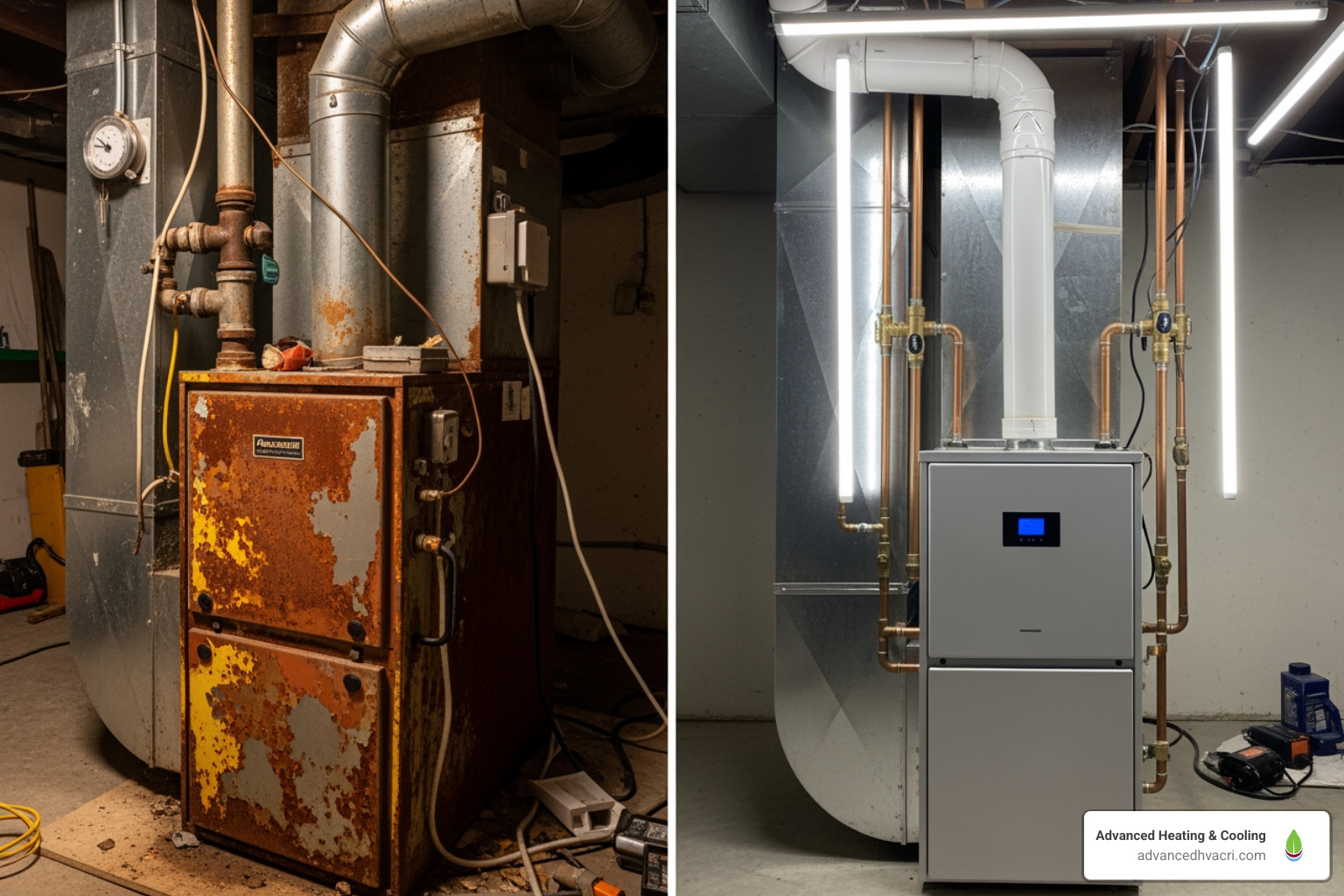
- Visible Rust or Cracks: Inspect the exterior of your furnace. Rust, corrosion, or cracks, especially on the heat exchanger (though this requires professional inspection), are signs of significant wear and potential safety issues.
Comparing Repair vs. Replacement Costs
Let’s talk numbers. The average furnace repair bill is about $300, with repairs ranging from as low as $65 to as high as $1,500. For smaller, one-off issues, a repair is often the most sensible option. You can find more details on general repair costs at Cost to repair a furnace.
However, some repairs hit harder:
- Blower Motor Replacement: This can cost anywhere from $450 to $1,500.
- Ignitor Replacement: Expect to pay around $150 to $300 for this.
- Heat Exchanger Replacement: This is one of the most expensive furnace components. Replacing it can cost between $2,000 and $3,000. Often, if the heat exchanger fails, we recommend replacement of the entire furnace, as the cost of this single repair can be close to the cost of a new, entry-level unit, and the furnace is likely already quite old.
When a major component fails, or if you’re facing multiple repairs on an older unit, the long-term cost-effectiveness shifts dramatically towards replacement. The initial furnace replacement cost estimate might seem daunting, but when you factor in improved efficiency, fewer breakdowns, and better comfort, a new furnace often pays for itself over time.
Smart Strategies to Save on Your Furnace Replacement
Investing in a new furnace is a big decision, but it doesn’t have to break the bank. At Advanced Heating & Cooling, we believe in helping our Smithfield neighbors make smart financial choices that lead to long-term comfort and savings. It’s all about looking at the total cost of ownership – the upfront price plus the ongoing energy and maintenance costs – to find the best long-term value.
Take Advantage of Rebates, Tax Credits, and Financing
One of the best ways to reduce your upfront furnace replacement cost estimate is to tap into available incentives:
- Manufacturer Rebates: Many furnace manufacturers offer seasonal rebates on new, energy-efficient models. We stay up-to-date on these offers and can help you identify eligible units.
- Utility Company Incentives: Local utility companies in Rhode Island sometimes offer rebates for installing high-efficiency heating systems. It’s always worth checking with your provider.
- Federal Tax Credits: The federal government often provides tax credits for installing ENERGY STAR-certified furnaces. For example, ENERGY STAR-certified furnaces with an AFUE of 97% or higher are eligible for a tax credit of 30% of the project cost, up to $600. These incentives can significantly reduce your overall costs. You can find more information at Energy Star’s furnace tax credit.
- Contractor Financing Options: We understand that a furnace replacement can be an unexpected expense. That’s why we offer various financing options to help make your new system more affordable. These options allow you to spread the cost over time, easing the immediate financial burden. Explore our options on Your Guide to Affordable Heating Services.
The Importance of Regular Maintenance
While it might seem counterintuitive, regular maintenance on your old furnace can save you money before you even get a new one, and maintenance on your new furnace will protect your investment.
- Extending Furnace Lifespan: A well-maintained furnace can last 15 to 25 years. Routine tune-ups keep components running smoothly, preventing minor issues from escalating into major, costly repairs.
- Preventing Costly Repairs: Annual professional maintenance, ideally performed before the heating season kicks in, allows our technicians to catch potential problems early. This proactive approach can save you from an emergency breakdown on the coldest day of the year. Learn more about its benefits at The Importance of Regular Heating Maintenance.
- Changing Air Filters: This is a simple task you can do yourself that has a huge impact. Changing your air filter every 1 to 3 months (or more frequently if you have pets or allergies) ensures optimal airflow, efficiency, and indoor air quality. A clogged filter makes your furnace work harder, increasing energy consumption and wear. For guidance, see How Often Should You Replace Your HVAC Air Filter?.
Timing and Getting Multiple Quotes
Timing can play a role in your furnace replacement cost estimate, and getting multiple quotes is always a smart move.
- Off-Season Purchasing: If your furnace isn’t on its last legs, consider planning your replacement during the off-season, typically spring or summer. Demand for HVAC services is lower then, which might lead to more competitive pricing or faster scheduling.
- Getting At Least Three Quotes: We always recommend getting at least three detailed, itemized quotes from reputable HVAC contractors. This allows you to compare not just the bottom-line price, but also what’s included in the estimate, the type of equipment being offered, and the proposed scope of work. A good quote will include model numbers, sizing calculations, and timelines.
- Comparing Itemized Estimates: Don’t just look at the total! Ensure each quote provides a clear breakdown of equipment costs, labor, permits, and any additional services. This transparency helps you understand exactly what you’re paying for and avoid hidden fees. When choosing a contractor in our area, you want someone who prioritizes quality and clear communication. For tips on selecting a reputable local company, read Choosing the Right HVAC Company in Smithfield, RI.
Frequently Asked Questions about Furnace Replacement Costs
How long does a new furnace typically last?
A well-maintained furnace has a lifespan of 15 to 25 years. The quality of the installation, regular heating system maintenance, and the unit’s brand all play a role in its longevity.
How long does the furnace replacement process take?
A standard furnace replacement typically takes 4 to 10 hours. The process can take longer if significant ductwork modifications, electrical updates, or other complex adjustments are needed.
Is a more expensive, high-efficiency furnace worth it in Smithfield?
Yes, for most Smithfield homeowners, a high-efficiency furnace is a worthwhile investment. While the upfront cost is higher, the long-term energy savings from our cold winters often offset the initial price, leading to a lower total cost of ownership.
Get a Precise, No-Obligation Estimate for Your Smithfield Home
Understanding your furnace replacement cost estimate is the first step toward a warmer, more efficient home. By considering factors like furnace type, efficiency, and size, and by exploring ways to save, you can make a confident and cost-effective decision. For a detailed and honest assessment custom to your specific needs, trust the local experts. With over 30 years of experience, Advanced Heating & Cooling provides transparent, free estimates to ensure you get the right system at the right price. Contact us today to schedule your heating installation and repair consultation.


