Is Adding a Whole House Humidifier Right for You?
Adding a whole house humidifier is one of the most effective upgrades you can make to your home’s HVAC system — especially during harsh New England winters when indoor humidity can drop to just 15%.
Here’s a quick overview of what’s involved:
- What it is: A unit that connects directly to your furnace or air handler and distributes moisture throughout your home via existing ductwork
- Types available: Bypass, fan-powered, and steam humidifiers
- Typical cost: $400–$1,200 installed (unit + labor)
- DIY difficulty: Intermediate — requires basic plumbing, electrical, and sheet metal work
- Ideal humidity range: 30%–50% relative humidity
- Time to install: 2–5 hours depending on your setup
If you’ve been waking up with a dry throat, getting zapped by static electricity every time you touch a doorknob, or watching your hardwood floors crack and gap over the winter — your home’s air is almost certainly too dry. Forced-air heating systems are a big part of the problem. They pull in cold, dry outdoor air, heat it up, and push it through your home — stripping out what little moisture was left in the process. The result? Air that’s more parched than a desert in some Rhode Island homes.
The good news: there’s a reliable, long-term fix. And depending on your skill level, you may even be able to tackle it yourself.
I’m Richard Marcello, President of Advanced Heating & Cooling, and with over 30 years of hands-on HVAC experience serving homeowners across Rhode Island, I’ve helped hundreds of families evaluate the real costs and benefits of adding a whole house humidifier to their heating systems. In this guide, I’ll walk you through everything you need to know — from choosing the right type to deciding whether this is a DIY project or a job for a pro.
Essential adding whole house humidifier terms:
Understanding the Benefits of Adding a Whole House Humidifier
Living in Smithfield or North Smithfield, we know all too well how the winter air can turn our homes into dry, uncomfortable boxes. When we talk about unlocking comfort with a central HVAC humidifier, we aren’t just talking about a luxury; we’re talking about a significant improvement to your quality of life.
Health and Skin Hydration
Dry air is a thief—it steals moisture from your body. This leads to itchy skin, chapped lips, and irritated nasal passages. By adding a whole house humidifier, you keep your respiratory system hydrated, which helps your body filter out germs more effectively. Many of our neighbors find they suffer from fewer sinus infections and wake up without that “sandpaper throat” feeling when the humidity is balanced.
Protecting Your Home’s Interior
Your home is likely your biggest investment, and dry air can be its worst enemy. Wood is a natural material that shrinks when it loses moisture. If you’ve noticed gaps in your hardwood flooring or cracks in your expensive wood furniture, low humidity is the culprit. Maintaining a consistent moisture level helps preserve the structural integrity of your home’s woodwork and even keeps your musical instruments, like pianos or guitars, in tune.
Static Shock and Energy Efficiency
Tired of getting zapped every time you touch a light switch? Balanced humidity virtually eliminates static electricity. Furthermore, there is a hidden financial benefit. Moist air holds heat better than dry air. When your home is properly humidified, you actually feel warmer at a lower thermostat setting. This means you can turn the heat down a couple of degrees without losing comfort, leading to lower monthly energy bills. You can learn more about the impacts humidity has on your HVAC system to see how it affects your equipment’s longevity.
Choosing the Right Type for Your Home
When it comes to adding a whole house humidifier, one size definitely does not fit all. In April 2026, the technology has never been better, but you still need to pick the model that matches your home’s architecture and your family’s needs.
Bypass Models
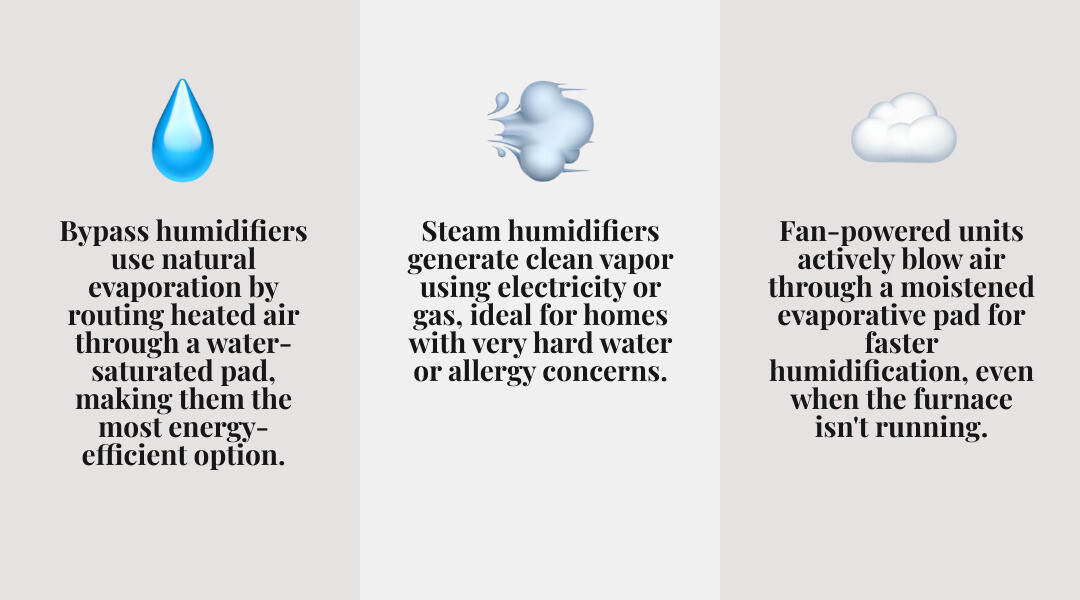
These are the most common and budget-friendly options. A bypass humidifier doesn’t have its own motor. Instead, it relies on the furnace’s blower to push air through a water-soaked pad. It requires a bypass duct to be installed between the supply and return plenums. While simple and reliable, they only humidify when the furnace is actively running.
Fan-Powered Units
These units have their own internal fan that pulls air across the water panel. Because they don’t rely solely on the furnace blower, they can often produce more moisture (around 18 gallons per day) and are great for homes with limited space where a bypass duct won’t fit.
Steam Generation
If you have a large home (over 4,000 square feet) or very high ceilings, steam is the way to go. Steam humidifiers use electrodes to boil water and create pure steam, which is then injected into the ductwork. These are the “Ferraris” of the humidifier world—they offer the most precise control and can produce up to 34 gallons of moisture per day.
| Feature | Bypass | Fan-Powered | Steam |
|---|---|---|---|
| Cost | Lowest | Moderate | Highest |
| Maintenance | Annual pad change | Annual pad change | Tank/Electrode cleaning |
| Water Usage | Higher (drainage) | Moderate | Efficient |
| Best For | Standard homes | Homes with limited space | Large homes/Precision |
Deciding between these can be tricky, especially when comparing humidifiers vs dehumidifiers for Rhode Island homes. While Rhode Island summers are sticky, our winters are the exact opposite.
Sizing and Capacity for Adding a Whole House Humidifier
To choose the right capacity, look at your home’s square footage and insulation quality. A well-insulated 2,000-square-foot home might only need 10–12 gallons per day, whereas an older, drafty home in Woodville of the same size might need 17 gallons to keep up with the moisture loss.
Best Location for Adding a Whole House Humidifier
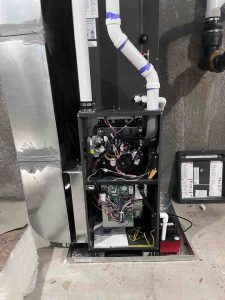
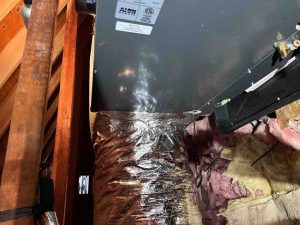
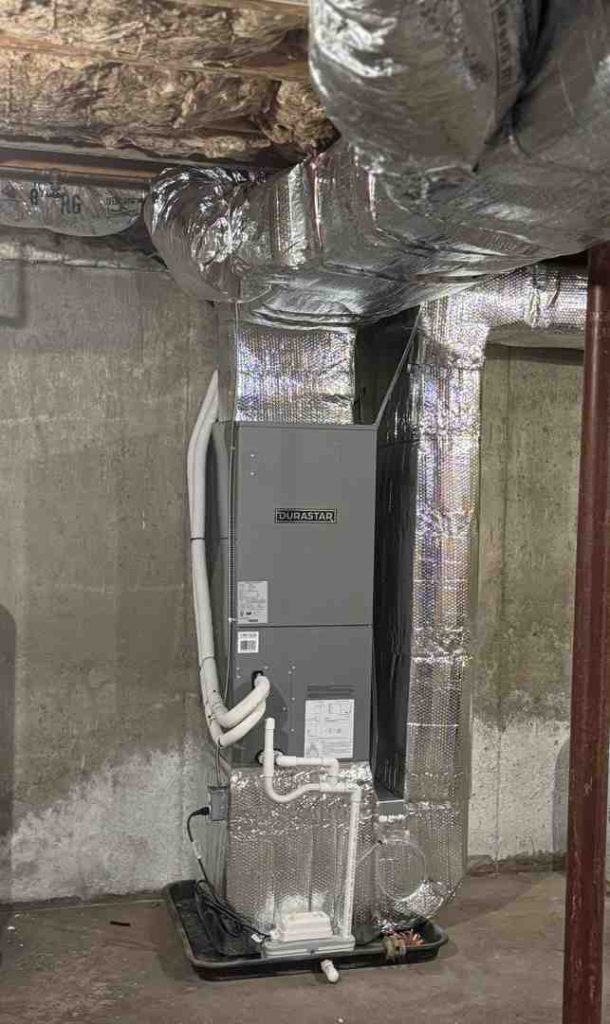
Most units are installed on the supply plenum (the part of the ductwork that sends air out to the rooms) or the return duct (where air comes back to be heated). The key is finding a straight run of ductwork—ideally at least 6 feet—to ensure the moisture has time to mix with the air before hitting a bend. If you have a unique setup, check out our guide on downflow humidifier installation tips.
The Cost of Adding a Whole House Humidifier in 2026
Budgeting for this project involves three parts: the unit, the installation, and the “feeding and caring” of the system.
- Unit Pricing: A basic bypass unit usually costs between $100 and $300. Fan-powered units range from $300 to $600, while steam units can exceed $1,000.
- Installation Labor: Professional installation typically averages between $395 and $734, though complex setups in older Johnston homes can push that closer to $1,500.
- Ongoing Maintenance: You’ll need to replace the water panel (the “filter”) once or twice a year, costing about $20–$40. Steam units require canister replacements every 2–3 years.
Is it worth it compared to those $50 portable units? Absolutely. Portable units only humidify one room, require daily refilling, and are prone to mold if not scrubbed weekly. A whole-house system is “set it and forget it,” providing consistent comfort to every corner of your house for pennies a day in water and electricity.

Step-by-Step Guide to DIY Installation
If you’re handy with a drill and don’t mind getting a little dusty in the basement, you can save on labor costs by doing a DIY furnace humidifier installation.
Tools You’ll Need
- Tin snips (for cutting ductwork)
- Power drill and bits
- Level
- Wire strippers
- Screwdrivers
- Safety glasses and work gloves (sheet metal is sharp!)
The Process
- Shut Off Power: Safety first! Turn off the power to your furnace at the breaker.
- Trace the Template: Most units come with a paper template. Tape this to the supply plenum and trace the opening.
- Cut the Duct: Use your tin snips to cut the hole. Pro tip: Wear gloves; the edges of the metal will be like razors.
- Mount the Unit: Attach the mounting plate and then the humidifier housing. Ensure it is perfectly level.
- Install the Humidistat: This is the “brain” of the system. Mount it on the return duct at least 6 inches upstream from the humidifier or any bypass duct.
- Water Line Connection: You’ll need to tap into a cold water pipe. While many kits include a “saddle valve,” we strongly recommend using a T-fitting. Saddle valves are notorious for leaking over time.
- Drain Line: Run a plastic tube from the unit to a floor drain or condensate pump. Make sure the line always slopes downward so water doesn’t back up.
- Wiring: Follow the manufacturer’s diagram to connect the humidistat to the furnace’s 24V control board. This ensures the humidifier only turns on when the blower is running.
For a more visual walkthrough, you can reference this step-by-step guide to ensure you haven’t missed a step.
Maintenance and Troubleshooting for Long-Term Success
Once your system is up and running, it doesn’t need much, but you can’t ignore it entirely.
Annual Cleaning
At the start of each heating season (usually October in Rhode Island), pop open the cover and replace the water panel. Over the winter, minerals from our local water supply will build up on the pad, turning it into a crusty “brick” that won’t hold water.
Mineral Buildup and Leaks
If you have hard water, you might see white scale buildup in the distribution tray. A quick soak in vinegar will clear this right up. Periodically check the drain line for clogs—dust can sometimes mix with the water to create a sludge that blocks the flow.
Seasonal Adjustments
Your humidistat isn’t a “set at 45 and leave it” dial. As the temperature outside drops, you actually need to lower your indoor humidity setting. If it’s 0°F outside and your humidity is at 45%, you’ll see heavy condensation on your windows, which can lead to wood rot and mold.
| Outdoor Temp | Recommended Humidity |
|---|---|
| +20°F | 35% |
| +10°F | 30% |
| 0°F | 25% |
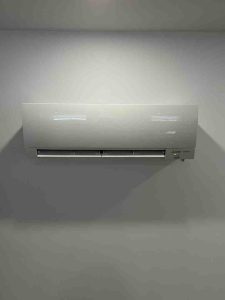
For those with ductless systems, the maintenance is slightly different, as detailed in this Old House guide.
Frequently Asked Questions about Humidifier Installation
Can I install a whole house humidifier myself or should I hire a pro?
If you’ve never worked with sheet metal or low-voltage wiring, it might be best to call us. While a DIY install saves money, an incorrectly installed unit can lead to water leaking directly into your expensive furnace electronics or mold growth in your ducts. Most manufacturer warranties also require professional installation to remain valid.
What humidity level should I maintain and how do I monitor it?
The “sweet spot” is between 30% and 50%. Anything lower and you’ll feel the dry air symptoms; anything higher than 60% and you’re inviting mold and dust mites to the party. We recommend buying a small digital hygrometer to keep in your living room to monitor the actual levels.
Are there any risks like mold growth or water leaks?
Yes, but they are preventable. Mold only grows if the humidity is kept too high (above 60%) or if the unit is leaking into the ductwork. If you see water pooling under your furnace, check the solenoid valve and the drain line immediately. Proper sealing during installation is the best defense against these issues.
Conclusion
Adding a whole house humidifier is truly a “game-changer” for New England winters. It protects your health, your home, and your wallet. Whether you decide to take the DIY route or prefer the peace of mind that comes with expert installation, the result will be a much more comfortable home.
At Advanced Heating & Cooling, we’ve been keeping our neighbors in Smithfield, Johnston, and North Smithfield comfortable for over 30 years. We pride ourselves on honest, quality workmanship and are always happy to provide free estimates for your home improvement projects.
Ready to breathe easier? Contact us for expert humidifier installation today and let’s get your home’s air back in balance!