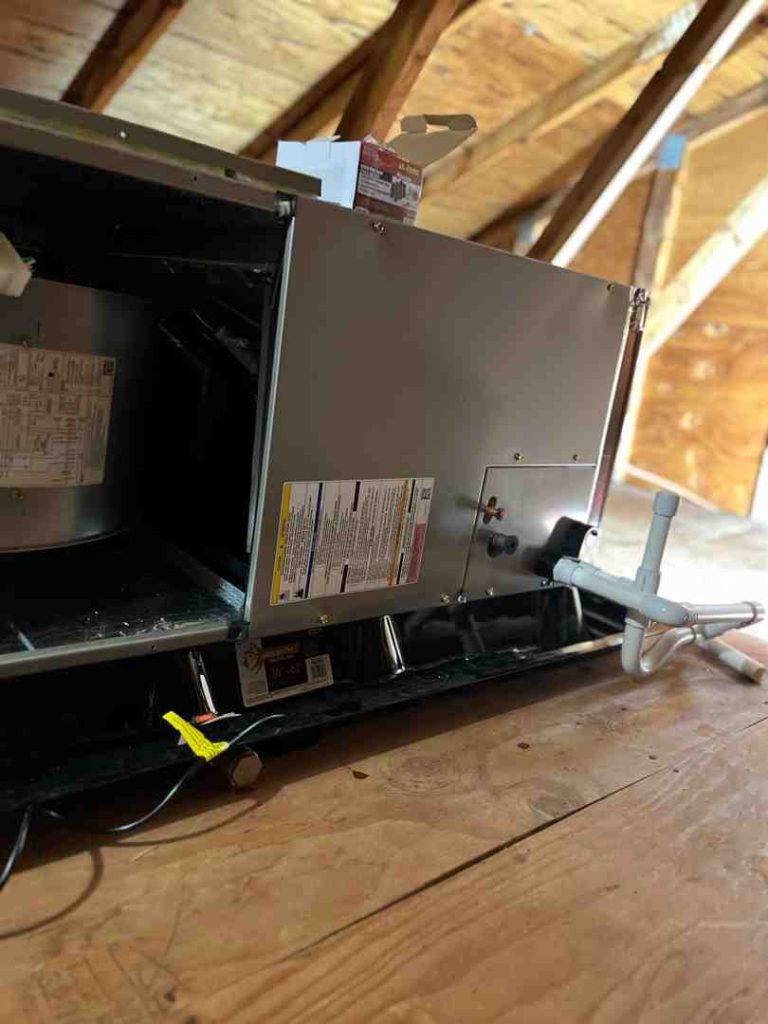
Your Home Already Has Half the System — Here’s How to Complete It
Adding AC to a gas furnace is not only possible — for most Rhode Island homes with existing forced-air heating, it’s the most practical and cost-effective way to get whole-home cooling.
Here’s the short answer:
- Install an evaporator coil above your furnace in the plenum
- Connect refrigerant lines to a new outdoor condenser unit
- Add a condensate drain line to handle moisture
- Upgrade your thermostat to control both heating and cooling
- Have a certified technician charge the system with refrigerant
The result: Your furnace’s existing blower and ductwork do the heavy lifting — you get central AC without rebuilding your entire HVAC system.
Typical cost ranges from $4,000 to $12,000, depending on duct condition, AC unit size, and any electrical upgrades needed. Many Rhode Island homeowners land in the $5,000–$8,000 range for a straightforward retrofit.
If you already have a gas furnace with forced-air heating, you’re closer to year-round comfort than you might think. The blower, the ducts, the vents — they’re already there. Adding cooling means working with what you have, not starting over.
That said, there are real compatibility checks to run before you buy anything. Duct sizing, blower capacity, and plenum space all matter. Get those wrong and you’ll end up with a system that runs but doesn’t perform.
I’m Richard Marcello, President of Advanced Heating & Cooling, and with over 30 years of hands-on HVAC experience serving Rhode Island homeowners, I’ve helped countless families navigate adding AC to a gas furnace the right way — without overspending or cutting corners. In this guide, I’ll walk you through everything you need to know before making a decision.
Adding ac to gas furnace vocabulary:
Key Considerations for adding ac to gas furnace
Before we start picking out equipment, we have to look at the “bones” of your home. Adding air conditioning isn’t just about sticking a box outside; it’s about ensuring your existing furnace can handle the extra work. In Smithfield and North Smithfield, many older homes have sturdy furnaces that were built to last, but they weren’t always designed with modern cooling in mind.
Blower Capacity and CFM Requirements
The blower motor inside your furnace is the engine that moves air through your home. For heating, air is thin and light. For cooling, the air is denser, and it has to push through a cold, wet evaporator coil. This creates “static pressure”—basically, resistance.
We need to verify that your blower can provide enough Cubic Feet per Minute (CFM) of airflow. A general rule of thumb is 400 CFM per ton of air conditioning. If you are installing a 3-ton unit, your blower needs to move 1,200 CFM. If the blower is too weak, the coil will freeze into a block of ice, and you’ll be left sweating.
Ductwork Sizing and Static Pressure
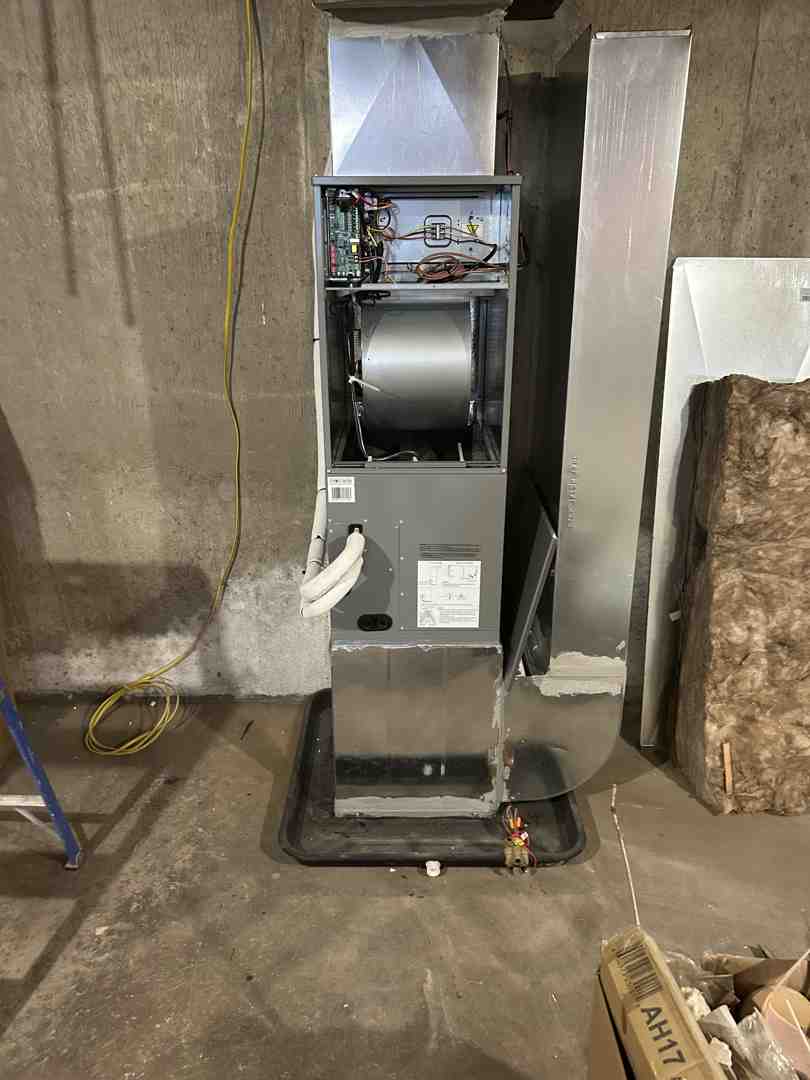
This is where many DIY projects hit a wall. Heating ducts are often smaller than cooling ducts because hot air naturally rises and moves easily. Cool air is stubborn; it’s heavy and likes to sink. If your ducts are undersized, the air will “whistle” through the vents, or worse, it won’t reach the second floor of your Mapleville or Greenville home.
| Feature | Heating Needs | Cooling Needs |
|---|---|---|
| Air Density | Low (Thin air) | High (Dense air) |
| Airflow (CFM) | Typically lower | Higher (approx. 400 CFM/ton) |
| Duct Size | Can be smaller | Needs to be larger for volume |
| Return Air | Minimal requirements | High volume required for dehumidification |
We often find that older homes in Slaterville or Esmond need a few extra return air vents added to help the system “breathe.” Without enough return air, the system struggles to remove humidity, leaving your home feeling clammy. For a deeper dive into these technicalities, check out Cooling Down: The Ultimate Guide to Hooking Up AC to Your Furnace.
Plenum Space Availability
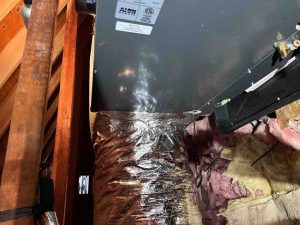
The “plenum” is the box sitting right on top of your furnace where the air starts its journey into the ducts. This is where the evaporator coil lives. We need enough vertical or horizontal clearance to slide that coil in. If your furnace is tucked into a tight crawlspace in Johnston or a low-ceiling basement in Stillwater, we may need to modify the sheet metal to make it fit.
Essential Components and the Installation Process
When we talk about adding ac to gas furnace systems, we are essentially building a bridge between your indoor heating and outdoor cooling. Here are the main components we’ll be installing:
1. The Evaporator Coil (The Indoor Unit)
This is a series of copper or aluminum tubes shaped like an “A” (often called an A-coil). It sits inside your furnace plenum. As the furnace blower pushes air over these cold coils, the heat is absorbed by the refrigerant inside, and the air is cooled before it hits your vents.
2. The Outdoor Condenser
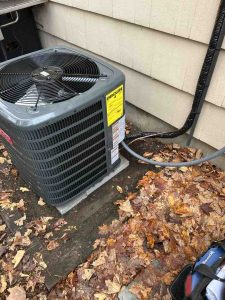
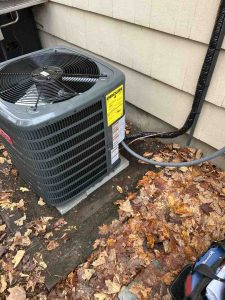
This is the large unit that sits outside on a level pad. It contains the compressor (the “heart” of the system) and a fan. Its job is to take the heat absorbed from inside your house and release it into the outdoor air.
3. Refrigerant Line Sets
Two copper lines connect the indoor coil to the outdoor condenser. One carries cold liquid refrigerant in, and the other carries warm vapor out. These must be sized correctly and insulated to prevent energy loss and “sweating” that could damage your drywall.
4. Manual J Load Calculation
We don’t guess the size of the unit you need based on square footage alone. We use a “Manual J” calculation. This looks at your home’s insulation, window types, and local climate in places like Woodville or Forestdale. An oversized unit will “short-cycle” (turn on and off too fast), which fails to remove humidity. An undersized unit will run forever and never get the house cool.
5. Condensate Drain Line
Air conditioners don’t just cool air; they dehumidify it. That moisture has to go somewhere. We install a drain line (and sometimes a small pump) to carry that water to a floor drain or outside. If this isn’t done right, you’ll end up with a puddle in your basement.
6. System Commissioning
Once everything is hooked up, we don’t just flip a switch. We use specialized tools to “vacuum” the lines (removing air and moisture) and then carefully release the refrigerant. We then test the pressures and temperatures to ensure the system is running at peak efficiency.
Professional vs. DIY: Navigating Regulations and Safety
We know the “DIY” spirit is strong in Rhode Island. You might see videos like How To Install Your Own Air Conditioning With Furnace Combo and think, “I can do that!” While you can certainly help with things like clearing a spot for the outdoor pad or running some basic ductwork, the core of the installation requires a pro.
EPA Section 608 Certification
By federal law, only EPA-certified technicians can handle, purchase, or charge refrigerant. Modern refrigerants like R-32 are much better for the environment (with a GWP of 675 compared to older types at 2,088), but they operate at high pressures and require specialized training. Handling these yourself isn’t just dangerous—it’s illegal.
Vacuum and Pressure Testing
Before adding refrigerant, we must pull a “deep vacuum” on the system. If even a tiny amount of moisture or air remains in the lines, it will react with the oil in the compressor and cause the system to fail prematurely. We use high-precision gauges to ensure there are zero leaks. This is a critical step in our Total HVAC Solutions: AC Services in Smithfield, RI.
Electrical and Building Codes
Adding a 220V outdoor condenser usually requires a new circuit from your electrical panel. In towns like Mapleville or North Smithfield, local codes are very specific about how these wires are run and protected. Furthermore, improper wiring can fry your furnace’s control board—an expensive mistake you don’t want to make.
Warranty Protection
Most major manufacturers (like Goodman or Trane) will void your warranty if the system isn’t installed by a licensed professional. If your compressor fails in year two, you want that warranty to cover the replacement. Investing in professional installation is essentially buying insurance for your comfort.
Frequently Asked Questions about Adding AC to a Gas Furnace
Is my existing ductwork compatible for adding ac to gas furnace?
In many cases, yes, but there are caveats. If your home was built before the 1990s, the ducts might be leaky or uninsulated.
- Insulation: Cooling ducts must be insulated (typically R-8 for attics and R-4 for conditioned spaces) to prevent condensation and energy loss.
- Airflow: If your vents are too small, the air will struggle to move.
- Return Air: Central AC needs more “return” air than a furnace does. We might need to add a larger return grille to prevent the system from “choking.”
For more localized advice, see AC Installation 101: What You Need to Know in Smithfield, RI.
What is the typical cost range for this retrofit?
The national average for adding ac to gas furnace systems ranges from $4,000 to $12,000.
- Equipment: A standard 14 or 16 SEER2 unit is the most common choice.
- Refrigerant: Systems using the newer R-32 refrigerant are 10-15% more efficient and are becoming the new standard.
- Labor: A straightforward install might take a day, but if we have to modify ducts or upgrade your electrical panel, the labor costs will rise.
- Incentives: Don’t forget to check for local Rhode Island rebates! Many high-efficiency systems qualify for hundreds of dollars back.
Does adding ac to gas furnace increase home value?
Absolutely. In today’s market, central air is no longer a “luxury”—it’s an expectation.
- Resale Appeal: About 87-90% of American households now have AC. If your home doesn’t, it will sit on the market longer.
- Indoor Air Quality: Your AC system acts as a whole-home filtration system, removing dust and allergens every time it runs.
- Zoning: If you have a large home in Johnston, we can even look at “dual-fuel” setups where a heat pump handles the mild days and the gas furnace kicks in for the deep Rhode Island freezes.
Learn more about how these systems work together in our Understanding HVAC Systems: A Smithfield Homeowner’s Guide.
Conclusion
Adding ac to gas furnace systems is one of the smartest upgrades you can make for your home. You’re leveraging the equipment you already own to gain a level of comfort that window units simply can’t match. No more lugging heavy units into windows every June, and no more noisy fans drowning out your TV.
At Advanced Heating & Cooling, we’ve spent over 30 years perfecting the art of the HVAC retrofit. We live and work right here in Smithfield, and we know the unique challenges of Rhode Island homes—from the tight basements of Slaterville to the sprawling layouts in Greenville.
We pride ourselves on honest, quality workmanship. We won’t sell you a system you don’t need, and we’ll make sure your existing furnace and ducts are truly up to the task before we start. Whether you need a simple add-on coil or a high-efficiency R-32 system, we are here to help.
Ready to stay cool this summer? Contact us today for a free estimate on your project. Let’s make your home the comfortable sanctuary it deserves to be.
AC Installation & Repair Heating Installation Mastering Your Comfort: Expert Furnace Setup in Smithfield