Why a Commercial Ductless Air Conditioner Could Transform Your Business Comfort
A commercial ductless air conditioner is a split-system HVAC unit that cools (and often heats) a commercial space without needing any ductwork. Here’s a quick overview:
| Feature | What It Means for Your Business |
|---|---|
| No ducts required | Faster, less invasive installation |
| Zoned comfort | Control temperature independently per room or area |
| High efficiency | SEER2 ratings up to 25, cutting energy costs significantly |
| Quiet operation | Indoor sound levels as low as 22–27 dB(A) |
| Flexible mounting | Wall, ceiling cassette, or floor-ceiling options |
| Heat pump capable | Many models both heat and cool year-round |
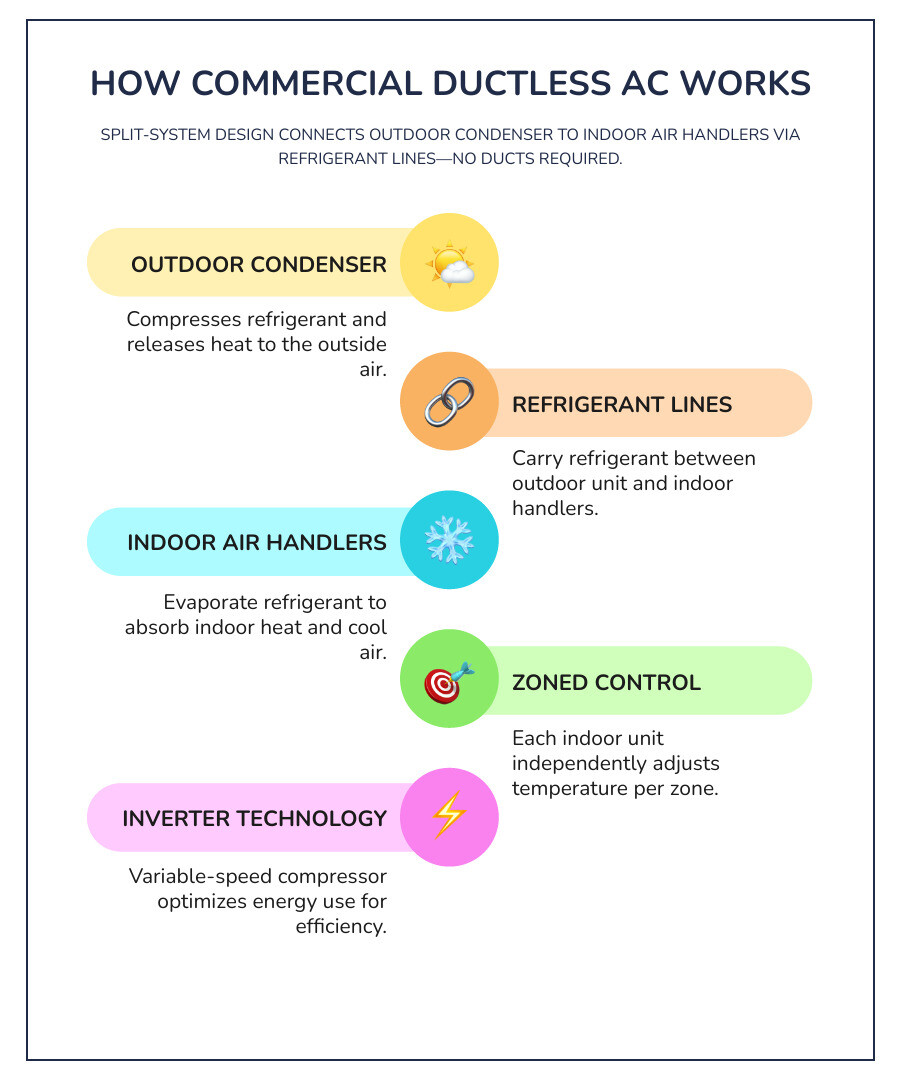
These systems work by connecting one or more indoor air handlers to an outdoor condenser unit via refrigerant lines — no ductwork needed. Businesses from small offices to restaurants use them to solve real comfort problems: hot and cold spots, server room overheating, building additions without existing ducts, and rising energy bills.
For Rhode Island business owners frustrated by inefficient HVAC and unreliable contractors, this guide will walk you through everything you need to know — from how these systems work to what they cost and which brands to consider.
I’m Richard Marcello, President of Advanced Heating & Cooling, and with over 30 years of hands-on HVAC experience serving businesses across Rhode Island, I’ve helped countless commercial clients find the right commercial ductless air conditioner for their specific needs. In this guide, I’ll share what I’ve learned in the field so you can make a confident, informed decision.
Common commercial ductless air conditioner vocab:
- Commercial HVAC replacement cost
- Commercial air conditioner installation
- Commercial air conditioner maintenance
Understanding the commercial ductless air conditioner and How It Works
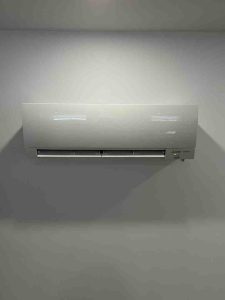
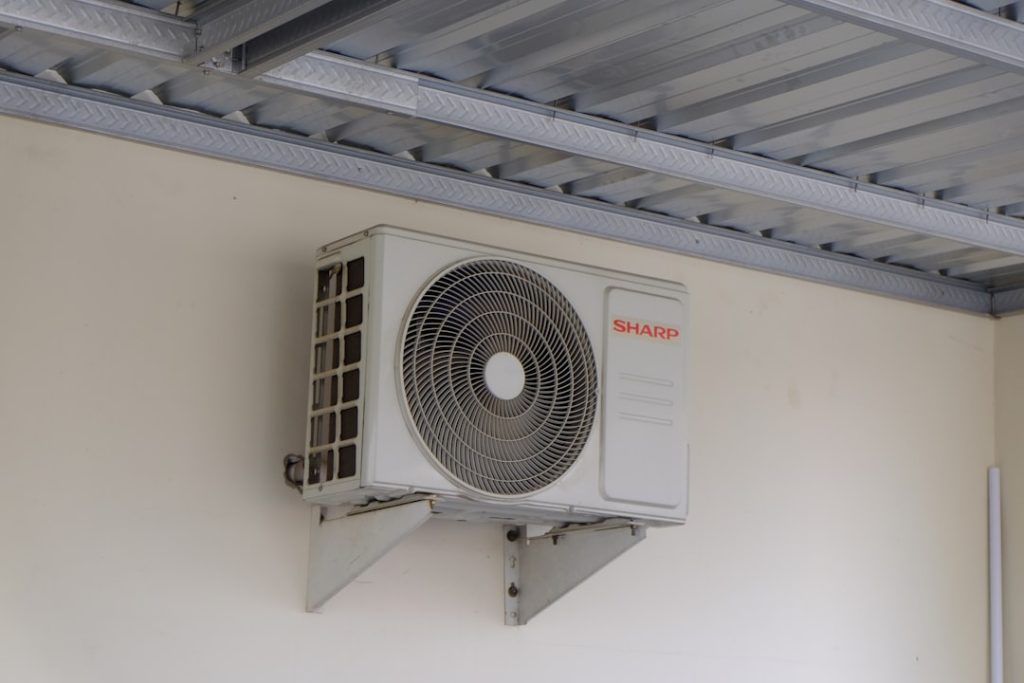
To understand why a commercial ductless air conditioner is so effective, we first need to look at its anatomy. Unlike traditional central air that forces air through a maze of metal ducts, a ductless system (often called a “mini-split”) delivers conditioned air directly into the room.
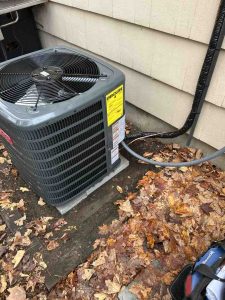
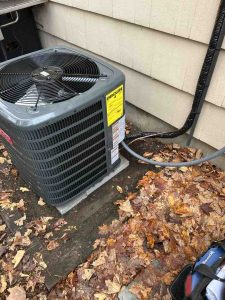
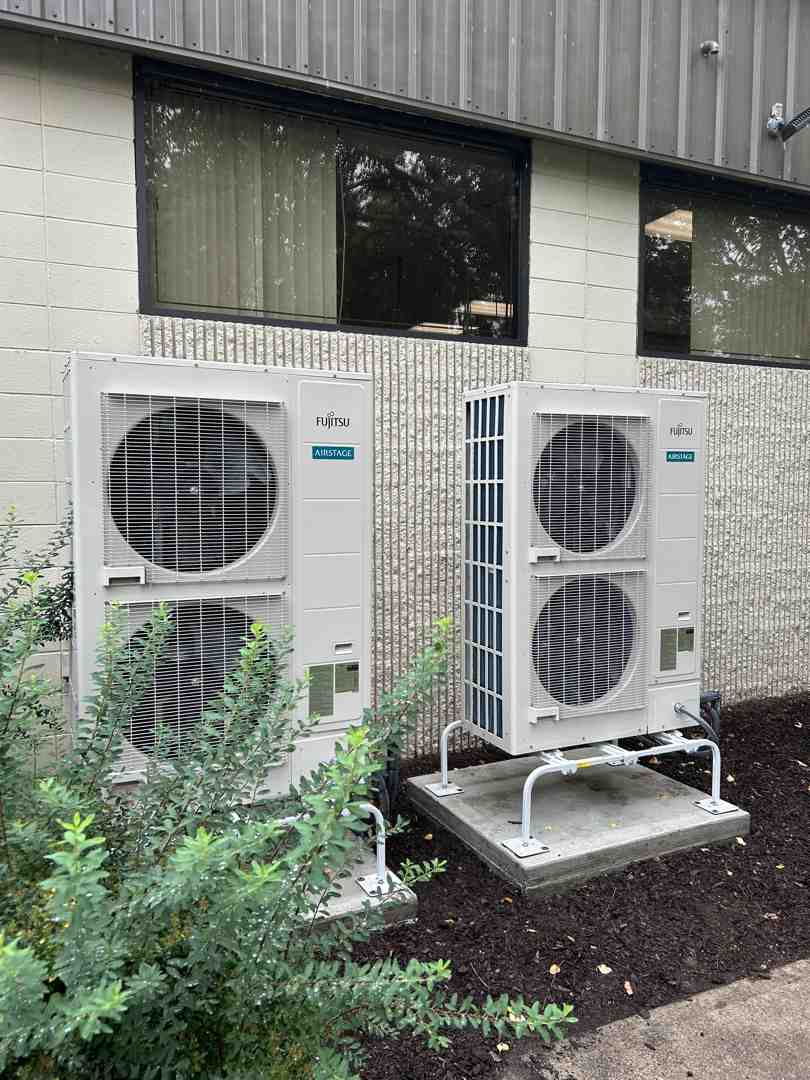
The system consists of two primary components: an outdoor condensing unit and one or more indoor air handlers. These are connected by a small conduit housing the power cable, communication wires, and refrigerant lines. Because there are no ducts, you don’t have to worry about the energy losses associated with leaky or poorly insulated ductwork. According to ENERGY STAR, a typical household’s energy bill is around $1,900 per year — half of which goes to heating and cooling, and ductless systems are a primary recommendation to slash those costs.
The “secret sauce” of modern commercial units is inverter technology. Traditional AC units are either 100% on or 100% off, which leads to uncomfortable temperature swings and high energy spikes. In contrast, a commercial ductless air conditioner uses a variable-speed compressor. It ramps up or down to match the exact cooling demand of the space, much like a dimmer switch for a light bulb. This allows for incredibly precise temperature control and massive energy savings.
How Heat Pump Technology Enhances Business Comfort
Most commercial ductless systems aren’t just for cooling; they are actually “heat pumps.” By using a reversible valve, the system can flip the refrigeration cycle. In the summer, it pumps heat out of your office; in the winter, it extracts heat from the outdoor air (even in cold Smithfield winters!) and pumps it inside.
For local business owners, this means a seamless commercial AC replacement can actually replace your aging furnace as well. This provides year-round climate control from a single, high-efficiency system, simplifying your maintenance and reducing your carbon footprint.
Key Benefits of Installing Commercial Ductless Mini-Split Systems
Why are so many businesses in North Smithfield and Greenville making the switch? It usually comes down to three things: control, cost, and quiet.
- Elimination of Duct Loss: In a standard ducted system, you can lose up to 30% of your energy through the ductwork alone. Ductless systems eliminate this waste entirely.
- Commercial Zone Control: This is a game-changer for office productivity. With commercial zone control for office buildings, the accounting department can keep it a crisp 68 degrees while the showroom stays at a comfortable 72. You only pay to cool the rooms you are actually using.
- Whisper-Quiet Operation: Noise is the enemy of concentration. High-end units like the Heil DLFLCA Cassette provide quiet indoor operation as low as 27 dB(A), which is quieter than a whisper in a library. Some YORK® models even reach sound pressure levels as low as 22dB(A).
- Improved Indoor Air Quality: Without ducts to collect dust, pollen, and mold, the air in your business stays cleaner. Most units feature advanced multi-stage filtration that is easy to access and clean.
- Flexible Installation: We don’t have to tear down walls or drop ceilings to install these. A small three-inch hole in the exterior wall is usually all it takes to connect the system.
Versatile Applications for a commercial ductless air conditioner
We’ve installed these systems in a wide variety of settings across Rhode Island. Here are the most common “problem-solver” scenarios:
- Server Rooms: IT equipment generates massive heat. A dedicated commercial ductless air conditioner provides 24/7 “round-the-clock” cooling for server rooms without needing to run the building’s main HVAC system at night.
- Retail Boutiques & Restaurants: These spaces often have high ceilings or large windows that create hot spots. Ductless units provide targeted relief exactly where it’s needed.
- Office Additions: If you’ve added a new wing or partitioned off a warehouse, extending existing ductwork is often impossible or cost-prohibitive. A mini-split is the perfect solution.
- Historic Building Retrofits: Many of our beautiful older buildings in Johnston or Slaterville don’t have the space for bulky ducts. Ductless systems preserve the architectural integrity while providing modern commercial-ac-heating services.
Choosing the Right System: Sizing, Efficiency, and Configurations
When selecting a commercial ductless air conditioner, you aren’t stuck with a “one-size-fits-all” box on the wall. There are several mounting configurations to match your interior design:
- Wall-Mounted: The most common and cost-effective option, placed high on a wall.
- Ceiling Cassettes: These fit flush into a drop ceiling, with only a sleek grille visible. They offer 360-degree airflow, making them perfect for large open offices.
- Floor-Ceiling Models: These can be mounted low on a wall (like a radiator) or high on a ceiling where wall space is limited.
- Concealed Ducted Units: These are hidden behind a wall or ceiling, with only small registers visible, offering the look of central air with the efficiency of ductless.
Determining the Right Size for Your commercial ductless air conditioner
Getting the size right is critical. If a unit is too small, it will run constantly and fail to cool. If it’s too large, it will “short cycle,” leading to high humidity and premature wear. We look at several factors during our efficient commercial HVAC services assessments:
- Square Footage: The baseline for BTU (British Thermal Unit) capacity.
- Ceiling Height: High ceilings mean more air volume to cool.
- Insulation Quality: Better insulation means you can often get away with a smaller, less expensive unit.
- Window Exposure: Large south-facing windows act like giant heaters in the summer.
We always recommend a professional load calculation. A 3-ton (36,000 BTU) system might be perfect for one shop, while a 5-ton (60,000 BTU) system is needed for a similar-sized space with high foot traffic and heat-generating equipment.
Comparing Ductless vs. Traditional Ducted HVAC Systems
For many business owners, the choice comes down to a comparison between what they know (ducted) and the modern alternative (ductless).
| Feature | Ductless Mini-Split | Traditional Ducted |
|---|---|---|
| Installation Speed | Fast (often 1-2 days) | Slow (weeks for ductwork) |
| Energy Efficiency | Very High (up to 25+ SEER2) | Moderate (typically 14-18 SEER) |
| Maintenance | Simple (filter cleaning) | Complex (duct cleaning + filters) |
| Zoning | Built-in per unit | Requires expensive dampers |
| Space Required | Minimal | Significant (attic/closet/duct runs) |
One of the biggest advantages of ductless is the ability to avoid “structural modifications.” You don’t have to lose ceiling height to accommodate bulky ducts. Furthermore, Daikin efficiency standards for commercial units show that systems like the POLARA can achieve SEER2 ratings up to 19.8, providing a much higher ROI than older rooftop units.
Advanced Features and Smart Controls
The technology inside a commercial ductless air conditioner has come a long way. Most modern systems include:
- Wi-Fi Connectivity: Control your office temperature from your smartphone using apps like the Daikin Cloud or Mitsubishi’s Kumo Cloud.
- Hyper-Heat Performance: Special compressors that can provide 100% heating capacity even when the outside temperature drops to -13°F.
- Motion Sensors: Some units use “Intelligent Eye” technology to detect when a room is empty and switch to energy-saving mode automatically.
- Air Purifying Filters: Advanced filters can trap viruses, bacteria, and allergens, which is a huge plus for employee health.
If you are looking for commercial furnace and heating solutions, these advanced heat pumps are often a more versatile and efficient choice than a traditional gas furnace.
Maintenance and Cost Considerations for Business Owners
While ductless systems are incredibly reliable, they aren’t “set it and forget it.” To protect your investment, you need a basic maintenance routine.
- Monthly: Clean the air filters. Most commercial units have filters that slide right out and can be rinsed in a sink.
- Quarterly: Check the outdoor unit for debris like leaves or snow.
- Annually: Schedule a professional tune-up. We provide comprehensive HVAC maintenance services that include checking refrigerant levels, inspecting electrical connections, and deep-cleaning the coils.
Pricing, Rebates, and Long-Term ROI
The upfront cost of a commercial ductless air conditioner can be higher than a single window unit, but the long-term savings are where the value lies.
- Lower Utility Bills: By eliminating duct loss and using inverter technology, most businesses see an immediate 20-40% drop in cooling costs.
- Rebates and Tax Credits: Many Rhode Island utility companies offer substantial rebates for installing high-efficiency heat pumps. Under the Inflation Reduction Act, there are also federal tax credits available for commercial energy upgrades.
- Increased Property Value: A modern, zoned HVAC system is a significant asset if you ever decide to sell or lease your commercial space.
We offer free estimates and various financing options to help Smithfield business owners upgrade their comfort without a massive hit to their cash flow.
Frequently Asked Questions about Commercial Ductless AC
How many indoor zones can one commercial outdoor unit support?
It depends on the model. Light commercial systems like the Daikin VRV IV S-series can support up to 10 indoor units from a single 5-ton outdoor condenser. This allows you to cool an entire floor of an office building with very little outdoor footprint.
What is the typical lifespan of a commercial ductless system?
With proper maintenance, a high-quality commercial ductless air conditioner typically lasts 15 to 20 years. This is significantly longer than the 10-12 year lifespan of many traditional rooftop units or window air conditioners.
Can ductless systems handle extreme winter temperatures?
Yes! While older heat pumps struggled in the cold, modern “Hyper-Heat” or “Hyperformance” units are designed specifically for climates like New England. Many units can provide efficient heat even when it is -13°F or -22°F outside.
Conclusion
Upgrading to a commercial ductless air conditioner is one of the smartest moves a Rhode Island business owner can make. Between the energy savings, the whisper-quiet operation, and the precision of zoned comfort, these systems pay for themselves in both lower bills and a more productive work environment.
At Advanced Heating & Cooling, we’ve spent over 30 years helping our neighbors in Smithfield, North Smithfield, Greenville, and Johnston stay comfortable. We pride ourselves on honest, quality workmanship and a deep understanding of the unique HVAC challenges facing local businesses.
If you’re ready to unlock better efficiency and comfort for your business, we’re here to help. Contact us for commercial HVAC solutions today to schedule your free estimate and find out if a ductless system is the right fit for your space.