Why a Central HVAC Humidifier Matters for Your Home
A central HVAC humidifier is a device integrated into your home’s heating and cooling system. It automatically adds moisture to the air circulating throughout your entire home. This helps maintain ideal humidity levels, which are crucial for comfort, health, and protecting your property.
Here’s a quick overview of what you need to know:
- What it is: A system that works with your furnace to add water vapor to your home’s air.
- How it works: Water is evaporated or boiled, then distributed through your existing ductwork.
- Key Benefits:
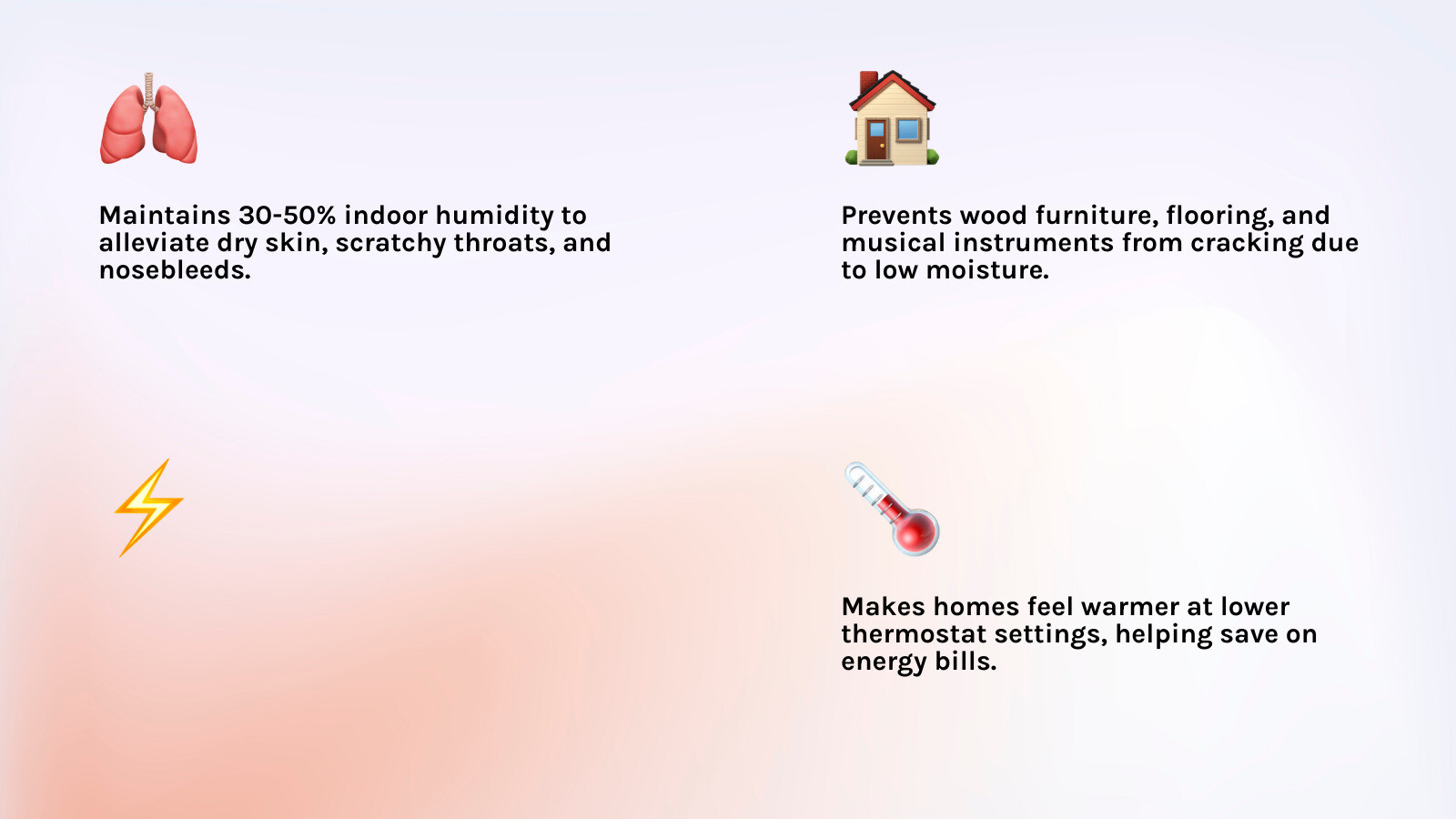
- Health: Alleviates dry skin, scratchy throats, nosebleeds, and can reduce cold and flu symptoms.
- Home Protection: Prevents wood furniture, flooring, and musical instruments from drying out and cracking. Reduces static electricity.
- Comfort: Makes your home feel warmer, allowing you to set your thermostat lower and potentially save on energy bills.
- Common Types: Bypass, fan-powered, and steam models.
- Ideal Humidity: Experts recommend maintaining indoor relative humidity between 30% and 50%, never exceeding 60%.
- Average Cost: Adding a central humidifier typically ranges from $400 to $1,000, including the unit and professional installation.
Ever experience dry, itchy skin or static shocks in winter? Or maybe you’ve noticed your wooden furniture starting to crack? These are common signs of dry indoor air. Many Rhode Island homeowners face this challenge, especially during colder months. But comfort is not just about temperature. It’s also about the quality of the air you breathe. A central HVAC humidifier offers a powerful solution, working with your existing heating system to bring much-needed moisture back into your home.
As Richard Marcello, President of Advanced Heating & Cooling, I’ve seen how a properly installed central HVAC humidifier transforms homes. With over 30 years in the HVAC industry, my team and I are committed to providing practical solutions that enhance your comfort and air quality.
Central hvac humidifier vocab to learn:
- Smithfield HVAC installation services
- Smithfield furnace replacement company
- direct vent furnace installation
How a Central HVAC Humidifier Works
To understand how a central HVAC humidifier works, it helps to think of it as “nature’s way” of adding moisture, but automated for your convenience. Unlike portable units that you have to lug from room to room and refill constantly, a central system is a “set it and forget it” solution.
Most central units operate on the evaporative principle. When your furnace kicks on and starts blowing warm air, the humidifier goes to work. A small water line, connected directly to your home’s plumbing, provides a steady flow of water to a distribution tray. This water then trickles down a “water panel” or evaporator pad.
As the warm air from your furnace passes through this moisture-laden pad, it picks up water vapor. This humidified air is then carried through your ductwork and distributed evenly to every room in your house.
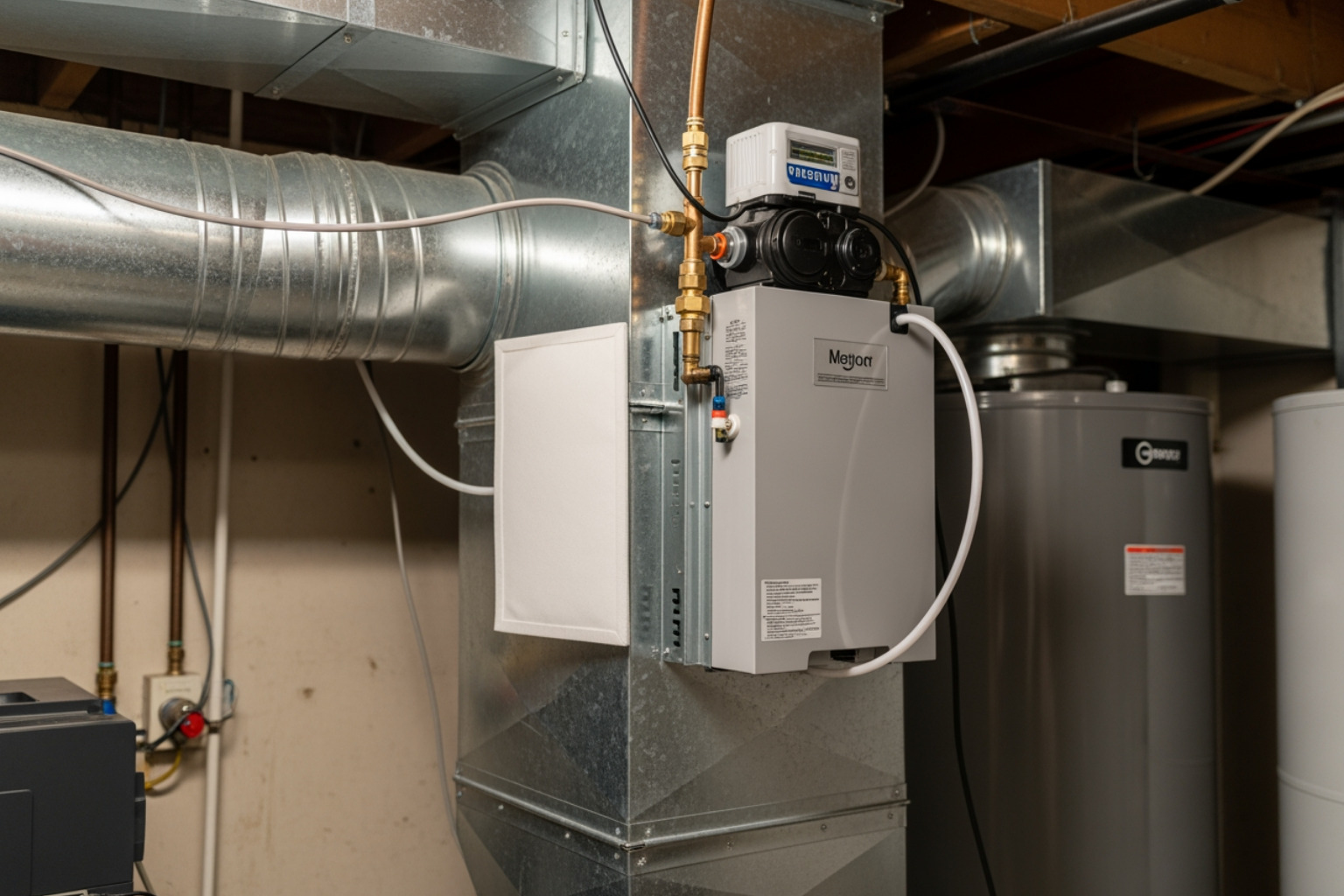
According to the experts at InterNACHI, Central Humidifiers are hard-wired into both your plumbing and your forced-air heating system, ensuring you never have to worry about stagnant water or manual refills.
The Role of the Humidistat
The “brain” of the operation is the humidistat. Much like a thermostat controls temperature, the humidistat monitors the relative humidity (RH) in your home.
Advanced models often include outdoor sensors. Why does this matter? Because as the temperature drops outside, the glass on your windows gets colder. If your indoor humidity is too high while it’s freezing in Smithfield, you’ll see condensation (and eventually frost) on your windows. Modern humidistats automatically adjust the moisture levels based on the outdoor temperature to prevent this “sweating” while keeping your air comfortable.
Integration with Forced-Air Systems
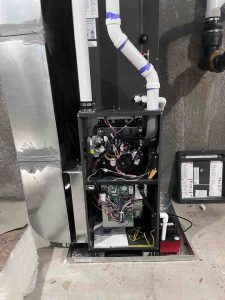
The physical installation usually involves mounting the unit on the supply or return plenum of your furnace.
- Supply Duct: This is where the air has already been heated and is ready to be sent to your rooms.
- Return Duct: This is where air is pulled back into the furnace to be reheated.
- Water Line: A dedicated line (often using a T-fitting or saddle valve) provides the water.
- Drain Line: Most units have a drain to flush away mineral deposits, which prevents the “white dust” often associated with cheap portable humidifiers.
Health and Home Benefits of Proper Humidity
Living in Rhode Island, we know that winter air is naturally dry. When we turn on our furnaces or heat pumps, that air gets even drier. This isn’t just a minor annoyance; it has real impacts on your body and your home.
Why Your Home Needs a Central HVAC Humidifier
From a health perspective, dry air is a culprit for many seasonal ailments. When the air lacks moisture, your nasal passages and throat dry out. This mucus is your body’s first line of defense against germs. When it dries up, you become more vulnerable to colds, the flu, and sinus infections.
Proper humidity levels (between 30% and 50%) can:
- Reduce Virus Survival: Many viruses thrive in dry air. Maintaining proper RH levels can actually decrease the lifespan of airborne pathogens.
- Soothe Skin and Eyes: Say goodbye to “winter itch,” chapped lips, and the feeling of sand in your eyes.
- Improve Sleep: Moist air keeps your airways clear, reducing snoring and that “dry mouth” feeling in the morning.
For those interested in a deeper dive, check out our guide on a healthier home environment.
Protecting Your Furnishings and Structure
Your home is likely your biggest investment, and dry air is its secret enemy. Wood is a natural material that breathes; it expands when it’s humid and shrinks when it’s dry.
Without a central HVAC humidifier, you might notice:
- Gaps in Hardwood Floors: Planks shrink away from each other, creating unsightly (and crumbly) gaps.
- Cracking Furniture: Antique tables or wooden chairs can literally split at the seams.
- Out-of-Tune Instruments: Pianos and guitars are incredibly sensitive to humidity. Dry air can cause permanent structural damage to these expensive items.
- Static Electricity: That annoying “zap” when you touch a doorknob isn’t just a nuisance—it can actually fry sensitive electronics like computers or high-end TVs.
Maintaining consistent moisture levels is a key part of indoor air quality in Rhode Island homes, ensuring your structural beams, molding, and furniture stay in peak condition.
Comparing Types of Central HVAC Humidifiers
Not every home in North Smithfield or Johnston is the same, which is why there are different types of humidifiers to choose from. Selecting the right one depends on your home size, your HVAC setup, and your budget.
Bypass Humidifiers
Bypass humidifiers are the most common and cost-effective option. They don’t have their own motor; instead, they rely on the furnace’s blower fan to push air through the unit.
- Pros: Highly energy-efficient, very quiet, and generally the most affordable to install.
- Cons: They only work when the furnace is actively heating.
- Best for: Average-sized homes with standard furnace setups. Some “drainless” models are available for homes without a nearby floor drain, though they require more frequent maintenance.
Fan-Powered and Steam Humidifiers
If you have a very large home or a system that doesn’t run its blower fan constantly, you might need a more “aggressive” solution.
Fan-Powered Humidifiers: These have their own internal fan, allowing them to pull more air through the water panel. They can produce about a gallon more moisture per day than bypass models and are great for homes on slabs or with HVAC systems in tight closets.
Steam Humidifiers: These are the “gold standard.” Instead of relying on evaporation, they electrically boil water to create pure steam.
- Pros: Highest moisture output (up to 34 gallons per day), works independently of the furnace, and provides the purest form of humidity.
- Cons: Higher initial cost and higher electricity usage.
- Best for: Large custom homes, homes with expensive woodwork or instruments, and those who want the absolute best control.
For a more detailed comparison of how these interact with your comfort, see our article on humidifier vs dehumidifier needs.
Maintenance and Installation Considerations
A central HVAC humidifier is a workhorse, but like any part of your HVAC system, it needs a little TLC to keep running efficiently.
Maintaining Your Central HVAC Humidifier
The most important maintenance task is replacing the water panel (also called a humidifier pad). Over time, this pad collects minerals from your water—calcium and magnesium—which eventually harden and block airflow.
- Annual Replacement: For most homes in the Smithfield area, replacing the pad once a year (at the start of the heating season) is sufficient.
- Mineral Buildup: If you have particularly hard water, you might need to check the pad mid-season.
- Summer Shutdown: When the humid weather returns to Rhode Island in the summer, we recommend turning off the water supply to the unit and closing the bypass damper to keep your AC running at peak efficiency.
Ignoring maintenance can lead to leaks or mold growth, which is why we always include a humidifier check during our regular HVAC maintenance visits.
Professional vs. DIY Installation
While some homeowners are handy with a drill, installing a central HVAC humidifier involves cutting into your ductwork, tapping into your home’s plumbing, and wiring into the furnace’s low-voltage control board.
We strongly recommend professional installation for several reasons:
- Plumbing Codes: Ensuring the water line is installed correctly prevents leaks that could ruin your furnace or flood your basement.
- System Compatibility: We ensure the humidifier is sized correctly for your home’s square footage (e.g., a home of 2,000 sq. ft. has different needs than one of 4,000 sq. ft.).
- Warranty: Most manufacturers require professional installation to keep the warranty valid.
- Safety: Especially with steam models, which involve boiling water and higher electrical loads, professional expertise is a must.
Frequently Asked Questions about Central Humidifiers
Do heat pumps dry out the air?
This is a common myth! Heat pumps do not dry out the air any more than a traditional furnace. The dryness you feel in the winter is caused by the cold outdoor air, which naturally holds less moisture. When that air is heated—regardless of the source—the relative humidity drops. In fact, because heat pumps move air at a lower, more consistent temperature than the “blasts” of a gas furnace, many people find them more comfortable. However, a humidifier is still a great addition to a heat pump system to maintain that perfect 35-45% RH.
What is the ideal humidity level for winter?
In the winter, we recommend aiming for 35% to 45% relative humidity. If you go much higher than 50%, you run the risk of condensation on your windows, which can lead to mold growth on the sills and damage to your drywall. If you see frost on the glass, your humidistat is set too high for the outdoor temperature.
What is the average cost of adding a humidifier?
For most Rhode Island homeowners, the average cost to add a whole-house humidifier to an existing furnace ranges from $400 to $1,000. This includes the unit itself and the labor for professional installation. While steam models can push that price higher, the long-term value in terms of health, furniture protection, and energy savings (because moist air feels warmer) makes it a wise investment.
Conclusion
At Advanced Heating & Cooling, we believe that true home comfort is about more than just the number on your thermostat. It’s about the air you breathe and the environment you live in. A central HVAC humidifier is one of the most effective ways to upgrade your home’s air quality, protect your family’s health, and safeguard your property from the harsh, dry Rhode Island winters.
Whether you’re in Smithfield, Greenville, or Johnston, our team is here to help you select and install the perfect system for your needs. With over 30 years of experience, we pride ourselves on honest, quality workmanship and a commitment to our local community.
Ready to say goodbye to dry air and hello to total comfort? Schedule your heating installation or repair today and let us help you find the perfect humidification solution for your home.