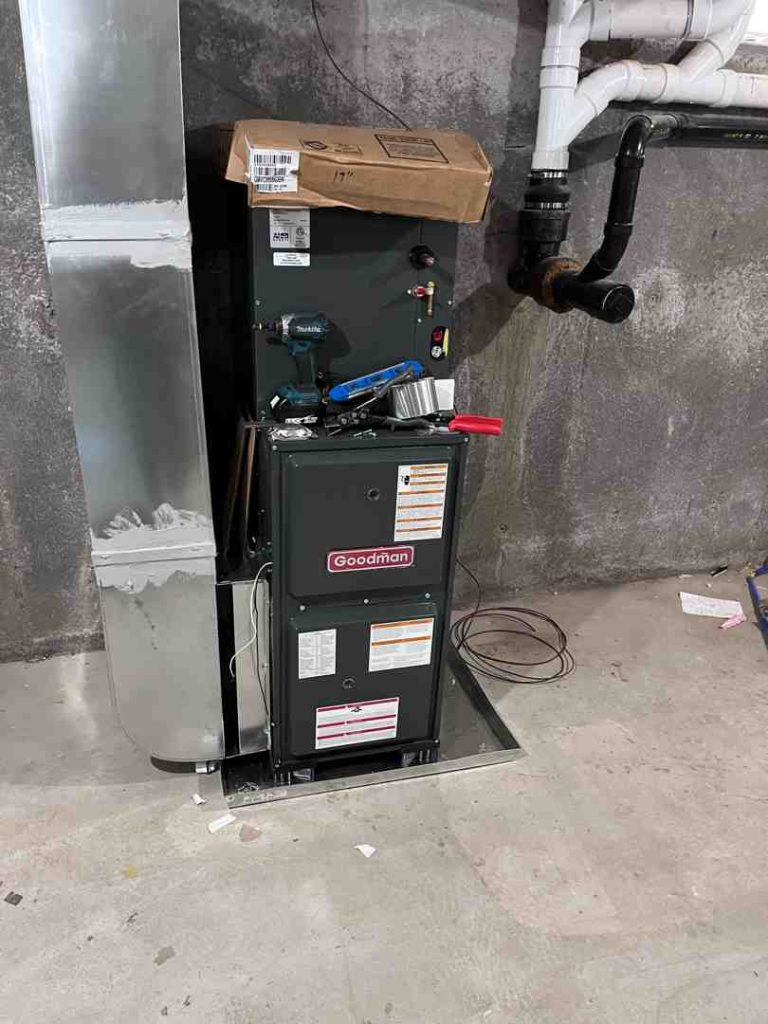
Why Heating Repair Matters Before Winter Hits Hard
Heating repair is the process of diagnosing and fixing problems in your home or building’s heating system — whether that’s a furnace, boiler, or heat pump — to restore safe, reliable warmth.
Here are the most common heating repair situations and what to do:
| Problem | Likely Cause | Action |
|---|---|---|
| No heat or weak heat | Clogged filter, broken thermostat, ignition failure | Replace filter, check thermostat, call a pro |
| Strange noises (banging, rattling) | Loose parts, blower motor issues | Schedule a diagnostic inspection |
| Rising energy bills | Dirty coils, duct leaks, aging system | Schedule maintenance or efficiency audit |
| Foul or burning smell | Mold, dust buildup, or potential gas leak | Turn off system, call a technician immediately |
| Short cycling (frequent on/off) | Thermostat issues, overheating, clogged filter | Check filter first, then call a pro |
| Uneven heating across rooms | Ductwork issues, zoning problems | Have ductwork inspected |
A malfunctioning heating system isn’t just uncomfortable — it can be dangerous. Carbon monoxide from incomplete combustion can reach harmful levels quickly, and a system running inefficiently can quietly drive up your energy bills month after month.
The good news? Most heating problems are very fixable — especially when caught early.
I’m Richard Marcello, President of Advanced Heating & Cooling in Smithfield, RI, with over 30 years of hands-on Heating Repair experience serving homeowners and businesses across Rhode Island. In this guide, I’ll walk you through seven practical ways to solve your heating problems for good — no guesswork, no overselling.
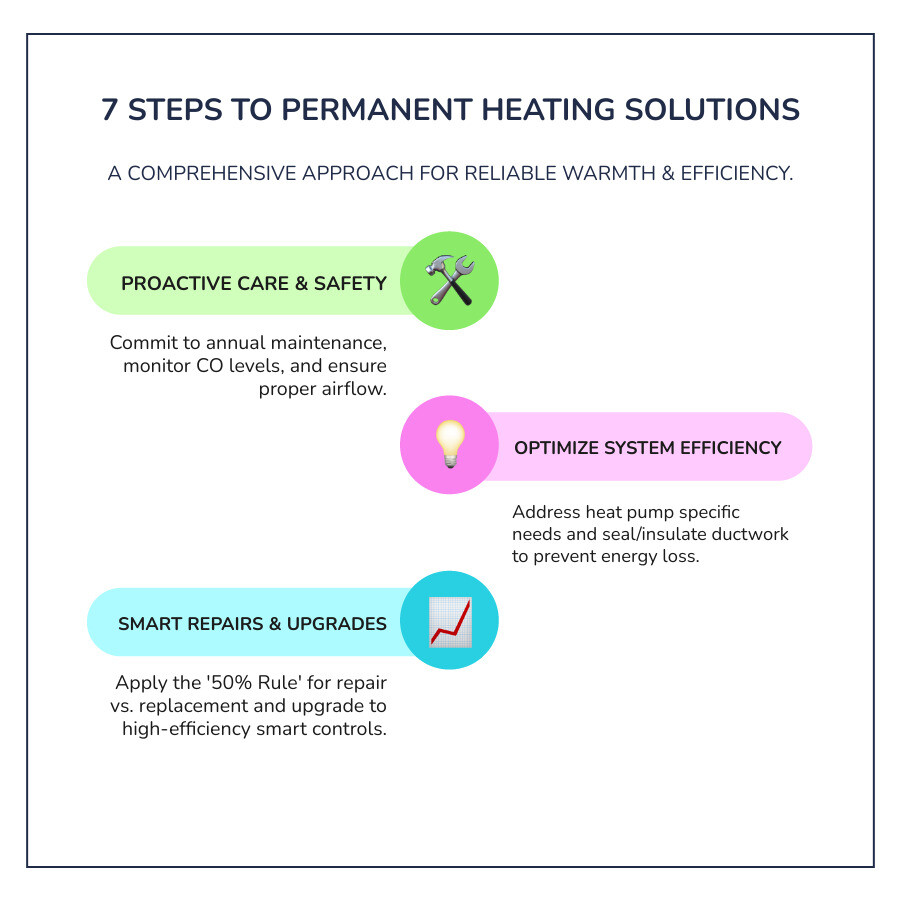
Identifying the Need for Professional Heating Repair
When the temperatures drop in Smithfield, North Smithfield, or Johnston, your heating system becomes the most important piece of equipment in your home. But how do you know when a small quirk is actually a cry for help? Identifying the need for professional Heating Repair early can be the difference between a simple $150 fix and a $5,000 system replacement.
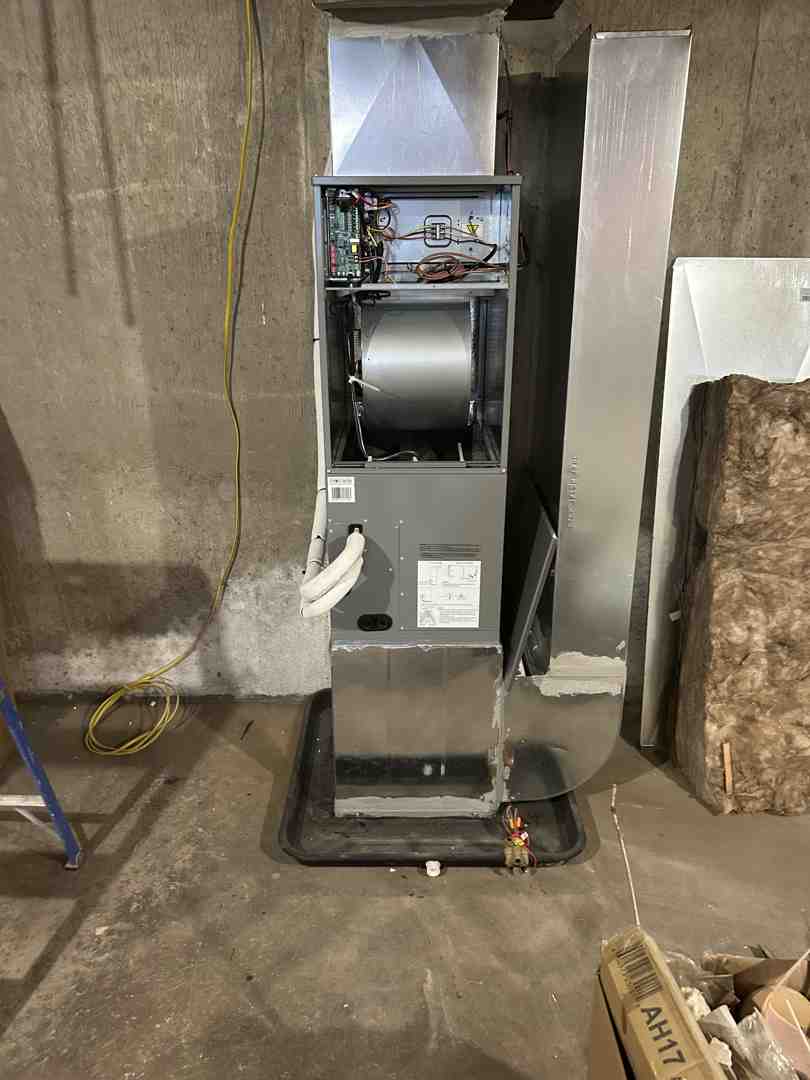
Professional diagnostics involve more than just looking at the unit. We use specialized tools to check electrical continuity, gas pressure, and airflow. While a homeowner can certainly check a tripped breaker or a dead thermostat battery, most internal components require a trained eye to prevent further damage. If you are noticing that your home isn’t reaching the set temperature or the system is running constantly, it’s time to look deeper. You can learn more about how we handle these issues locally by visiting our page on Smithfield heating services.
Recognizing Signs That Require Heating Repair
Your heating system usually tries to tell you it’s failing before it actually quits. Here are the “red flags” we tell our neighbors in Greenville and Georgiaville to watch out for:
- Strange Noises: If your furnace sounds like a dryer full of sneakers (banging, rattling, or screeching), something is loose or a bearing is failing.
- Short Cycling: This is when the heat turns on and off every few minutes. It’s often a sign of overheating or a faulty flame sensor.
- Uneven Temperatures: If the living room is a sauna but the bedroom is an icebox, you likely have ductwork issues or a failing blower motor.
- Rising Utility Bills: An unexpected spike in your gas or electric bill usually means the system is working twice as hard to produce the same amount of heat.
- Foul Odors: A “dusty” smell at the start of the season is normal, but a metallic, burning, or “rotten egg” smell is a major emergency.
For a broader look at how these systems integrate with your home’s overall climate, check out this Heating and Cooling Guide.
Key Components Involved in Heating Repair
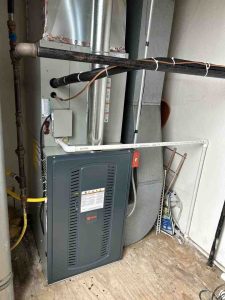
To understand why a repair is necessary, it helps to know what’s under the hood. Most Heating Repair calls involve one of these five critical parts:
- Thermostats: The “brain” of the operation. Sometimes the heater is fine, but the brain isn’t sending the right signals.
- Heat Exchangers: The most critical (and dangerous) part of a furnace. If this cracks, it can leak carbon monoxide into your home.
- Blower Motors: These push the warm air through your vents. If they get clogged with dust, they burn out.
- Ignition Systems: Whether it’s a pilot light or an electronic igniter, if it doesn’t spark, you don’t get heat.
- Reversing Valves: Exclusive to heat pumps, these allow the system to switch from cooling mode to heating mode.
If you use a heat pump, the repair considerations are slightly different, focusing more on refrigerant and electrical components. You can find more technical research on domestic heat pumps to see how these systems have evolved.
Ways 1-3: Maintenance, Safety, and Ventilation
The first three ways to solve your heating problems focus on the “Big Three”: keeping it clean, keeping it safe, and letting it breathe. In our 30+ years of experience in Slaterville and Esmond, we’ve found that roughly 75% of “no-heat” calls could have been prevented with basic attention to these areas.
Safety is paramount. Did you know that carbon monoxide can be lethal at concentrations of just 1,000 ppm (0.1%)? This usually happens due to incomplete combustion—where the fuel doesn’t burn fully because of a lack of oxygen or a dirty burner. Proper ventilation isn’t just about comfort; it’s about survival. The Ventilation and Infiltration standards set by ASHRAE provide the blueprint we use to ensure your home stays safe.
1. Commit to Annual Professional Maintenance
Think of a heating tune-up like an oil change for your car. You wouldn’t drive 50,000 miles without changing the oil, yet many people go years without looking at their furnace.
During a professional maintenance visit, we do three main things:
- Filter Replacement: A clogged filter restricts airflow, making the motor work harder and eventually causing it to overheat.
- Coil and Burner Cleaning: Dust acts as an insulator. A thin layer of dust on your heat exchanger can drop your efficiency by 10% or more.
- Safety Inspection: We check for cracks in the heat exchanger and ensure the sensors are working correctly.
Regularly maintaining your heating system can extend the life of your equipment by 5 to 10 years, saving you a fortune in the long run.
2. Monitor Ventilation and Carbon Monoxide Safety
Carbon monoxide (CO) is the “silent killer” because you can’t see, smell, or taste it. At several hundred ppm, exposure induces headaches, fatigue, and nausea.
To solve safety problems for good:
- Install CO Detectors: Place them on every floor, especially near sleeping areas and the furnace room.
- The Blue Flame Test: Look at your furnace’s flame. It should be a steady, crisp blue. A yellow or flickering flame is a sign of incomplete combustion and potential CO production.
- Air Changes: For proper health and comfort, a home typically needs about 4 air changes per hour. Modern, air-tight homes in Woodville often need mechanical ventilation to achieve this.
For more on how air quality affects your family, read about residential ventilation and health.
3. Ensure Proper Airflow and Vent Clearance
Your heating system needs to “inhale” fresh air and “exhale” exhaust. If either path is blocked, the system will shut down or become dangerous. In Rhode Island, snow is a common culprit. A heavy drift can easily block the PVC intake or exhaust pipes on the side of your house.
Inside the home, ensure that furniture, curtains, or rugs aren’t blocking your return air vents. If the system can’t pull air in, it can’t push heat out. We’ve put together a local Smithfield heating repair 101 guide to help you identify these simple obstructions before you call for service.
Ways 4-5: Heat Pumps and Ductwork Efficiency
If you have a heat pump or a ducted system, your Heating Repair needs often involve the “invisible” parts of the system—the refrigerant and the pipes that carry the air.
Efficiency is the name of the game here. In a typical space conditioning setup, duct losses can account for a staggering 30% of energy consumption. That is essentially throwing away $30 of every $100 you spend on heating. By sealing these leaks and ensuring your heat pump is running at the current industry minimum SEER rating of 14, you can drastically reduce your monthly costs.
| Action | Estimated Energy Savings | Comfort Impact |
|---|---|---|
| Duct Sealing | 20% – 30% | High (Eliminates cold spots) |
| Duct Insulation | 10% – 15% | Medium (Keeps air hotter) |
| Filter Change | 5% – 10% | High (Improves airflow) |
4. Address Heat Pump Specific Repair Needs
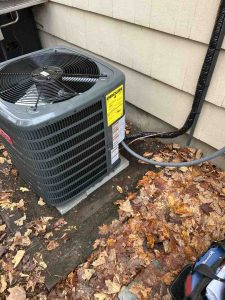
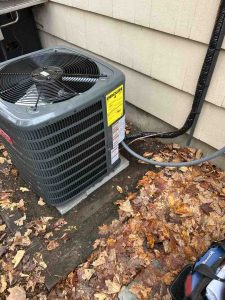
Heat pumps are incredible machines because they move heat rather than creating it. However, they have unique repair needs. If your heat pump is covered in ice during a Smithfield winter, it might have a faulty defrost board or a low refrigerant charge.
We also see many homeowners interested in integrating solar and heat pumps to drive costs down to near zero. Whether you are standard electric or solar-assisted, keeping your refrigerant levels precise is the only way to ensure the system can extract heat from the freezing outside air.
5. Seal and Insulate Ductwork
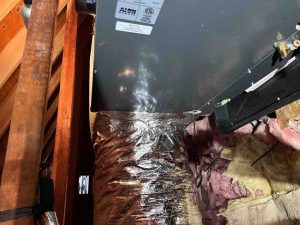
Many people blame their furnace for being “weak” when the real problem is the ductwork in the attic or crawlspace. Air leaks at the joints allow warm air to escape into the unconditioned parts of your home.
If your home doesn’t have ducts, or if your current ducts are beyond repair, we often recommend ductless mini-split advantages. These systems avoid the 30% energy loss entirely by delivering heat directly to the room. For those with existing ducts, using mastic sealant or metal tape (not “duct” tape, ironically) can provide a 30% efficiency gain almost overnight.
Ways 6-7: Strategic Repairs and Smart Upgrades
Eventually, every homeowner faces the big question: Should I keep fixing this old unit, or is it time to let go? This is where strategic Heating Repair turns into smart home investment.
Most heating systems have a 10-15 year lifespan. While they can sometimes last 20 years, the efficiency drop-off after year 12 is usually significant. If you find yourself needing emergency heating services more than once a season, you are likely throwing good money after bad.
6. Apply the “50% Rule” for Repair vs. Replacement
At Advanced Heating & Cooling, we use a simple rule of thumb to help our customers in Mapleville and Stillwater make the right choice: If the cost of the repair is 50% or more of the cost of a new system, replace it.
Why? Because a new system comes with a warranty (often 10 years) and much higher energy efficiency. An old furnace might have a 60-70% AFUE (Annual Fuel Utilization Efficiency) rating, while a new one can reach 95-98%. That’s a massive difference in your monthly gas bill. To help you stay comfortable, we’ve created a guide on how to stay warm and safe in Smithfield while navigating these decisions.
7. Upgrade to High-Efficiency Smart Controls
The final way to solve your heating problems is to take the control out of “manual” mode. A smart thermostat does more than just look cool on the wall; it prevents the “wear and tear” that leads to repairs.
- Zoned Heating: By using multiple thermostats, you only heat the rooms you are using. This reduces the load on your furnace by 20-40%.
- Remote Monitoring: If your heat fails while you’re at work, your phone will alert you before your pipes freeze.
- Programmable Schedules: These ensure the system isn’t working overtime when the house is empty.
Modern renewable energy in HVAC systems are designed to work seamlessly with these controls, providing the highest level of comfort ever possible.
Frequently Asked Questions about Heating Repair
What are the most common causes of heating system failure?
The #1 cause is actually neglect. Dirty air filters cause the system to overheat and shut down. Other common causes include worn-out fan belts, pilot light failures, and faulty thermostats. In our area, we also see a lot of issues caused by pests nesting in exterior exhaust vents during the off-season.
How often should I have my heating system professionally serviced?
We recommend a professional tune-up once a year, ideally in the late summer or early fall before the first cold snap hits. This ensures that any small issues—like a fraying belt or a dirty sensor—are caught before they turn into a mid-January emergency.
Is carbon monoxide a risk with electric heating systems?
Generally, no. Carbon monoxide is a byproduct of burning fuel (natural gas, propane, oil, or wood). Electric furnaces and heat pumps do not burn fuel, so they don’t produce CO. However, if you have a “hybrid” system or any other gas appliances in the home, you still absolutely need CO detectors.
Conclusion
Solving your Heating Repair problems for good isn’t about luck; it’s about a combination of regular maintenance, safety awareness, and knowing when to upgrade. Whether you’re in Smithfield, RI, or surrounding areas like Forestdale and Slaterville, taking a proactive approach will save you money, keep your family safe, and ensure your home remains a cozy sanctuary all winter long.
At Advanced Heating & Cooling, we’ve spent over 30 years perfecting the art of Rhode Island climate control. We pride ourselves on honest, quality workmanship and are always happy to provide free estimates for your residential or commercial needs. Don’t wait for the first blizzard to find out your heater is struggling. Contact us for expert heating repair and installation today, and let’s make sure your system is ready for whatever the New England winter throws our way.